Dragons, Ghosts, Butterflies, and Other Appliquéd Magic
Rebecca Bratburd
Off The Pages, Quilters
At an elementary school in Katy, Texas, a question followed music teacher Alex Begnaud wherever he went. “Mr. B, will you make one for me?” they’d say about the shirts their music teacher wore. Alex had chosen to sew his wardrobe for the school year instead of buying clothes—music shirts, shirts with dogs, shirts with aliens.
“No, but I’ll teach you,” Alex told them.
“Mr. B, will you make me a quilt?”
“No, I’ll teach you.”
Eventually, the questions shifted: “Mr. B, when is this sewing club going to happen? When is this going to happen?”
Finally, the PTA granted Alex $1,500 to make it happen. He teaches pre-K through fifth grade music and gives private voice lessons to high schoolers, but quilting has become central to his life.
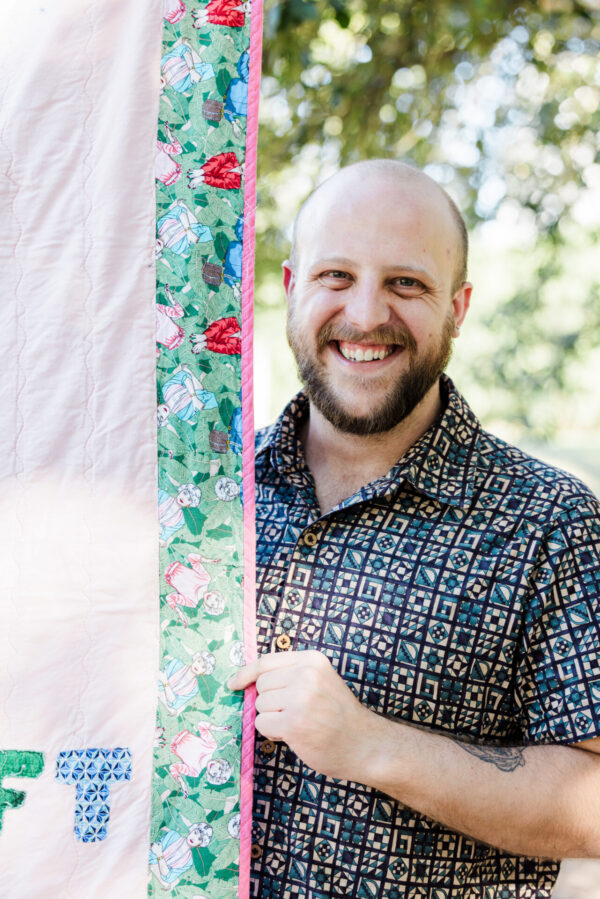
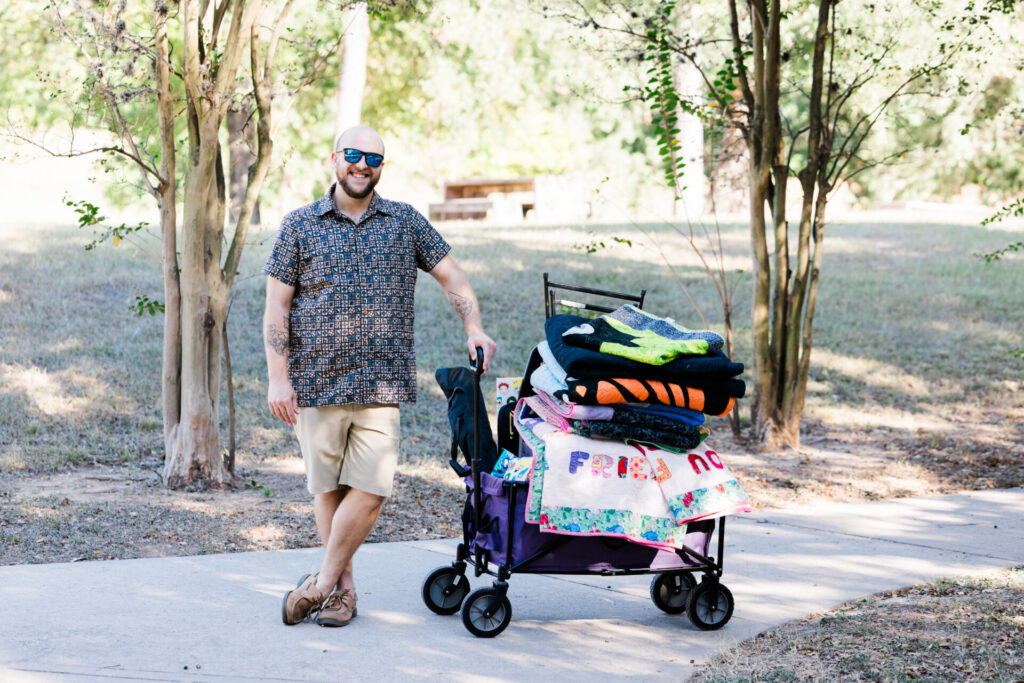
Alex Begnaud beside his "Golden Girls" quilt.
He spent most of the summer of 2025 building a sewing club that didn’t yet exist, gathering walls, fabric, and boxes of notions. Now, everything is ready except the machines. He’s in talks with Janome, which already partners with his school district for middle and high school programs, about expanding to fifth graders.
Many students at Alex’s school see parents sewing at home, making quinceañera dresses and doing alterations. Sewing machines are common in their households, and Alex wants to honor that while giving students both a creative outlet and practical skills. “We’re going to make quilts to go over the incubators in the NICU,” he said. “We’re going to make aprons for our lunch ladies. It’s going to be so fun and service-oriented.” Colleagues have suggested Alex get recertified as an art teacher so the entire school could rotate through sewing instruction instead of limiting it to an after-school club.
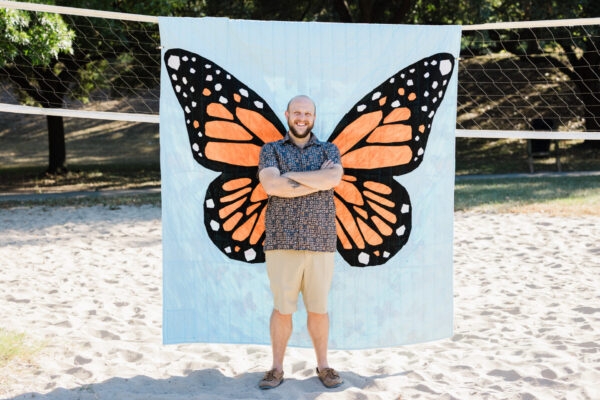
"Texas Monarch" made in 2025 by Alex was inspired by the state butterfly of Texas and his nana’s love of butterflies. One of Alex's annual class projects is raising and releasing butterflies.
His path to becoming a teacher of quilting began with his own teacher. His Nana Ruth started making quilts when he and his brothers were born, progressing through techniques over the years, from tied knots to more complex piecing. By the time Alex graduated high school, she was fielding requests for birthday quilts and graduation quilts. “It was getting to be too much, and she was like, ‘All right, I’ll teach you,’” Alex said. “That started weekly or bi-weekly sewing lessons, and I’d go over and learn how to do the next step and then go home and do it.”
His first quilt was a quilt-as-you-go T-shirt piece made on a Singer Patchwork, something to take along to college. Once he gained confidence, he conceived of a bigger project. His nana had mentioned that nobody had ever made her a quilt, though she always made quilts for others. So Alex designed her a quilt with an appliquéd hummingbird.
“I didn’t know what the word appliqué meant. I didn’t know what patchwork meant, so I just threw things together,” he said. “When her birthday came around, I had a box of fabric with the quilt top. I was like, ‘I tried really hard, but now I’m overwhelmed. And I need you to help me finish this because it’s your birthday present.’” Together, they pieced everything, and his nana received the first quilt someone had made for her. Later, when she passed away, Alex inherited the machine she’d been working on while teaching him.
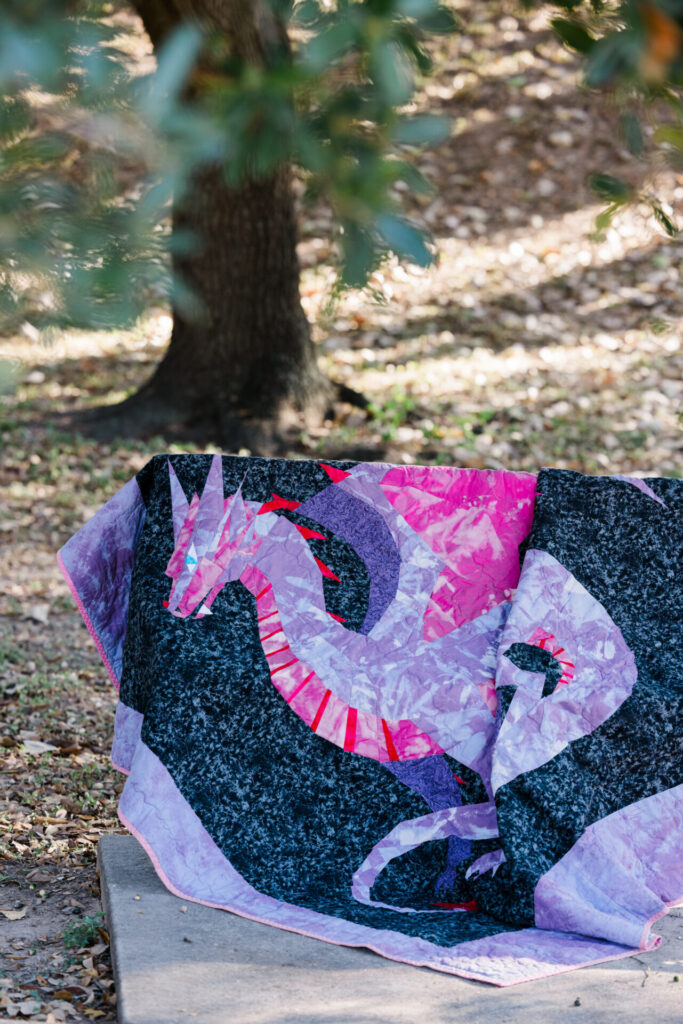
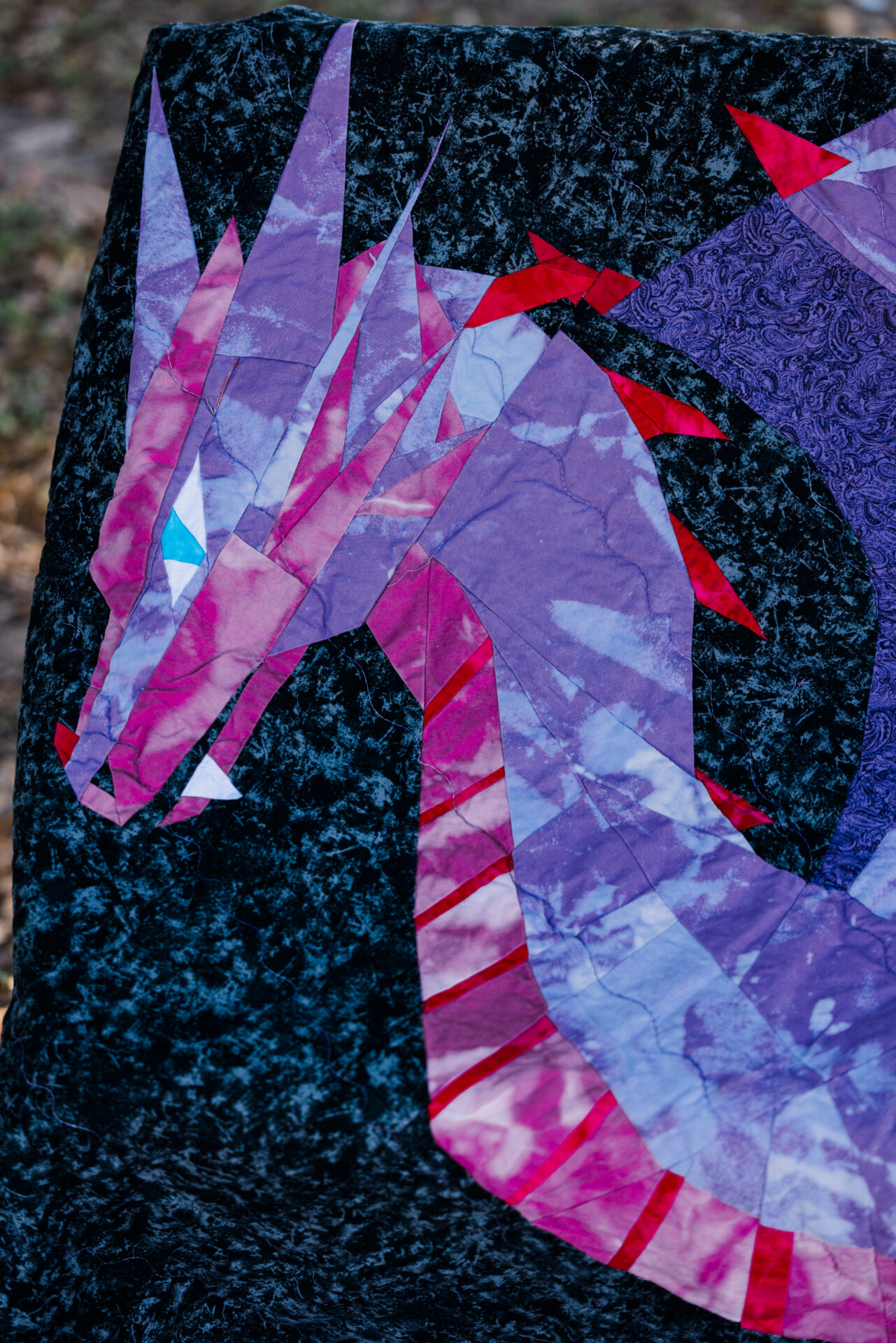
"Amethyst Dragon" (2025) was made using foundation paper piecing. Alex bleached the originally solid fabric to achieve a more textural look.
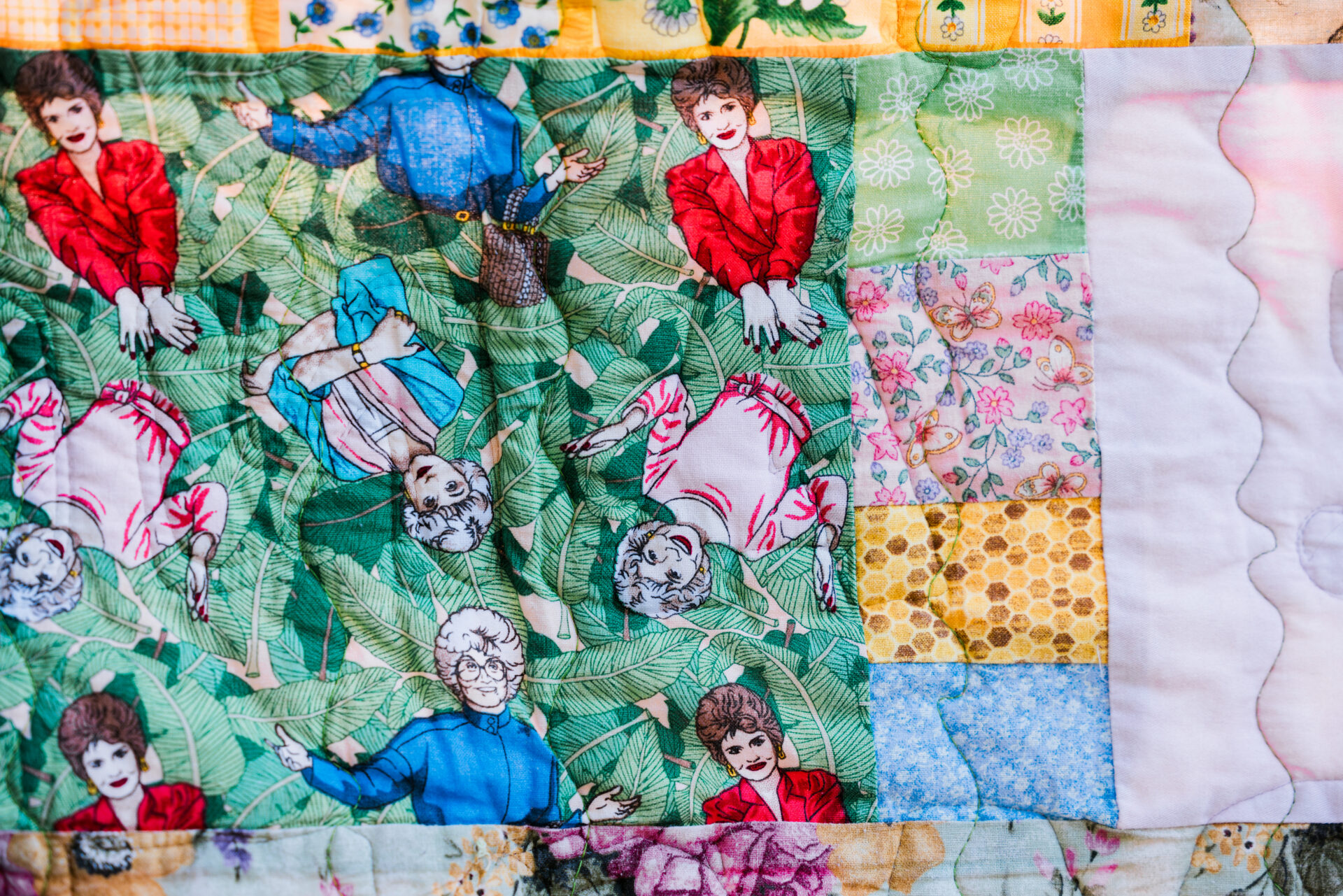
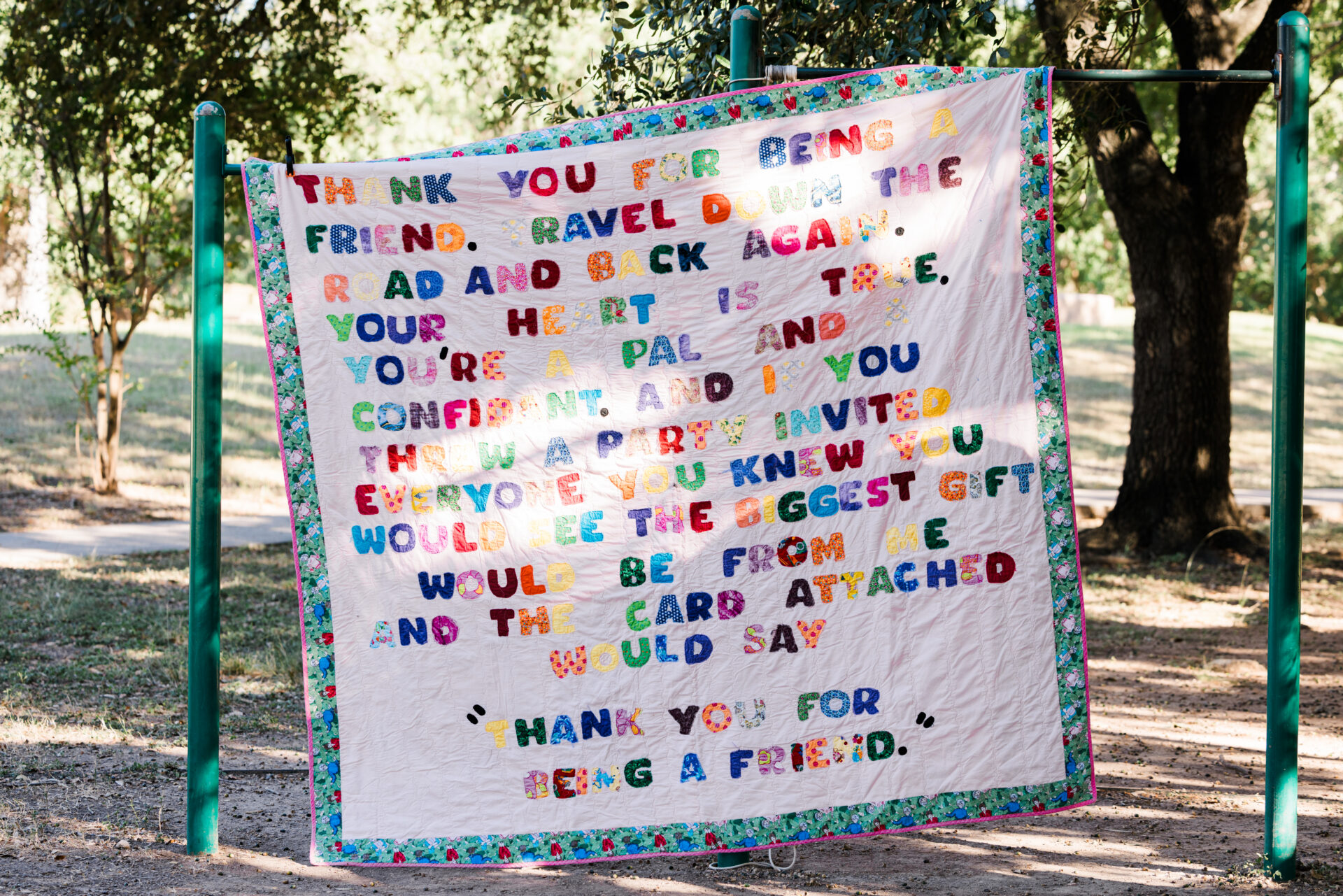
He’s since created a body of work that reflects his interests and passions. There’s a Golden Girls quilt, made while watching his favorite TV show. There’s also a pixel quilt—a portrait of his other grandmother—that earned a white ribbon at the Houston Livestock Show and Rodeo. And there’s a butterfly quilt honoring his nana, who loved monarchs, Texas’s state insect, which he keeps in his classroom every spring. His dragon quilt came from a love of The Inheritance Cycle (the Eragon books). He used solid fabrics and bleached them all for a reverse tie dye effect. He’s made a ghost wearing a cowboy hat quilt and a pickle quilt.
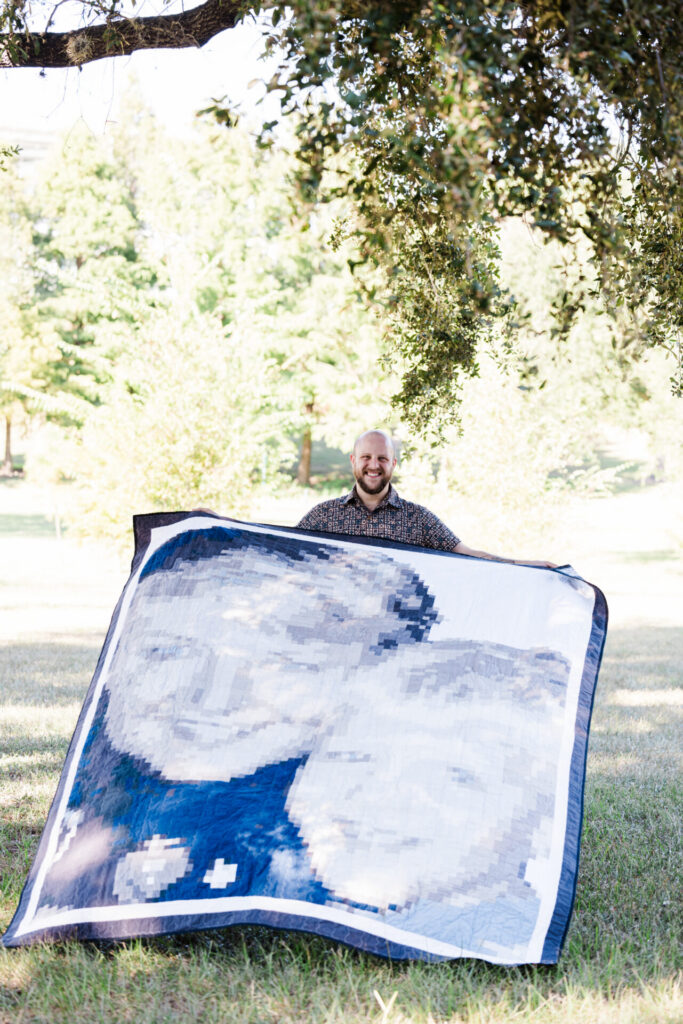
"Donna Holden" made by Alex in 2024 recreates a photo of Alex and his grandma using a pattern from pixelquilt.com.
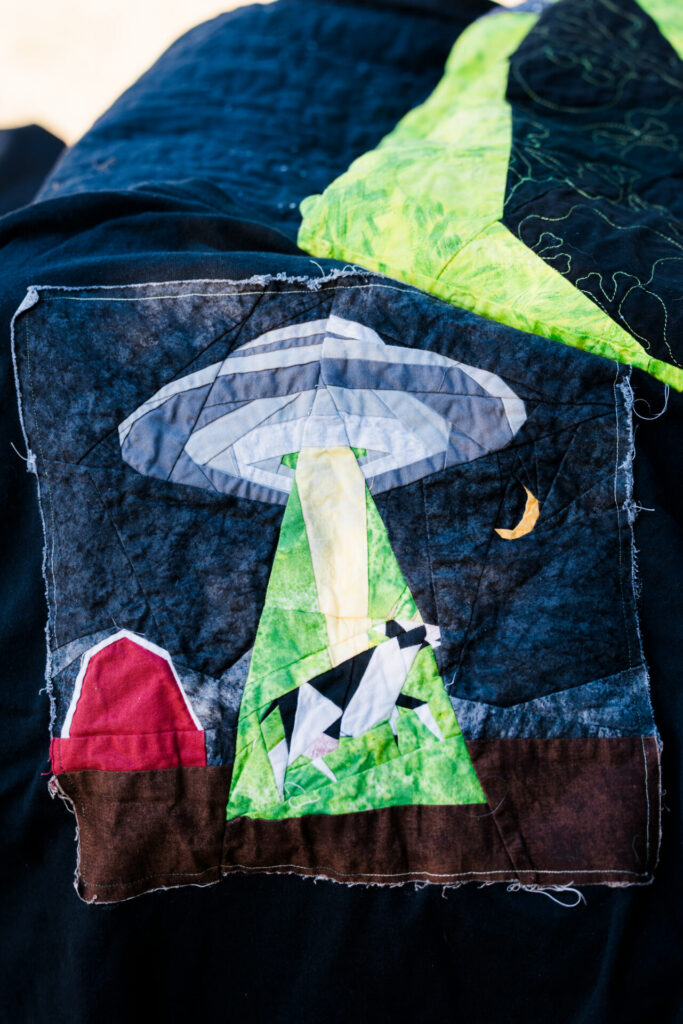
Alex stitched his "Udderly Out of This World" foundation paper pieced block from Getting Jazzy With It onto the back of a T-shirt.
As a member of the Houston Modern Quilt Guild, Alex has been exposed to techniques and approaches he didn’t know existed. But he considers himself a contemporary quilter rather than a modern one. “My patterns are image-based, not necessarily block-based,” he said. “The only reason why I started taking design classes is because the things that I wanted weren’t available.”
At 5’10”, Alex doesn’t like quilts that don’t cover him, so even his 60-by-60-inch ghost quilt qualifies as a smaller project by his standards. He learned foundation paper piecing from Kelley Matt and pattern design from Julius Rempe-Night. His process now involves layering photos to build a rough image, then working in QuiltAssistant software before sewing samples and publishing patterns.
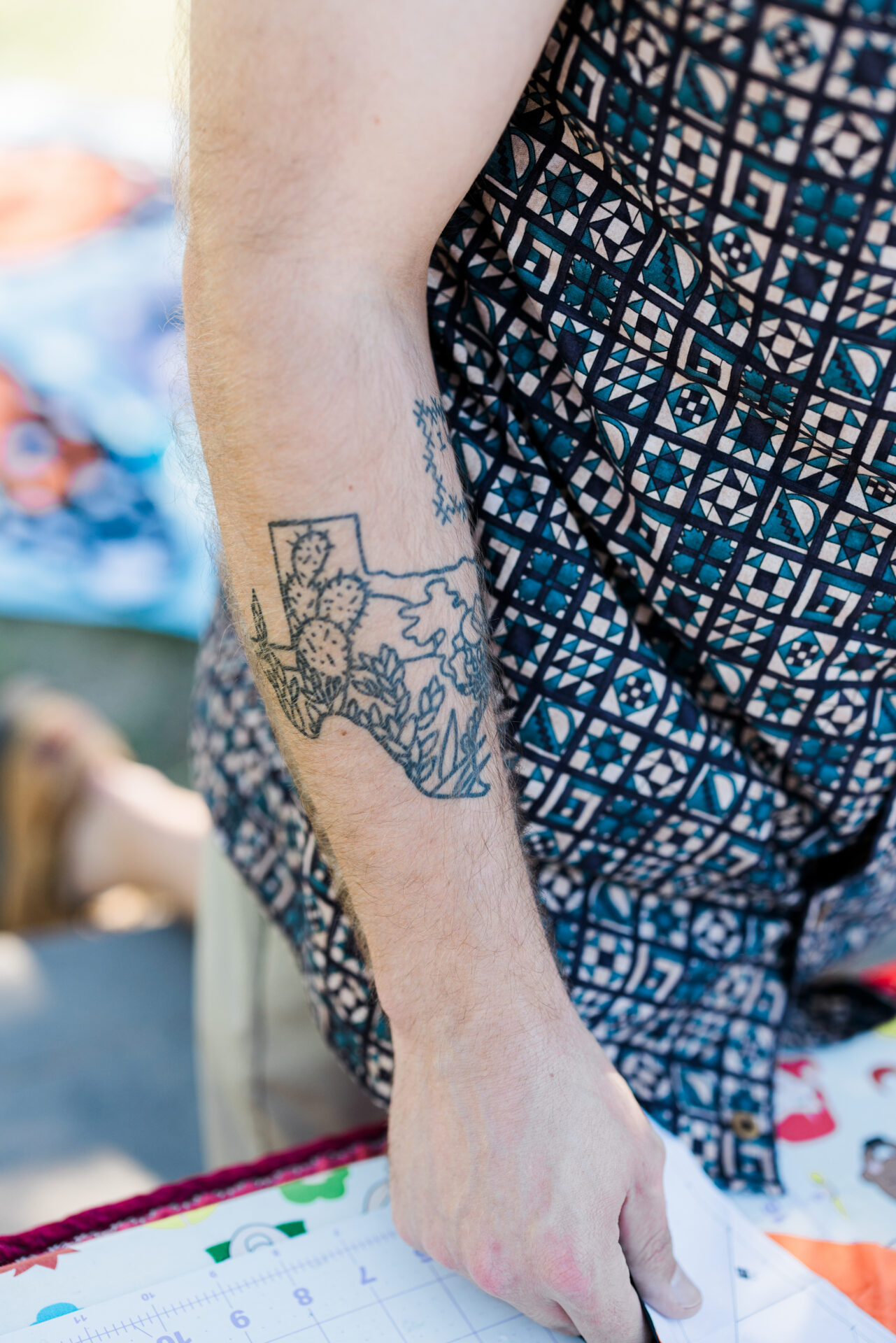
Alex Begnaud sporting a shirt he made himself.
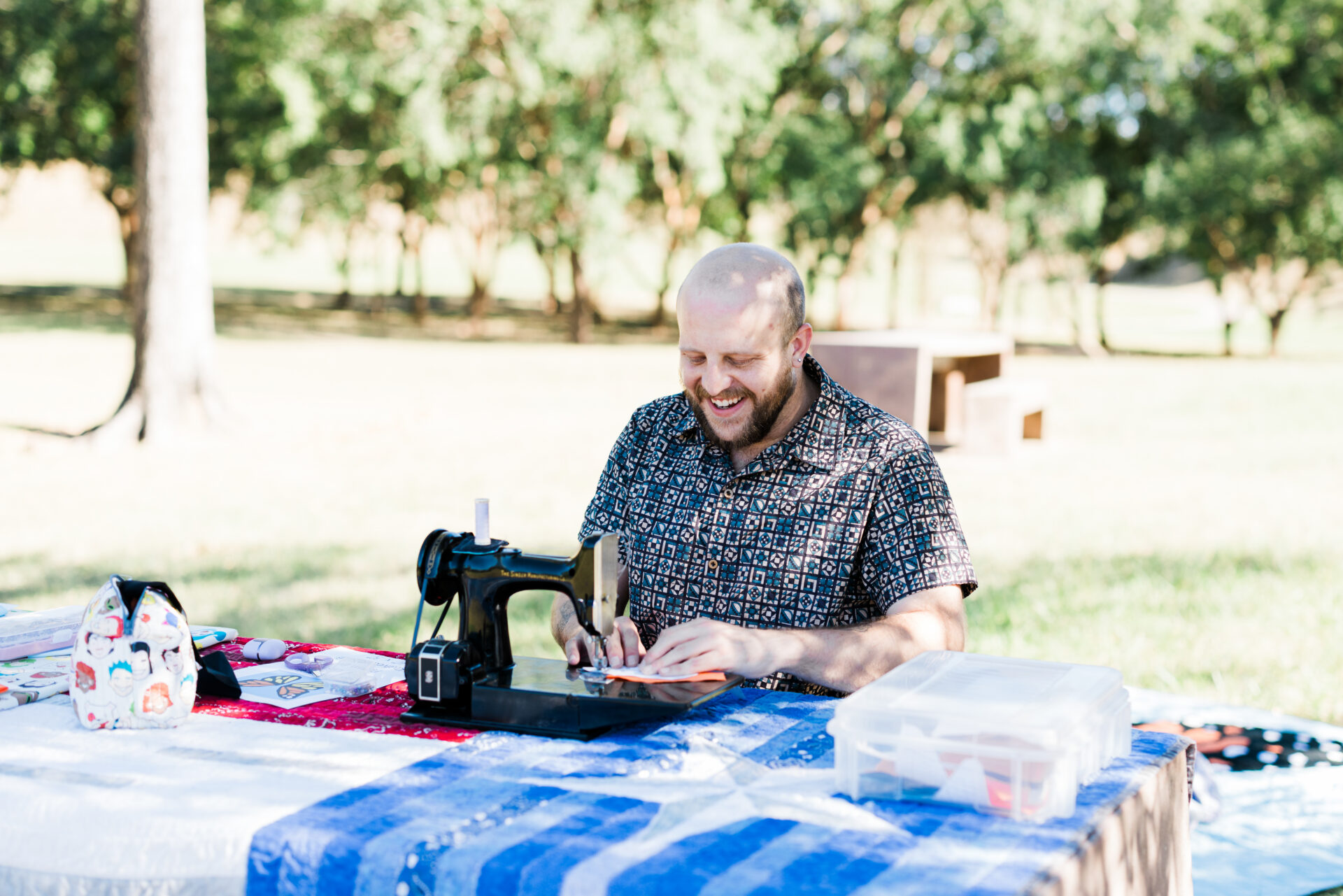
The outdoor quilting started when he worked as an emergency driver for a hospital system. During downtime between calls, he’d take out his Singer Featherweight, plug it into a portable battery, and sew. That evolved into quilting at parks and downtown, anywhere with decent light and space to spread out his work. “I love sewing and going anywhere,” Alex said. “It’s nice to be outside and have fresh air. I do a lot of foundation paper piecing, so I’ll rip papers while sitting in my hammock.”
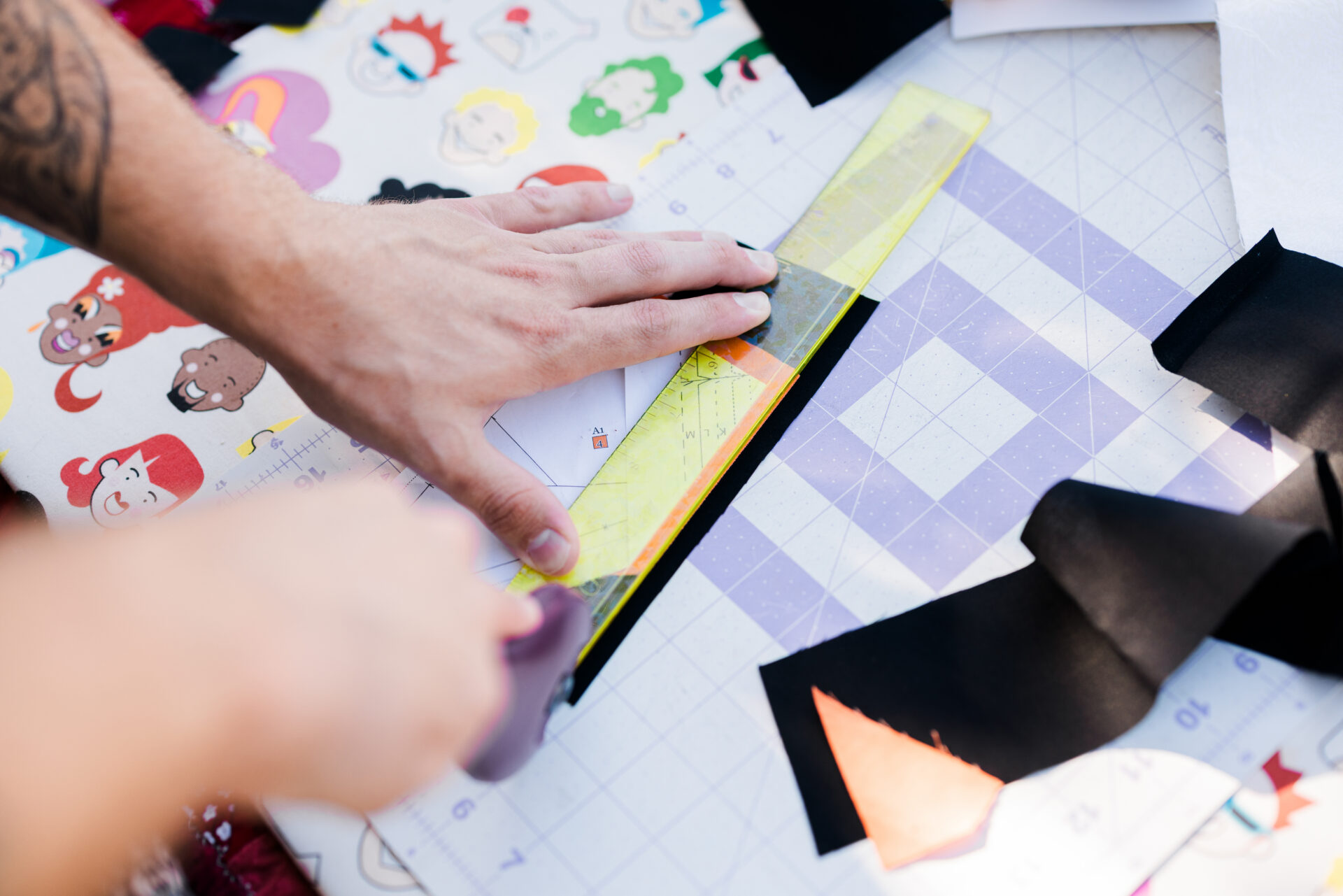
In his living room on the eastern edge of Houston, a 6-foot table sits in front of the TV with his sewing machine. Alex lives solo with his dogs, and quilting is how he unwinds after teaching all day. He’s developed a system for foundation paper piecing that removes decision-making from the evening sewing sessions. “I take all my cut pieces that are ready to go and pin them together so they’re in order,” he said. “I sit down and work on number one, then number two, then number three. I don’t have to think because I’ve already prepped these bite-sized pieces. The thinking is done. I just sit and sew.”
Until he opens that sewing club, you might find him in a Houston park with his Featherweight and portable battery, piecing quilts under an open sky, ready to pass along what his nana taught him.
Rebecca Bratburd joined the Quiltfolk team in 2023 and has written for the magazine and contributed to many other projects since. Learn more about Rebecca on her website and Instagram.
About the Photographer
Azuree Holloway has been photographing for Quiltfolk since 2019 and has contributed to many other projects. Check out more of her work on her website and her Instagram.