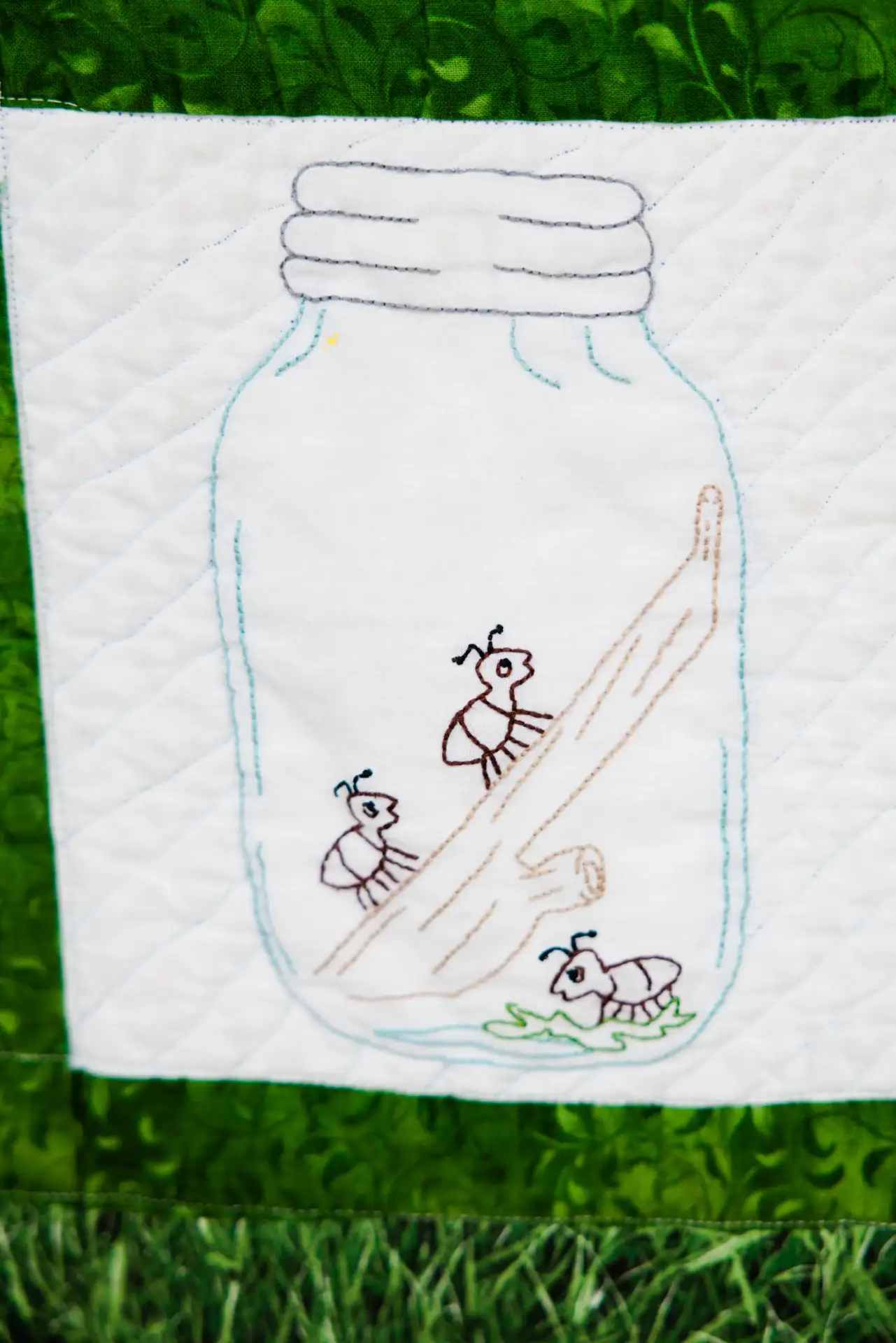
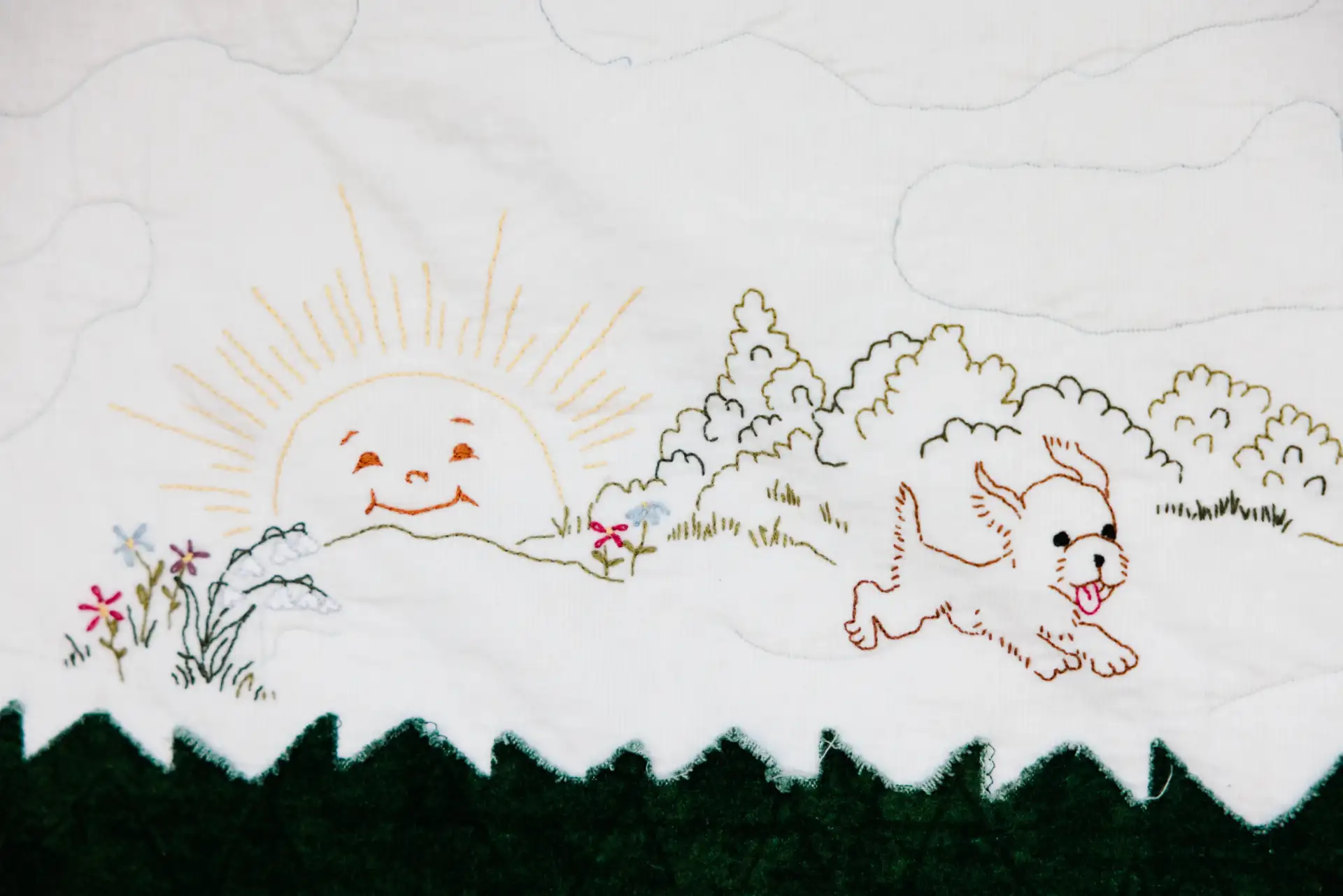
In Michelle Vincent’s basement studio in Springfield, Missouri, a longarm machine stretches across a 14-foot table, and the scrap buckets are sorted by color and open to anyone. That last part matters because Michelle shares the studio with her four boys: James, 13; Isaac, 12; Daniel, 10; and Christian, 7. Each of them has a project going. James has made a couple of quilts. Isaac is stitching hand embroidery that will become quilt blocks. The younger two are working on a quilt and a pillow.
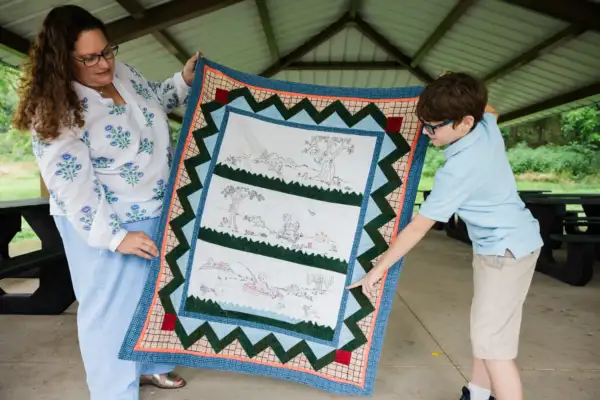
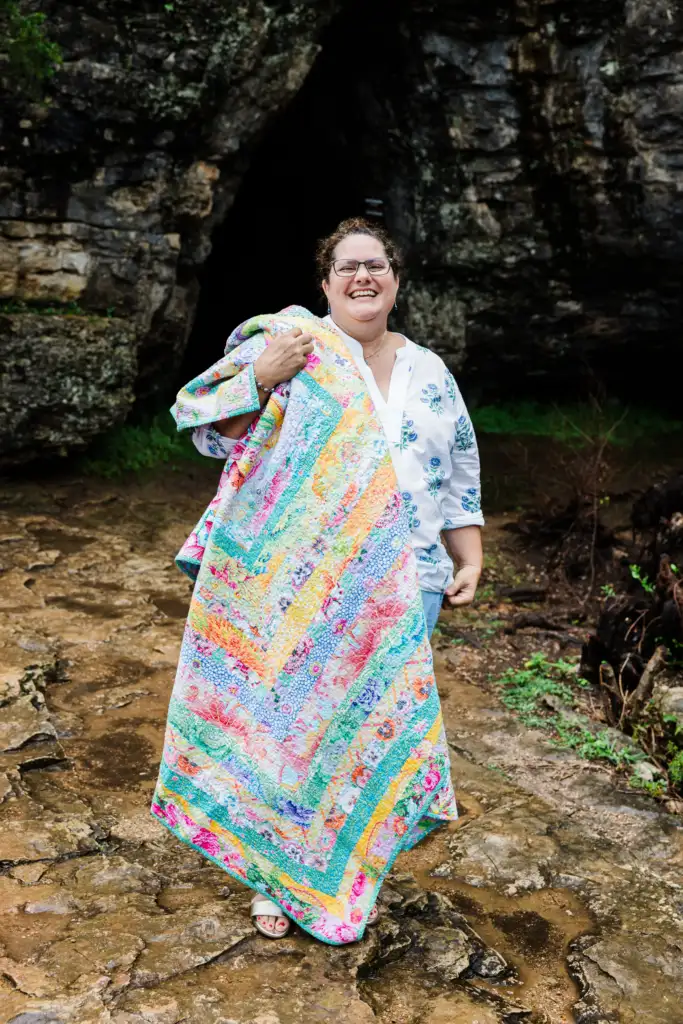
Michelle Vincent and her son, Isaac, with Isaac’s "Busy Boy Quilt" (2014).
“It’s just as important for boys to know how to sew as girls,” Michelle said. The boys pick their projects and reach for the scraps whenever the urge strikes. “They have access to [the scraps] so that they can be creative when they feel like it.”
That practicality carries past the studio. The whole family is active in Scouting America, where Michelle serves as a Cubmaster and her two older boys spend much of the summer away at camp. “For Scouting, they need to know how to patch things. They need to know how to repair their tents,” Michelle said. “They’ve never seen it as something that’s only for women.”
Victory Quilting and Needleworks is run from Michelle’s home. This means her time in her studio is usually spoken for by someone else’s quilt. But she keeps one rule above the rest. “When the boys come downstairs and are like, ‘Mom, can I sew on my pillow?’ then I stop whatever I’m doing, and we work on what they want to,” she said. “Which might not be teaching them great things about respecting my time, but it’s teaching them [other] great things, that we take time to quilt or take time to sew.” The reward has little to do with the sewing.
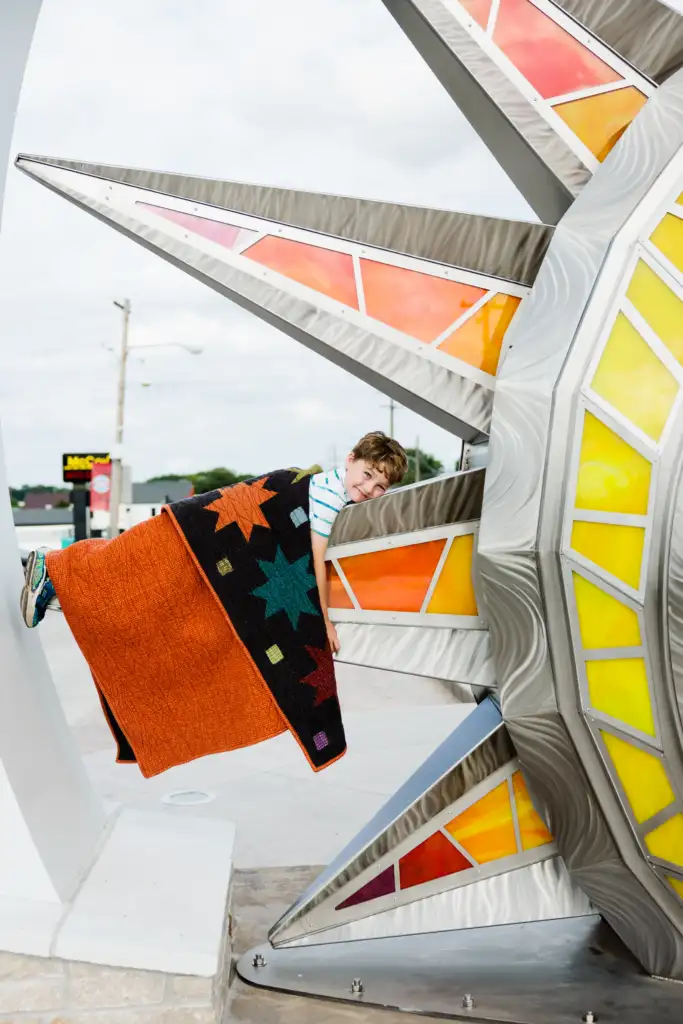
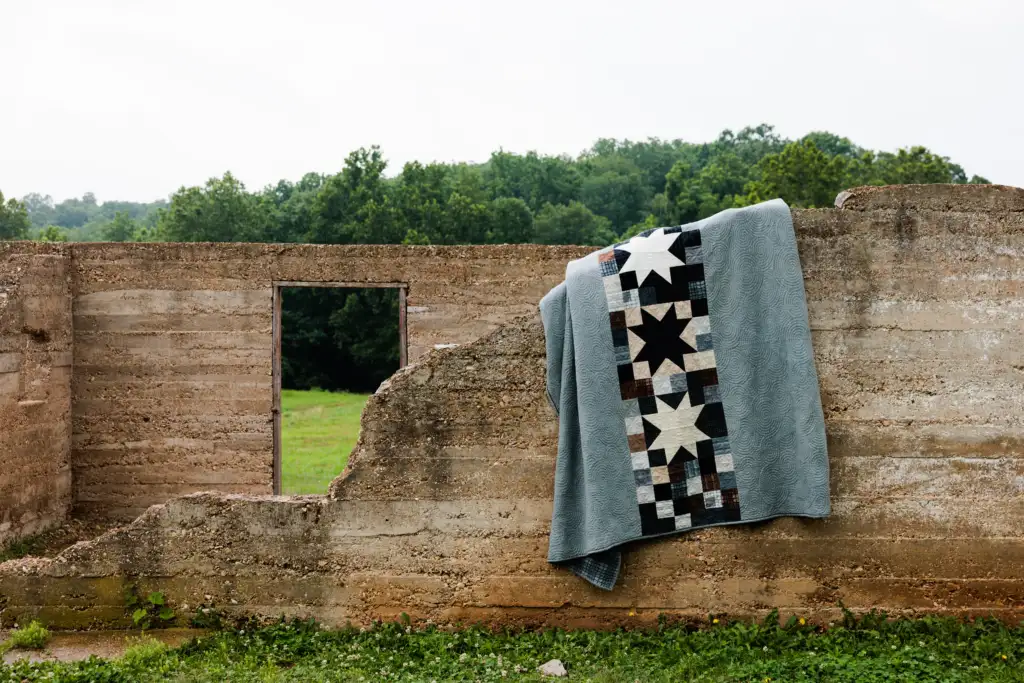
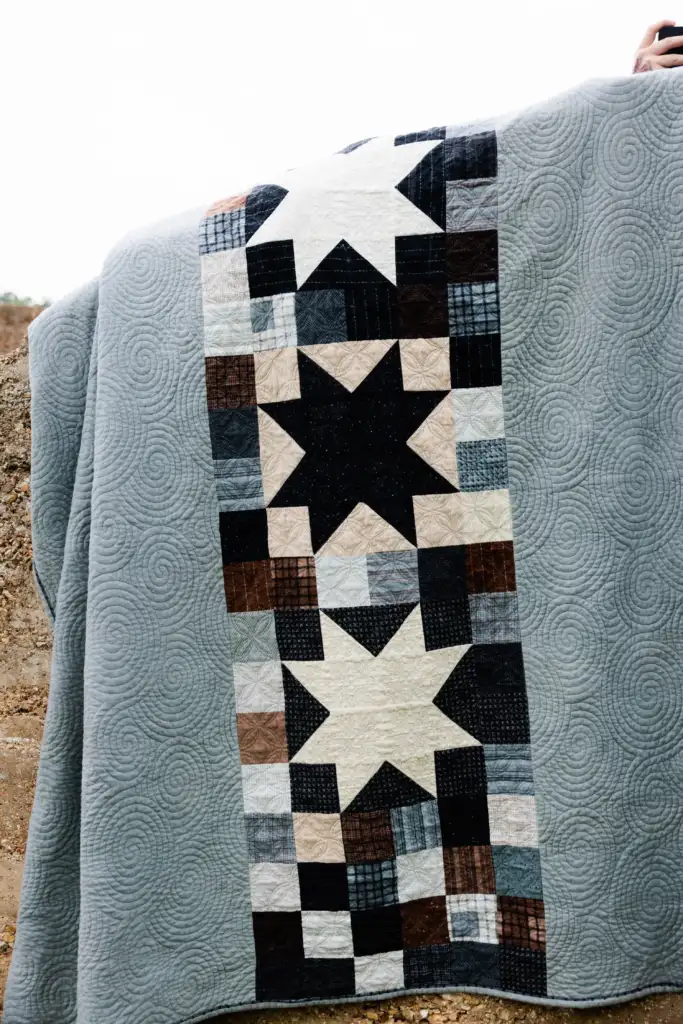
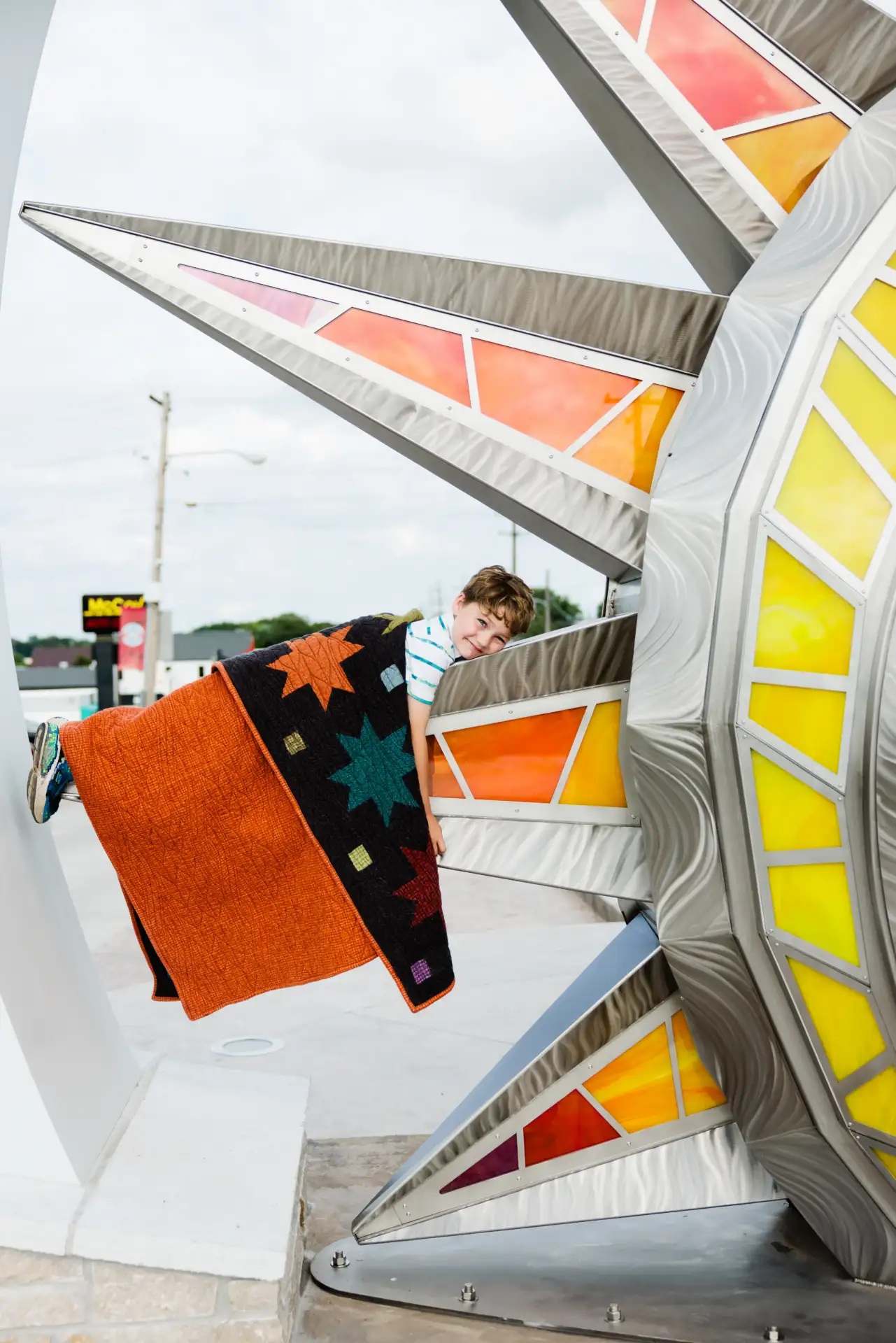
Michelle's son, Christian, with an eight-pointed Star quilt.
“They will spill the secrets of the world if we’re working next to each other,” Michelle said. “If they have to look at me—‘Fine,’ ‘Okay’—they give me one-word answers. But if we’re working next to each other, I learn all the secrets. I learn what books they’re into and what they’re upset about. My oldest will only tell me if things are wrong if we’re working together, and we try to figure out a plan—because he doesn’t want to talk about it. He wants to work out a plan. Us working together will bring that out, and I love that.”
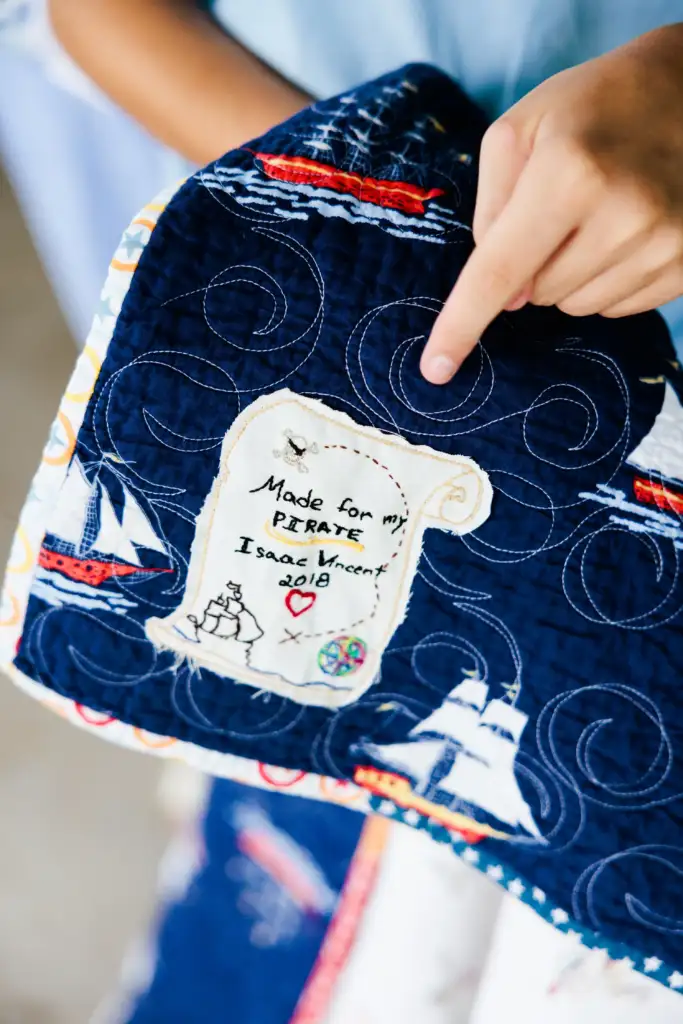
Isaac's 2018 quilt labeled "Made for my Pirate."
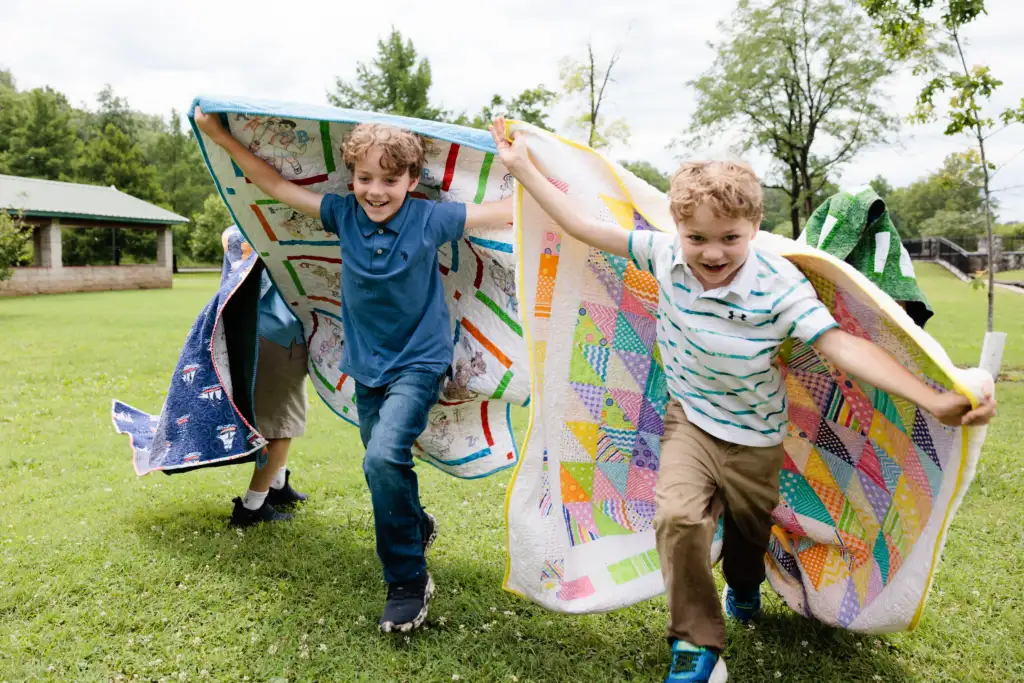
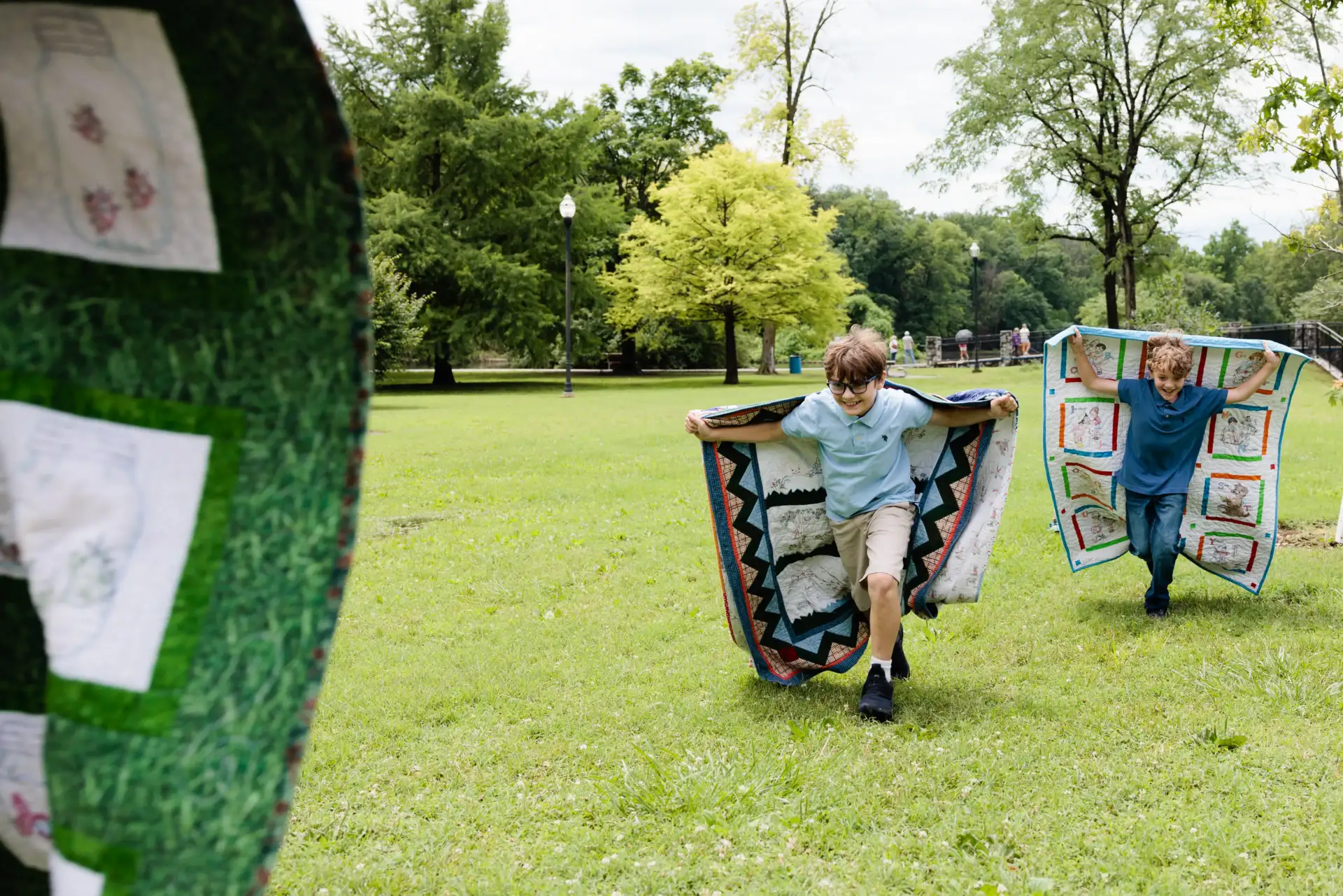
Michelle's four sons with their quilts.
Michelle traces her quilting journey to a baby quilt she helped make in the first grade. As a Girl Scouts Brownie, she and her troop made a quilt for their pregnant co-leader, a white top appliquéd with rosebuds and blue hearts for the boy on the way. The girls cut out the hearts and spray basted them while Michelle’s mother, Glenda Kruse (who can sew nearly anything), ran the piece through the machine. “We all got to be part of that joy of giving my co-leader that baby quilt, and I was like, ‘Wow, quilts are obviously the best gift ever,’” Michelle said. “That was implanted in my head at 7.”
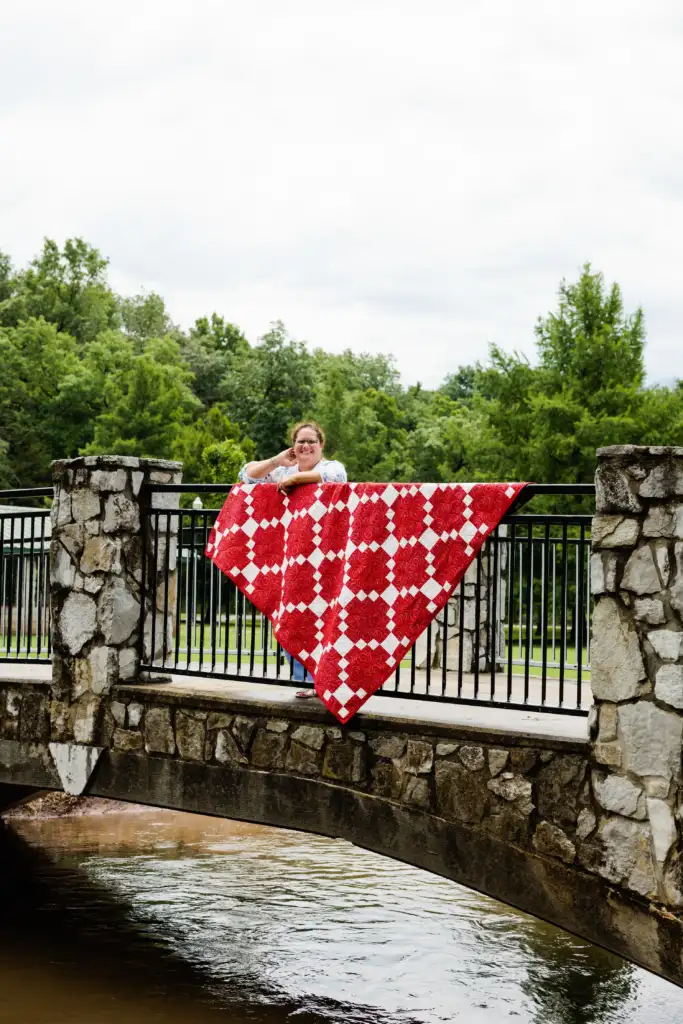
Mostly self-taught, she kept sewing through college, where she and a group of girlfriends ran their own quilting bee out of the dorm. Before quilting became her business, Michelle was an audiologist. She was recruited into the Army at the rank of Captain for her judo skills, going on to compete in the Military World Games, and she met her husband, Joseph Vincent, while the two served in Louisiana. She made an American flag quilt for him while they were dating, 16 years ago. Her husband is a physician assistant.
The American Flag quilt that Michelle made for her husband while they were dating.
Since they had four small boys at home, they decided against both parents working in a hospital during the COVID-19 pandemic. Michelle, who had been longarming since 2013, bought one for her studio and built a business from the house instead, founding Victory Quilting and Needleworks in 2020. “That’s how my family decided to deal with [the pandemic],” she said. “And then, I didn’t ever want to go back [to a hospital] because this is great.”
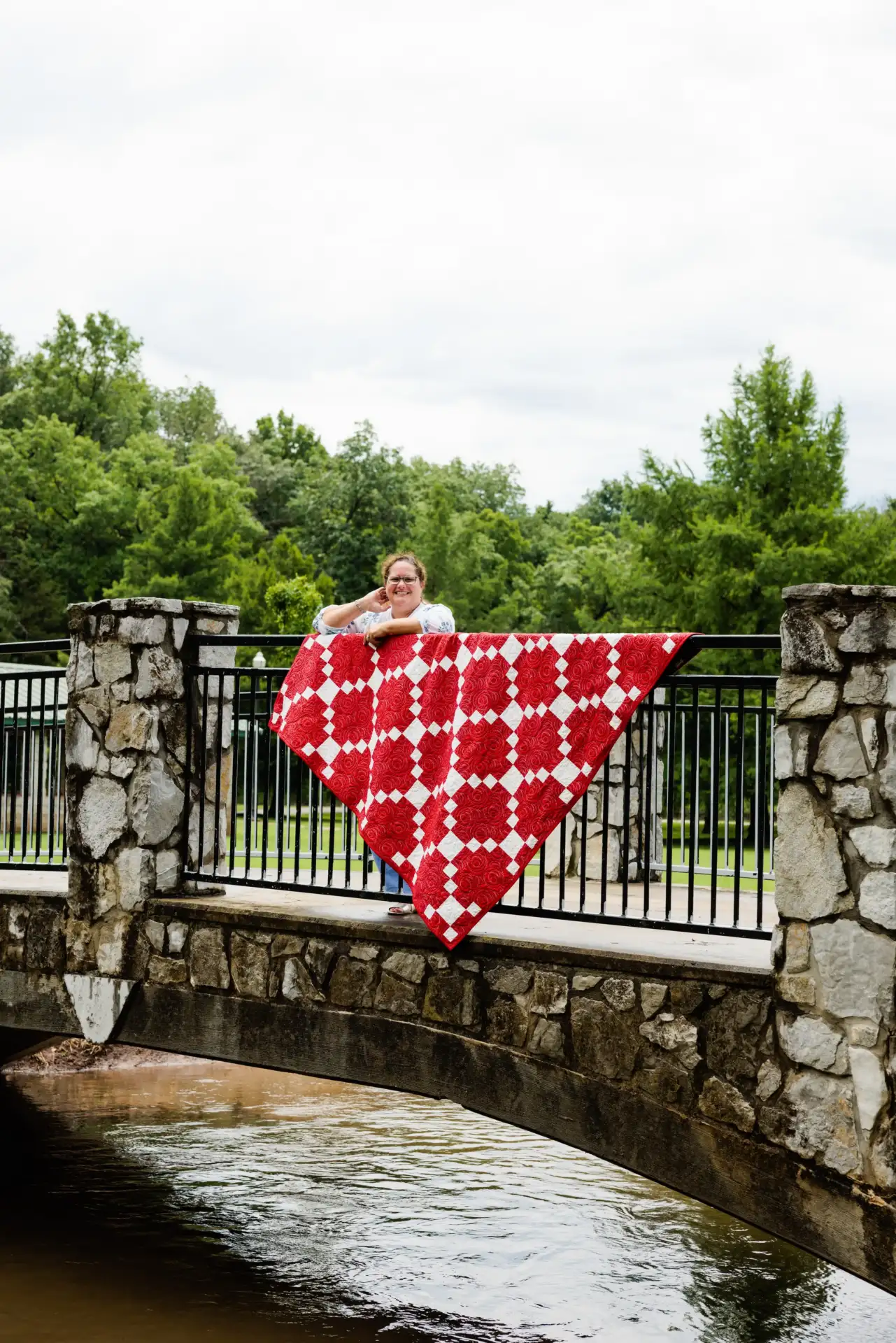
Michelle with her Irish Chain quilt.
A Gammill Statler with a 36-inch throat is her workhorse. “There should not be a quilt bigger than what I can quilt,” she said. Michelle creates quilt patterns to be pre-cut friendly. “I’m currently writing Christian’s baby quilt for pre-cuts. I am trying to design quilt patterns where you can easily take your impulse-buy 10-inch squares or jelly rolls and turn them into something that you would love,” she said, motioning to a tower of clear boxes full of precut fabrics.
A shop in nearby Branson gave her a piece of advice she hasn’t heard elsewhere. “When they design their patterns, they specifically design them to be made in four separate parts and then put together,” Michelle said. Southwest Missouri draws enough RVers and campers who sew on the road that working in sections beats sewing long rows. “They’ve advised me to write my patterns that way so that it can be done in sections and easier for campers.”
Michelle finds time for her personal projects, too, and Missouri’s natural color palette often shows up in her quilts. “Right now, Missouri is really showing off its wildflowers: periwinkle, bright yellow, purple, and neon orange. I used to tease my husband that he didn’t wear colors that occurred in nature, but since I moved to Missouri, I have learned there are neon orange flowers,” she said.
When inspiration fails to strike, she takes a gentler approach. “I have quilts for when I’m feeling creative and I want to design, and I buy a lot of quilt kits because sometimes I don’t want to think. I just want to sew,” she said. “Giving myself permission to buy a quilt kit was huge because [I used to think], ‘I should be able to do this myself. I should be able to come up with it.’ But you know what? It’s okay if I don’t. There’s nothing wrong with enjoying sewing.”
She gets her sewing done at a couple yearly retreats: a Longarm League gathering in Kansas City each fall and the Southern Belles retreat for Gammill owners in Arkansas. She gives away most of what she makes, and some of her favorite gifts are the quilts she leaves unfinished on purpose. She calls these “coloring book quilts.” For her niece, Marley (who is 13 and lives near Denver, Colorado), Michelle loaded white fabric onto her longarm and stitched Marley in the center, ringed by the things she loves: flowers, Jeeps, and more. Then, she wrapped it with a pack of Tulip fabric markers and let Marley color it in.
“Coloring book quilts are wonderful, and it’s a great gift because you’re giving them a long-distance hug and an art project,” Michelle said. Her brother sends photos of Marley bent over the quilt, coloring it just right. Michelle makes the same kind of thing to fundraise for the CASA (Court Appointed Special Advocate) network of volunteers, usually barnyard scenes with black thread outlines, and hands them to her boys when she is testing a new pattern’s scale.
“If quilting isn’t part of their childhood, it won’t be important to them as adults,” she said. “It’s just one more layer to add to the art, and it involves the kids.”
About the Author
Rebecca Bratburd joined the Quiltfolk team in 2023 and has written for the magazine and contributed to many other projects since. Learn more about Rebecca on her website and Instagram.
About the Photographer
Azuree Holloway has been photographing for Quiltfolk since 2019 and has contributed to many other projects. Check out more of her work on her website and her Instagram.