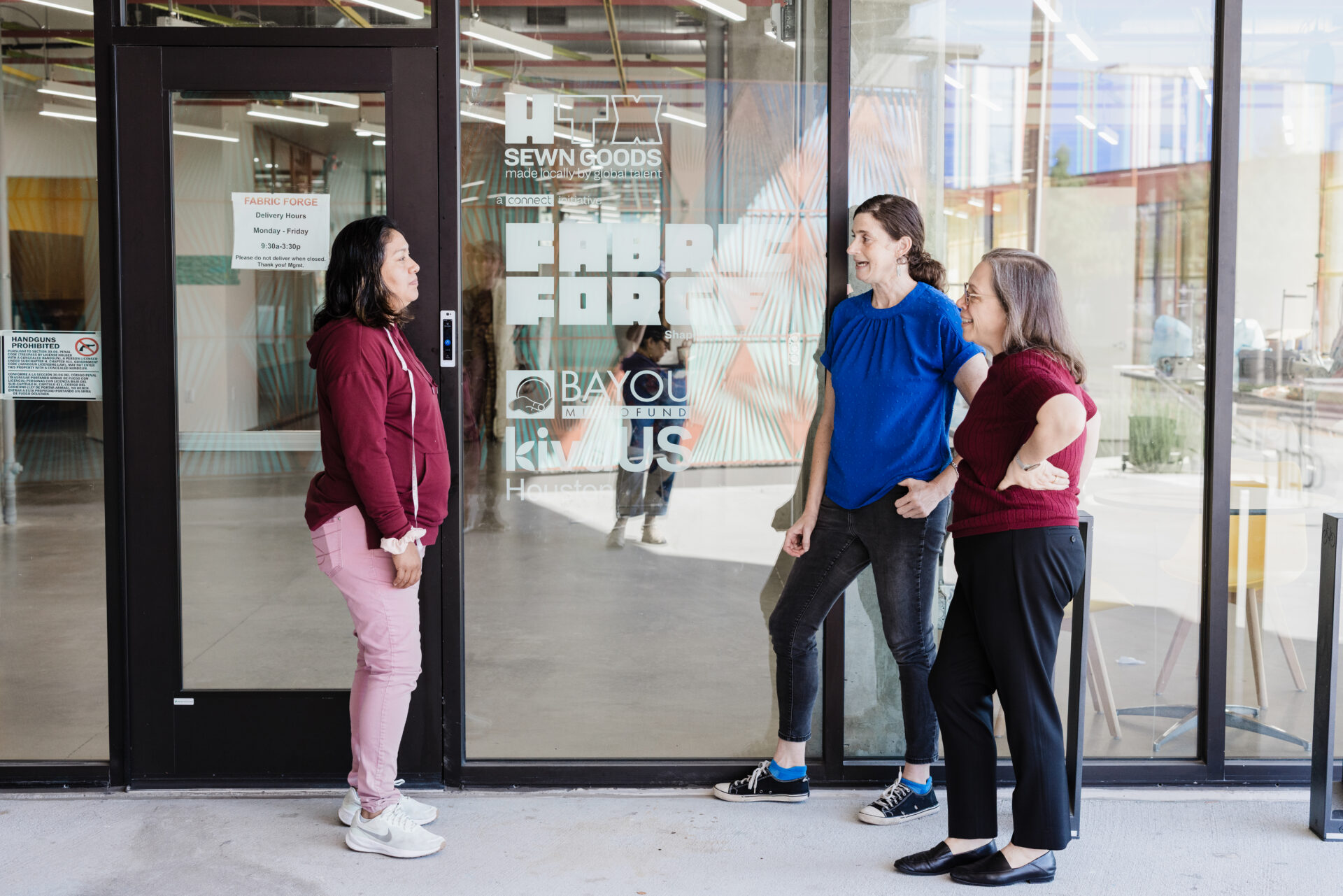
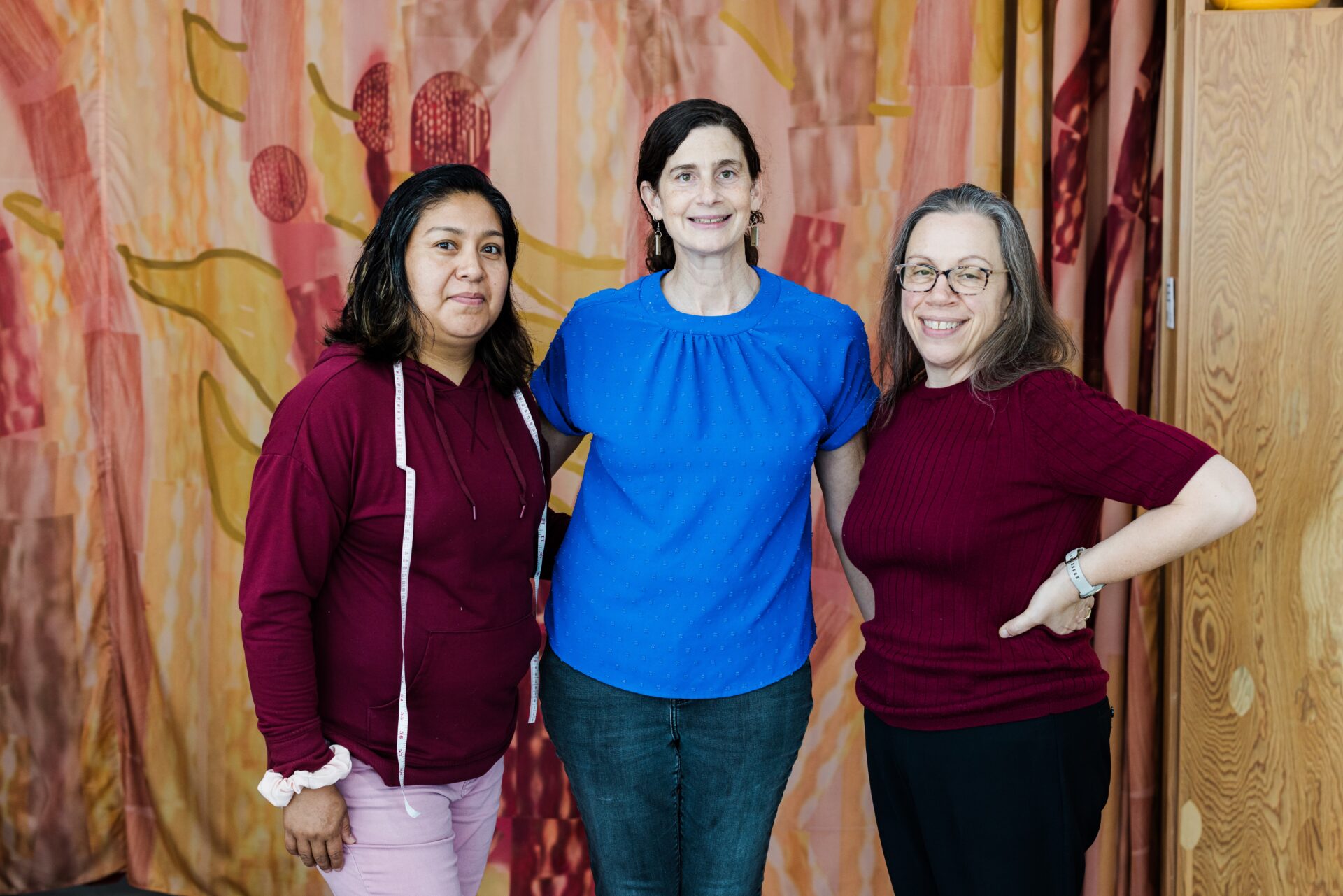
Like many ambitious sewists in 2020, Carie-Anne Simmons and Lauren Calderera got their hands dirty with masks. “We were able to sew about 75,000 cloth face masks,” said Lauren. After teaching local Houston women over Zoom the upskill into sewing—even dropping machines at their homes—and partnering with local municipalities for distribution, the team decided to pivot into white label production. With a crew of women hungry for work, many of whom were new to the country, Fabric Forge was born with a vision of teaching marketable job skills like industrial sewing, computer literacy, and English language when needed.
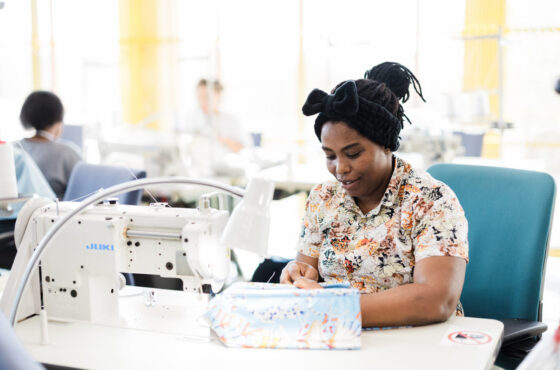
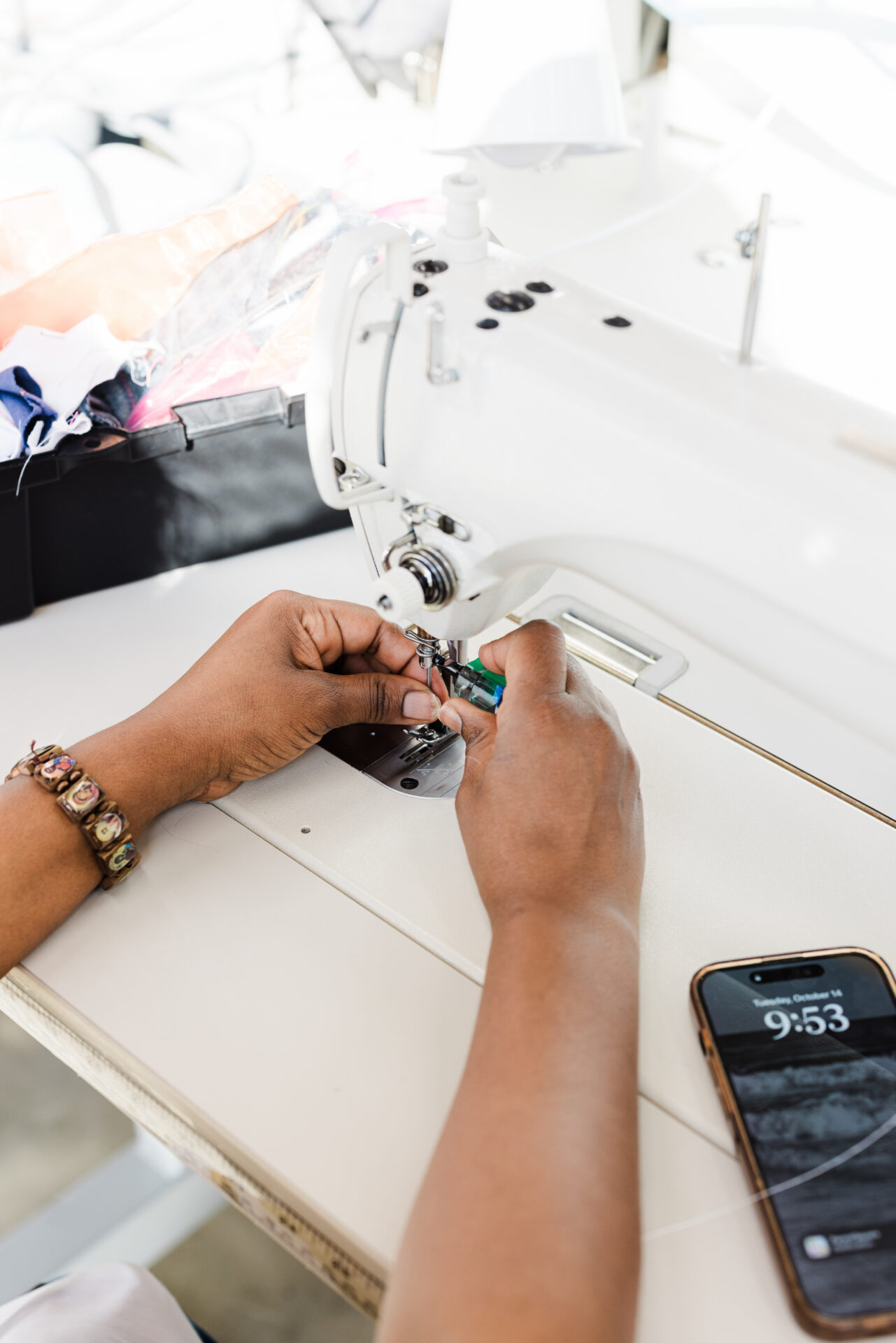
Nadine Mugisha working in the Fabric Forge studio.
Both women took on behind-the-scenes roles: Lauren is the vice president of programs and strategy, and Carie-Anne is the director of economic vitality. Both are happy to defer the sewing expertise to their students and teachers, more than thrilled that they’ve long since surpassed the early days of mask instruction. “I think it is a tremendous opportunity to put value and authority into the hands and the minds and the voices of the women that we work with,” said Carie-Anne.
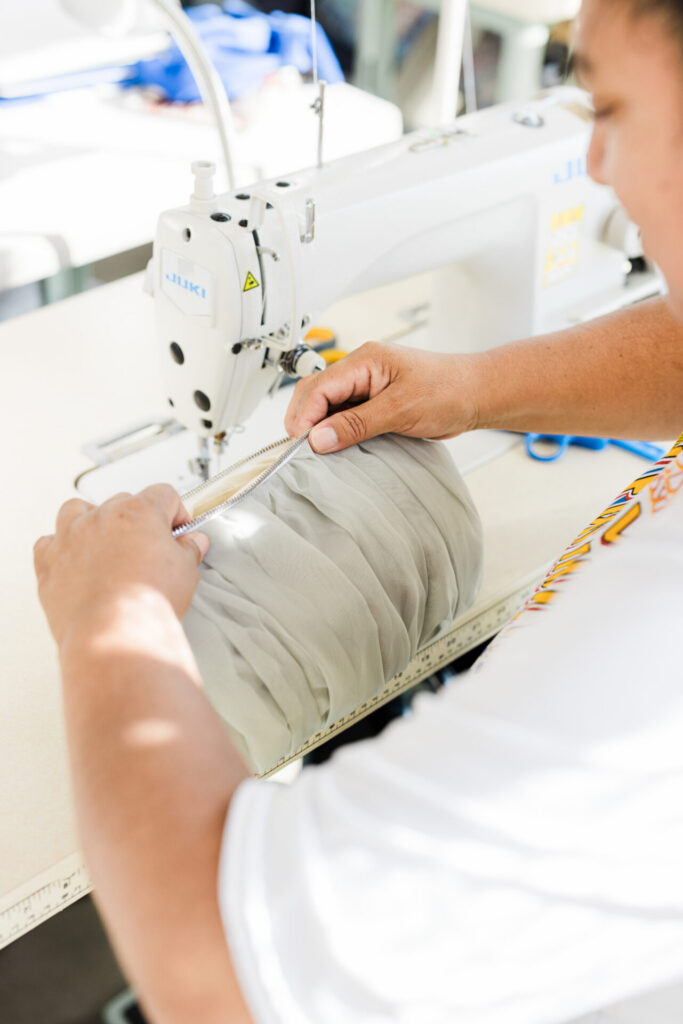
Sewist working on a product for Scenery.
“At the time, because of COVID shutdowns and the lack of movement for goods internationally, people were looking for opportunities to nearshore their production,” Lauren said. “I think we found a silver lining, in that we were able to identify supply chain issues with a few key brands and capitalize on them. That really launched our white label work.” The team thinks of the white label production work as a self-sustaining stream for the nonprofit—a “social enterprise” of sorts—where any and all capital generated from production feeds directly back into expanding the training offerings for incoming students. This has been especially critical as a nonprofit in an era where grants are evaporating and federal funding is diminishing.
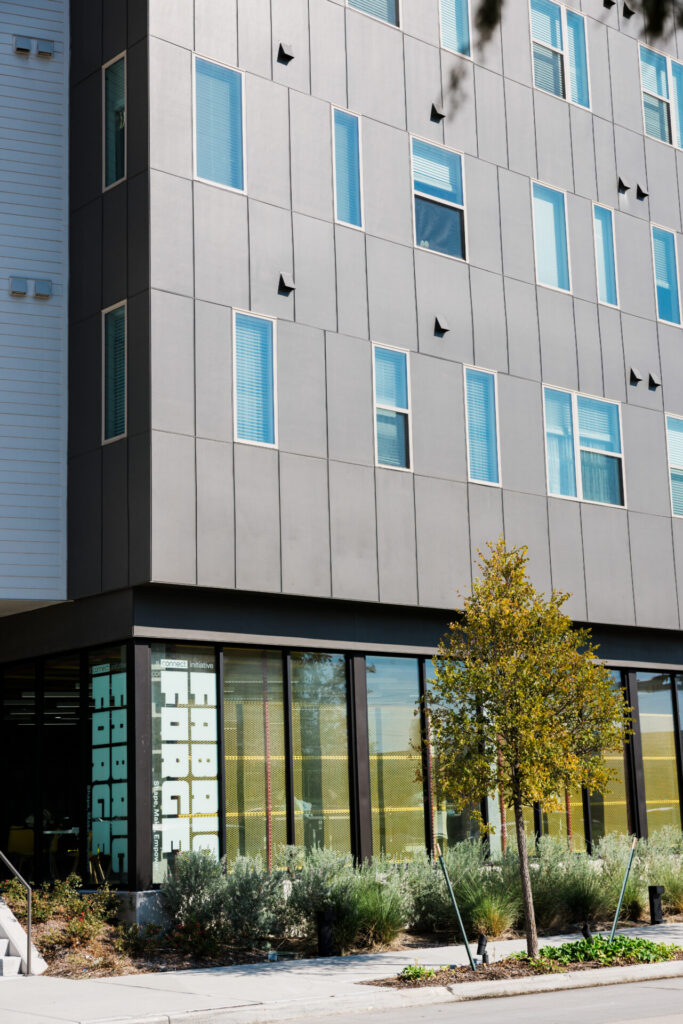
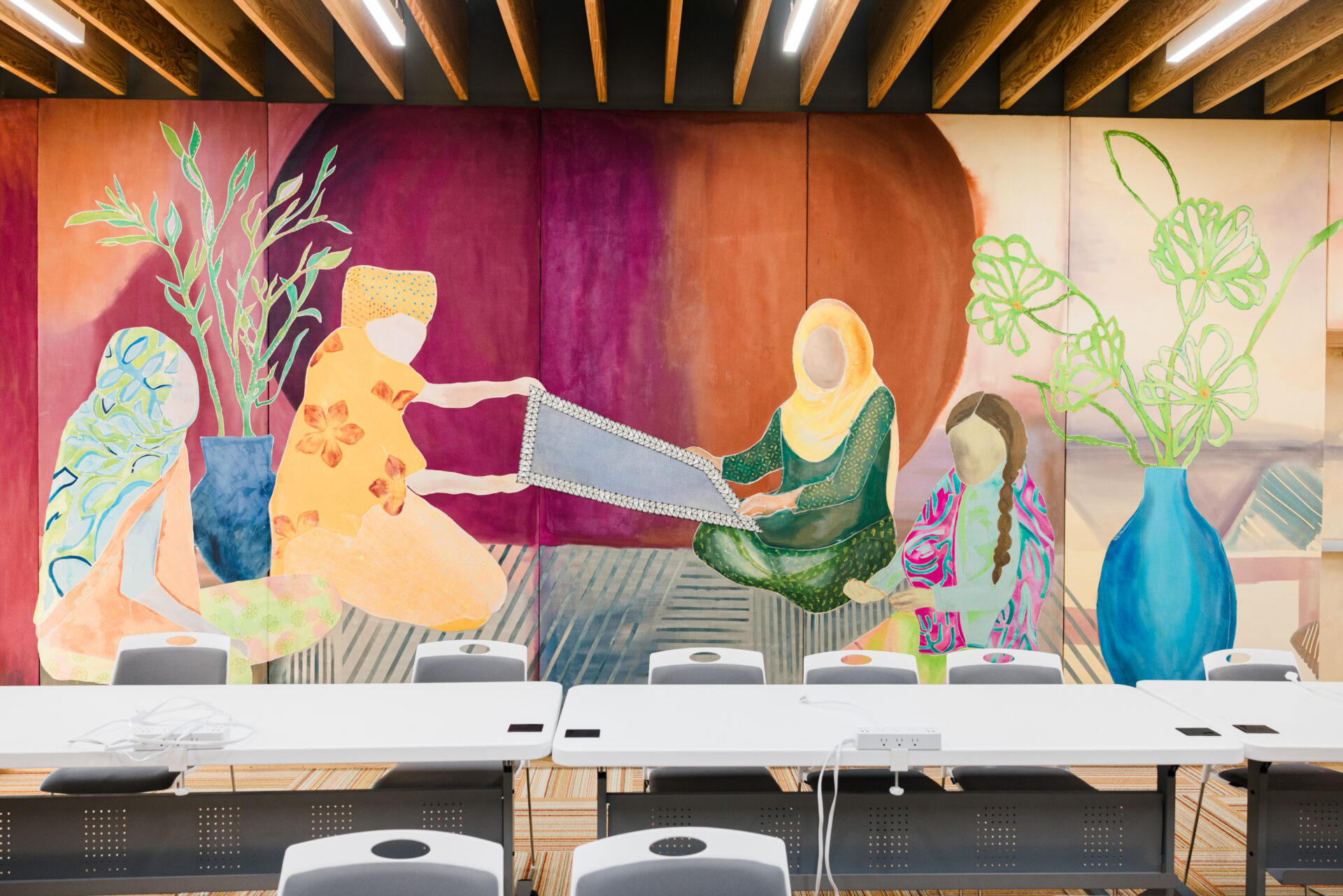
Fabric Forge’s rapid growth enabled them to move from two rooms in the basement of a local church into a 9,000-square-foot dedicated textile lab and entrepreneurship center.
Students are granted flexible schedules for training, free childcare, and the opportunity to expand their skills at the Industrial Sewing and Innovation Center in Detroit, Michigan. Some students graduate the job skills course but return as childcare specialists and teachers, while others go on to find work in their local communities.
Robaba Husseini is a former student and now one of Fabric Forge’s primary teachers—an especially exciting opportunity as she was a teacher in Afghanistan before immigrating. She teaches the industrial sewing course, which focuses on correct, safe usage of single needle, power stitch, and overlock machines. “I really enjoy teaching different people from different nations. They’re enjoying the same experience that I had as a student here. It’s amazing for me,” Robaba said.
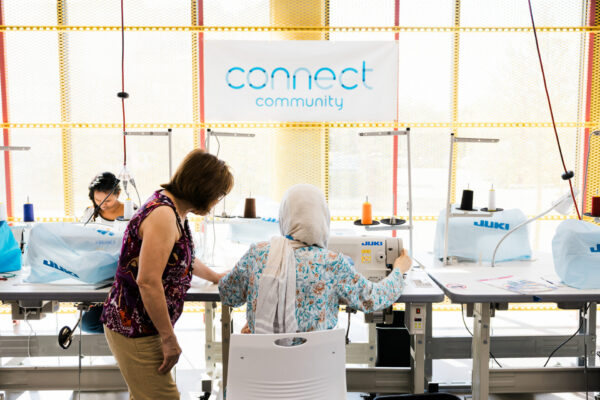
With over 20 machines, this space provides training to 42 people per year who are interested in gaining skills on single needle, serger, and cover stitch machines.
But her responsibilities don’t end there. Robaba also acts as the primary translator for many Afghani students in the program, helping them learn in English, Urdu, and Dari (a dialect of Persian spoken in Afghanistan).
Others like Robaba may have enjoyed their sewing instruction but have other ambitions. “We really see the production room, too, as a launch point into future careers, and it can help them grow in manufacturing where they want to. We’ve done training in 5S, lean manufacturing, and quality control, so that if they do continue on a manufacturing pathway, they have other transferable skills,” said Lauren.
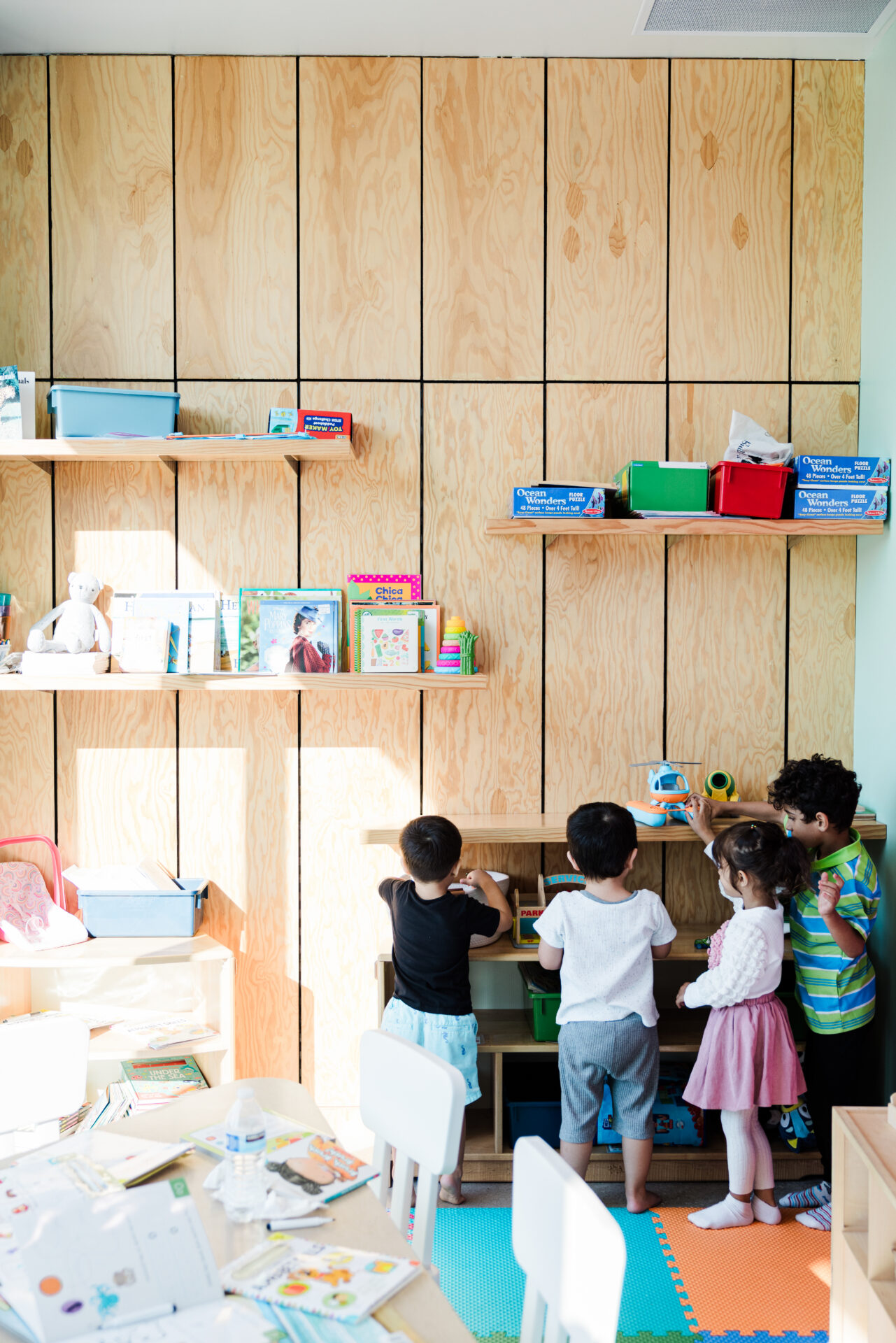
Fabric Forge participants are also encouraged to train within the free childcare program. “One of the biggest barriers for entering the workforce was that students had young kids, and the cost of childcare is so high it prohibits people from getting a job because they can’t afford to pay for it. When we were thinking about the design of Fabric Forge, we wanted to design around the barriers keeping women out of the workforce,” Lauren said.
For example, when she finishes for the day, Robaba, like many of her students, goes home to her three kids. “The best thing here is I have flexible time,” she said, noting that the ability to take her family to appointments and accommodate long school breaks is huge for the sustainability of her career.
“The more money that gets reinvested back into Houston’s neighborhoods, the more it gets invested in the lives of these women who want to earn income for their families and build wealth. This is a way for them to do it that’s flexible, and it fits within their cultural frameworks,” said Lauren.
The first new multi-family housing development built in Houston’s Gulfton/Sharpstown neighborhood since 1980. The mixed use space offers 77 units of 1,2, and 3 bedrooms with a ground floor that houses the 9,000-square-foot Fabric Forge, Textile Lab & Entrepreneurship Center.
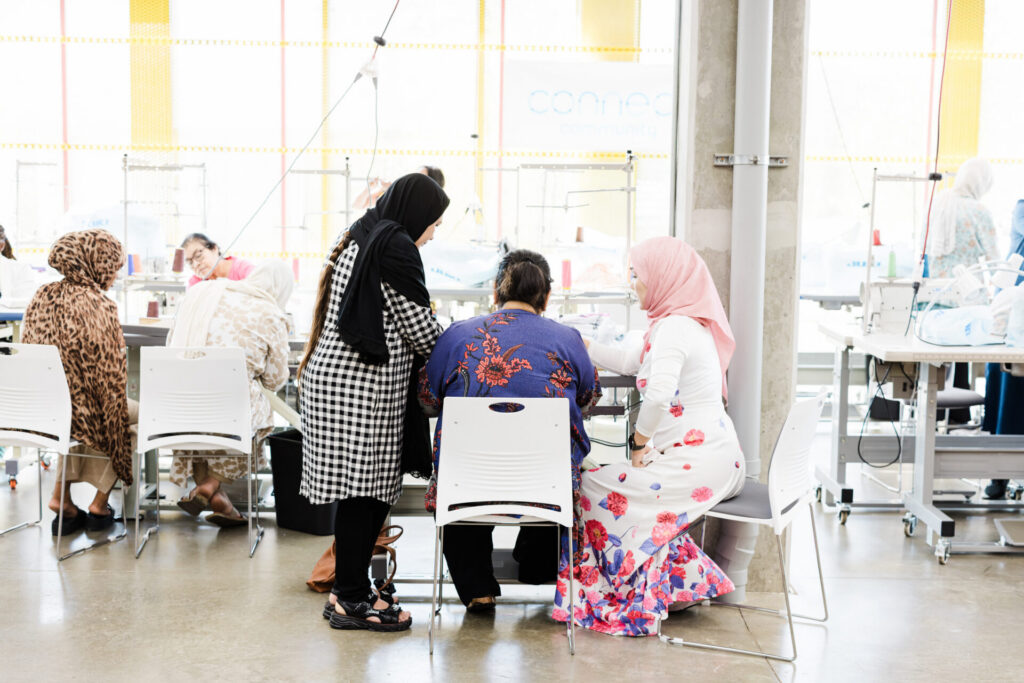
With the expanded space, Fabric Forge has grown its graduating classes from 16 women to 72 annually. Students go through a 15-week course for sewing skills and computer literacy. Classes are four days a week for two hours for industrial sewing and one day a week for digital literacy, which focuses on computer, tablet, and cash register skills. If students want to improve their English, they’re also welcome to join those sessions three days a week for one-and-a-half hours. Then, if interested, they can continue into the white label production rooms, training with others who are working on orders. Currently, Fabric Forge’s production room is staffed 100% by sewists who have graduated from the industrial sewing course.
Sewists working at Fabric Forge.
The program hopes to expand to additional shifts in the production room and to grow their summer programming for kids and teens. The summer of 2025 was the first year of week-long day camps for elementary, middle school, and high school students focused on upcycling and design thinking. “For our first year, I would almost venture to say it’s been our biggest success since we moved to our own building,” Carie-Anne said.
For Fabric Forge, the only limitation is what can be accomplished by so many helping hands, sewing in the same direction.
Mel Burke is a culture writer in the San Francisco Bay Area, where she lives with her husband and dog. When she’s not writing, she loves complaining about hiking and visiting cities with historic libraries. You can find her online everywhere as @melburkewrites.
About the Photographer
Azuree Holloway has been photographing for Quiltfolk since 2019 and has contributed to many other projects. Check out more of her work on her website and her Instagram.