Where Making Meets Mission: The DC Modern Quilt Guild
Rebecca Bratburd
Community, Guild Spotlight, Interviews
Danielle Kloke didn’t plan to become president of the DC Modern Quilt Guild (MQG)—neither did the president before her or the one before that. The guild runs on two-year term limits and a rotating board, which means leadership tends to find people rather than the other way around. “Like The Hunger Games,” Danielle said, “I volunteered scared.”
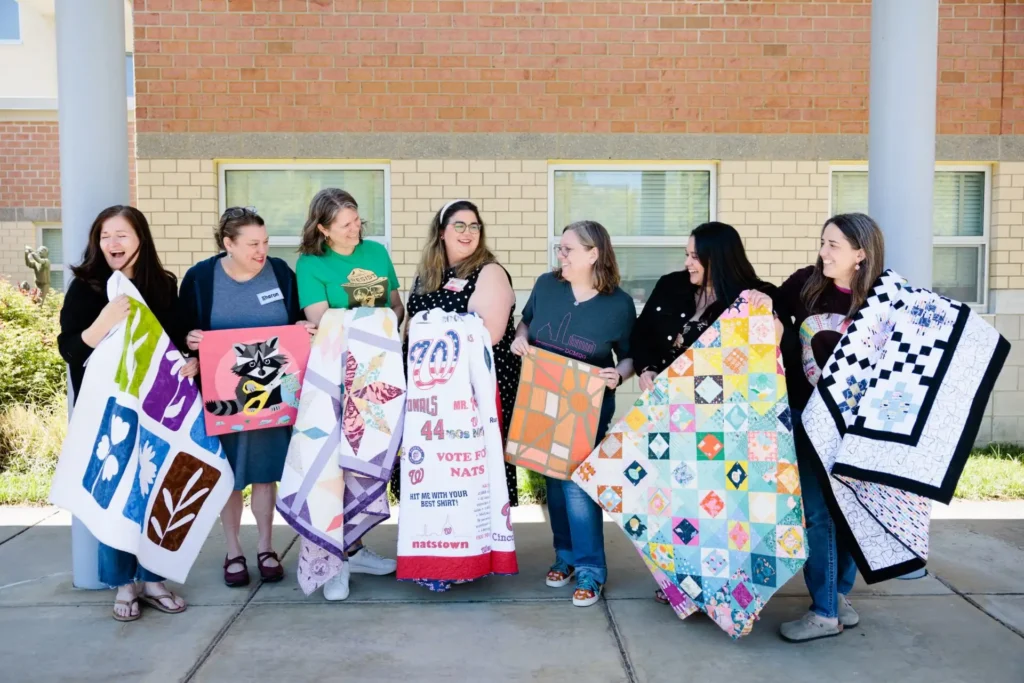
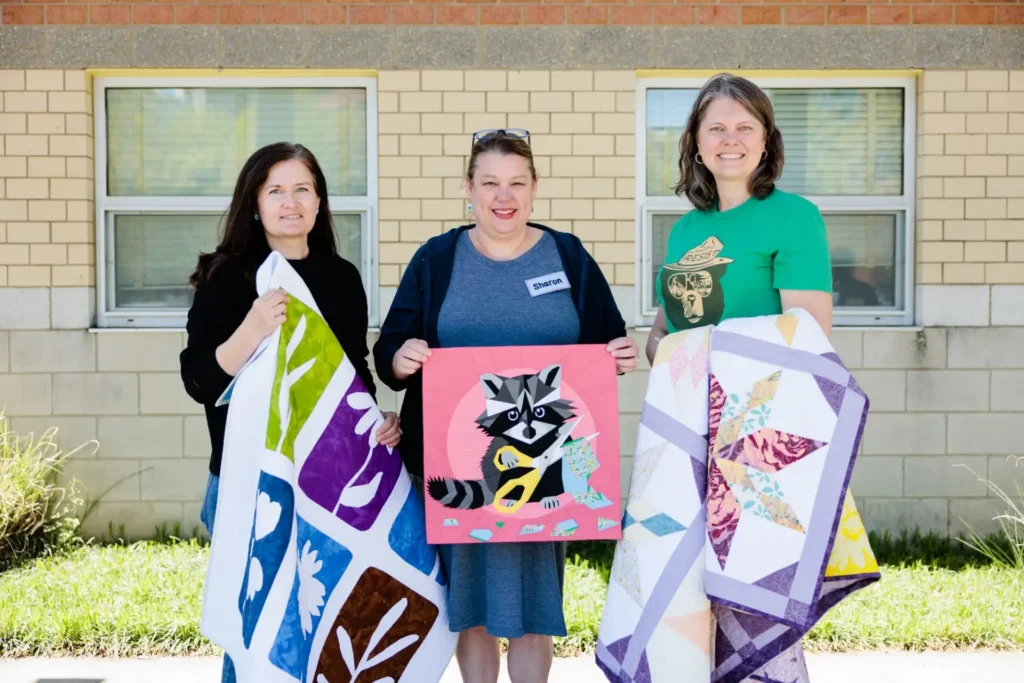
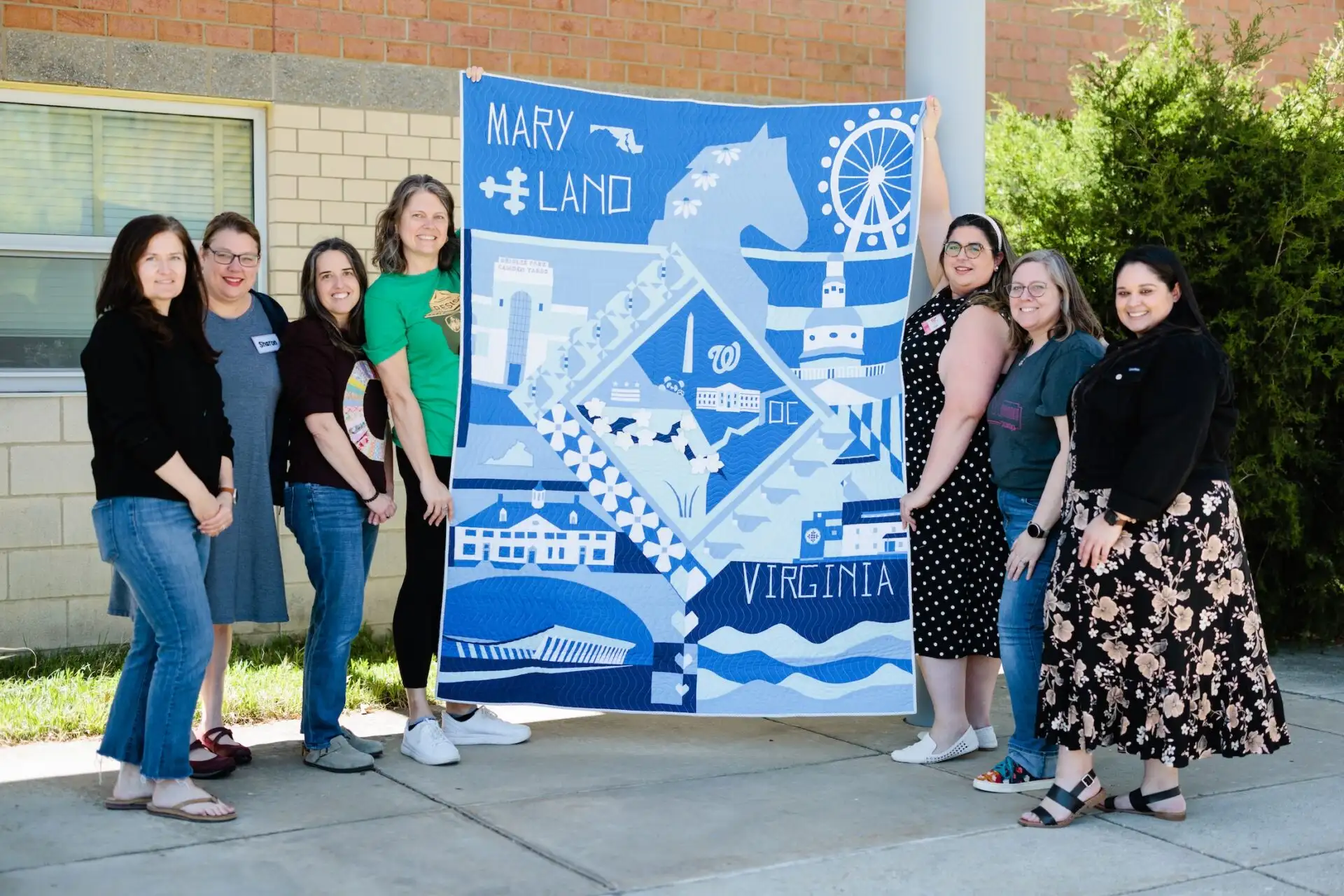
DC Modern Quilt Quilt members: (L-R) Alayna Wearly, Sharon Fay, Chandi Wagner, Danielle Kloke, Alyson Olander, Mayre Perez, and Diana Owen.
It’s a fitting model for a guild that has always operated by improvisation and goodwill. Washington, D.C. is not an easy place to organize anything in. Traffic is real, even on weekends. Space is expensive. Members are scattered across Maryland, D.C., and Northern Virginia, and getting them into the same room requires changing meeting locations, careful scheduling, and a relationship with a librarian in Hyattsville, Maryland, who helps navigate the 60-day booking window for public buildings. The guild has met in roughly 100 different venues since its founding around 2009, when a small group gathered in a coffeehouse. “People were bringing [quilts for] show-and-tell, and I thought, ‘I found my people.’ I’d heard about it online, back when communication was a lot more limited,” member Lynne Mackay-Atha said.
The guild’s leadership rotation is by design. The two-year term limit applies to every board position, which protects incoming volunteers and prevents the burnout that strands other guilds with a president who has been stuck for seven years and can’t find a replacement. When two board members hit their limits in the same year, the remaining members shuffle positions to keep the team intact.
Today, DCMQG counts 177 members. Not everyone comes to every meeting. Different people show up for different things, and the guild has built its programming around that reality. Meetings shift across the metro area so that no one is always the person making the long drive.
Virtual gatherings happen three times a year, and smaller socials fill the calendar between official meetings: potluck dinners, happy hours, museum trips, and hikes. A retreat center near Harpers Ferry, West Virginia, can house up to 15 members at a time for weekends of sewing, shared meals, and the slower kind of conversation. “I know a lot of my closest friends through this guild,” Lynne said.
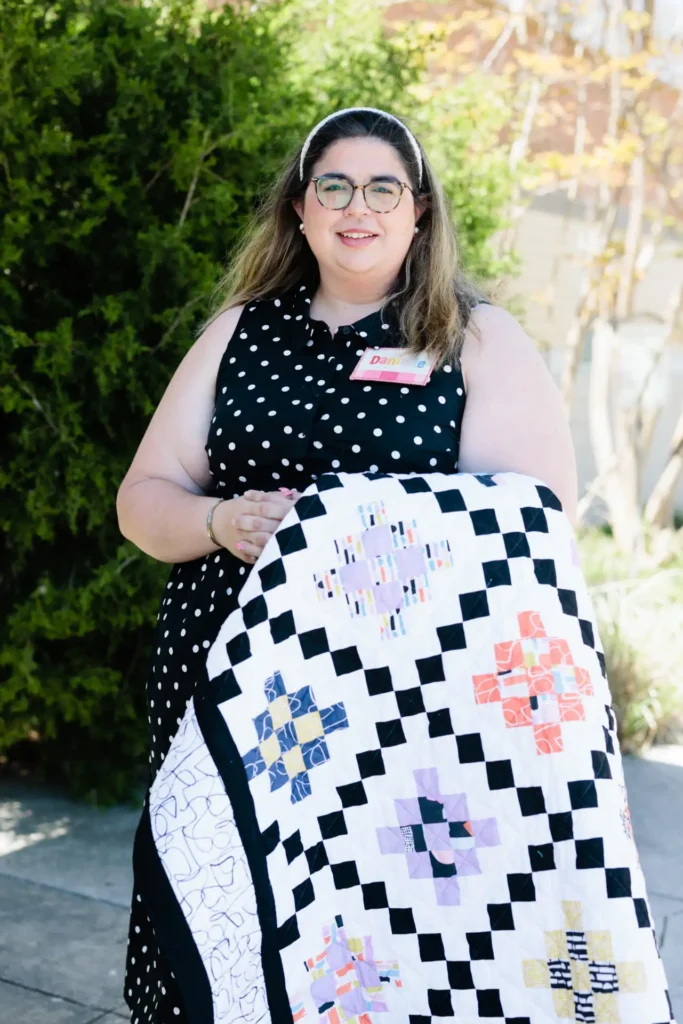
DC Modern Quilt Guild President Danielle Kloke and her Modern Irish Chain quilt.
Holding the whole operation together is The Stitch, a biweekly email newsletter with an 85 to 87 percent open rate. Newer member Jamiee Foster read it before her first meeting and arrived knowing where to park. “It removes all the barriers to entry,” she said. A Slack workspace handles the informal traffic: members looking for a specific fabric, unloading a sewing machine, or chatting about QuiltCon.
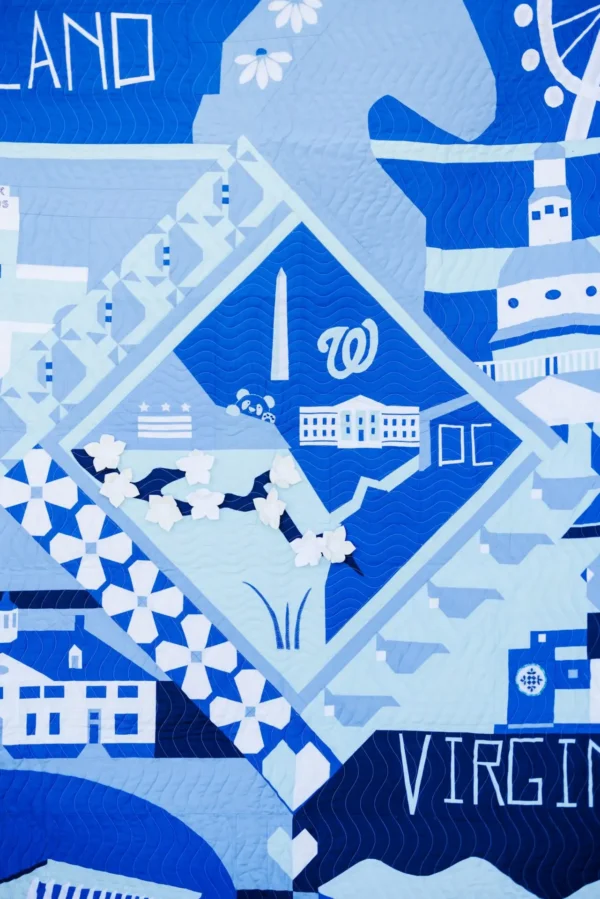
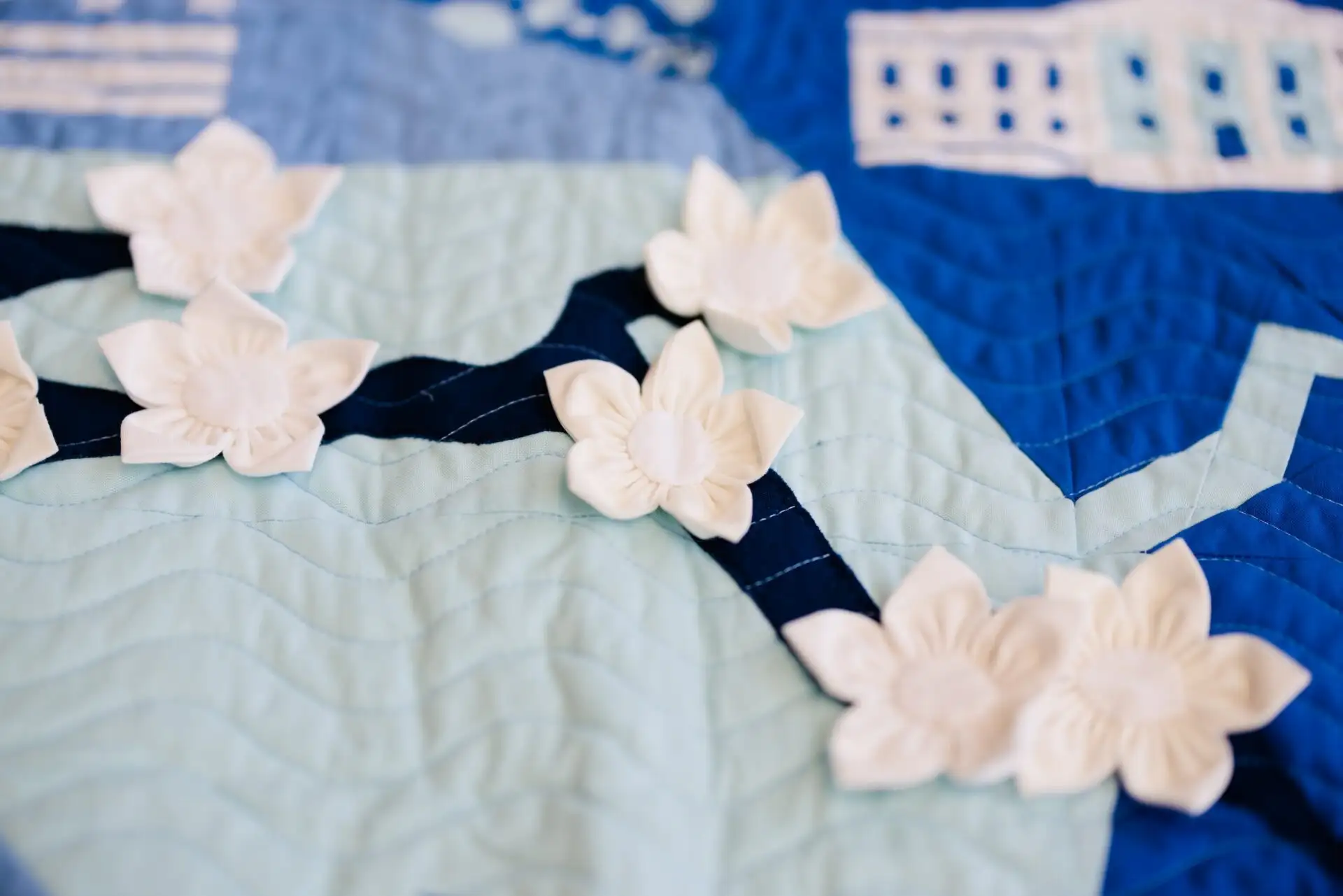
Designed by guild member Aynex Mercado, this quilt was pieced by DCMQG members and quilted by Fran Scher.
The guild draws members at every experience level and holds them with equal enthusiasm. Diana Owen brought a beginner’s baby quilt to her first meeting in 2015. The room applauded. “The show-and-tell completely hooked me,” Diana said. Danielle joined during the COVID-19 pandemic after buying a sewing machine to make masks and then spent years working through every project in Harriet Hargrave’s Quilter’s Academy.
In 2020, with the pandemic underway and the country in upheaval, member Cassandra McKee formed the guild’s social justice committee. The first project, called Wrapped in Love for Justice, produced quilts honoring social justice advocates. Later initiatives included collaborations with the Social Justice Sewing Academy and African American Quilters of Baltimore, programming that acknowledged the connections between modern quilting and traditions like Gee’s Bend.
Made by Sharon Fay.
(L-R) Alayna Wearly, Sharon Fay, and Chandi Wagner.
The guild also has ongoing charity partnerships with The Greater DC Diaper Bank, Inova Ewing Forensic Assessment and Consultation Teams, and Homes Not Borders. The work has stayed grounded in making. “It feels like social justice has just been integrated into the programming. When you marry a mission with quilting, with making something tangible, it makes it easy for people to participate,” Jamiee said.
At a recent retreat, Danielle recalled a new member arriving without having ever made a quilt and without a sewing machine. Someone was selling one, and she bought it. “Then, people just taught her: how to use a ruler, how to cut, how to read a pattern. She left with a project and a whole body of knowledge. It warmed my heart,” Danielle said.
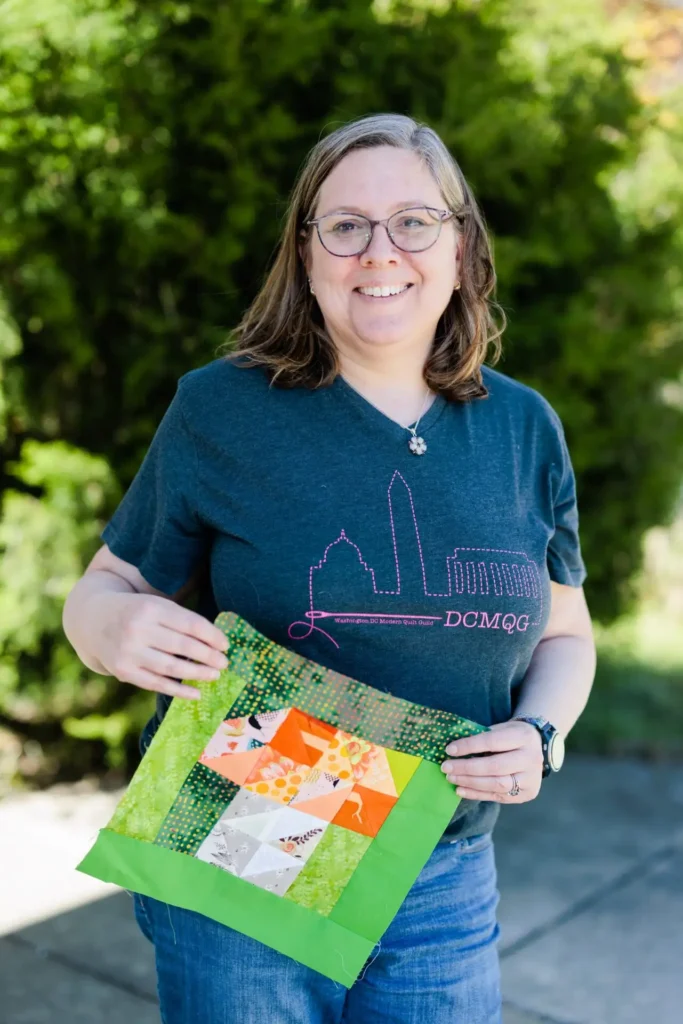
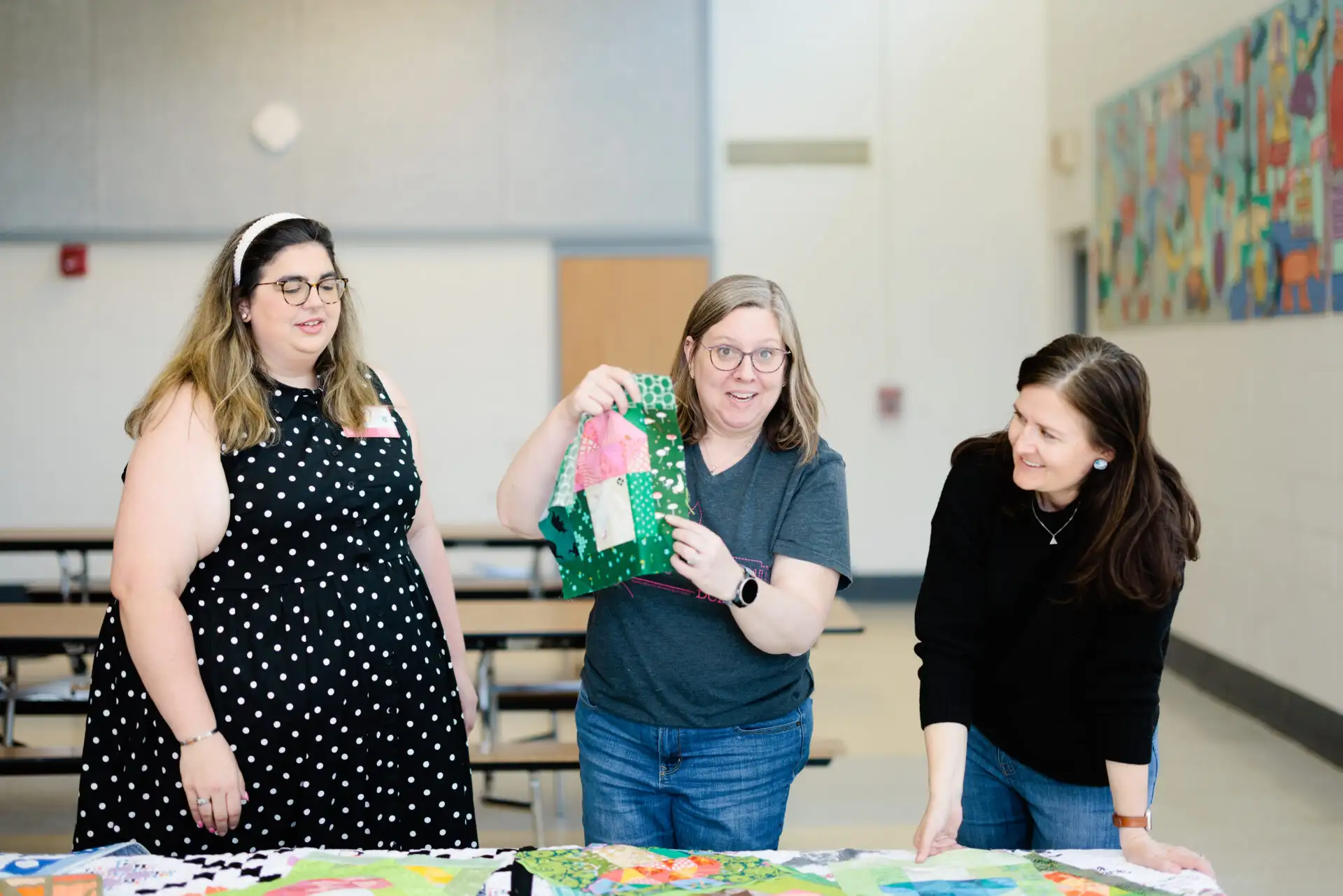
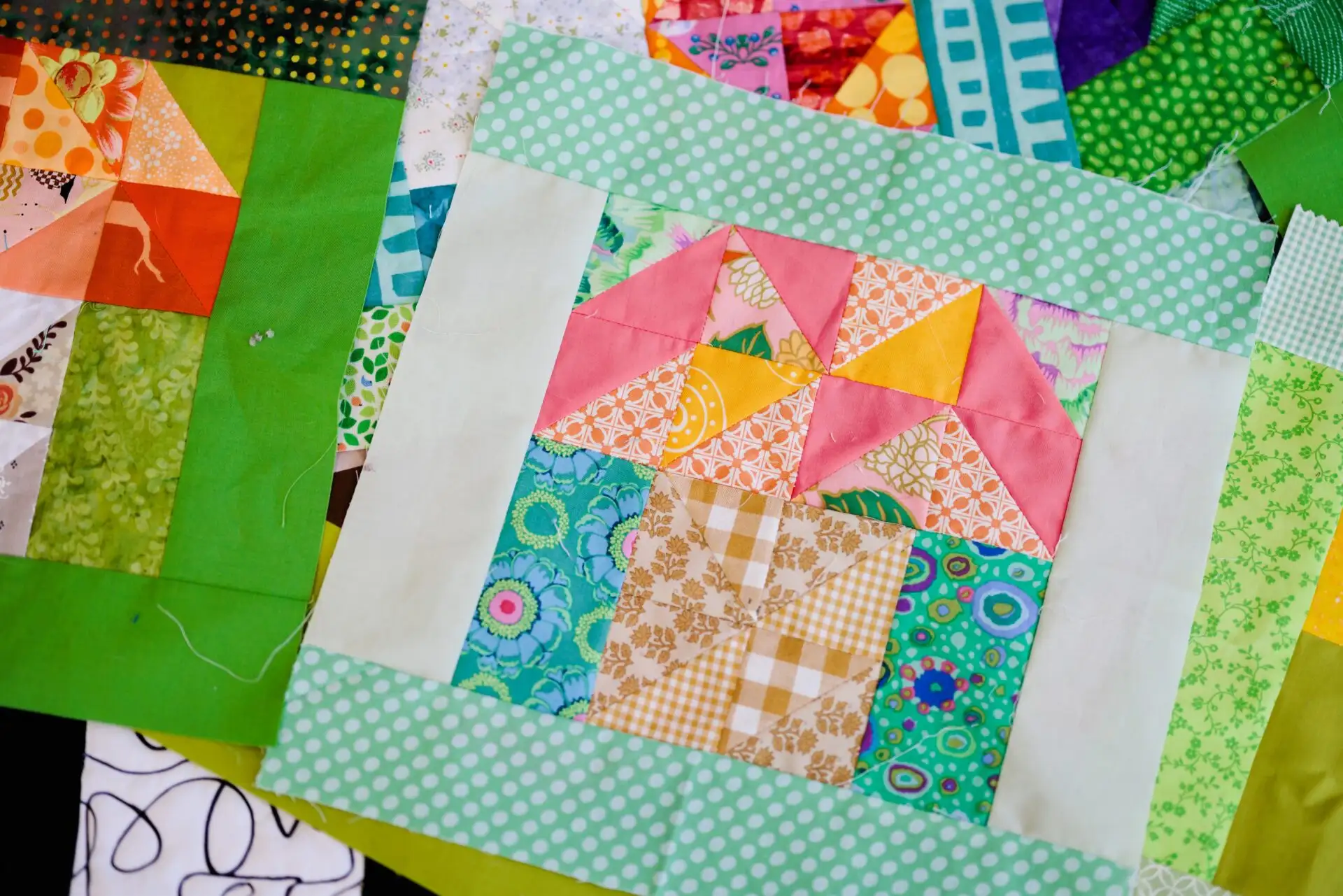
Alyson Olander holding "Scrappy Mushroom Bee Block," pattern by Cristy Stuhldreher of Love You Sew.
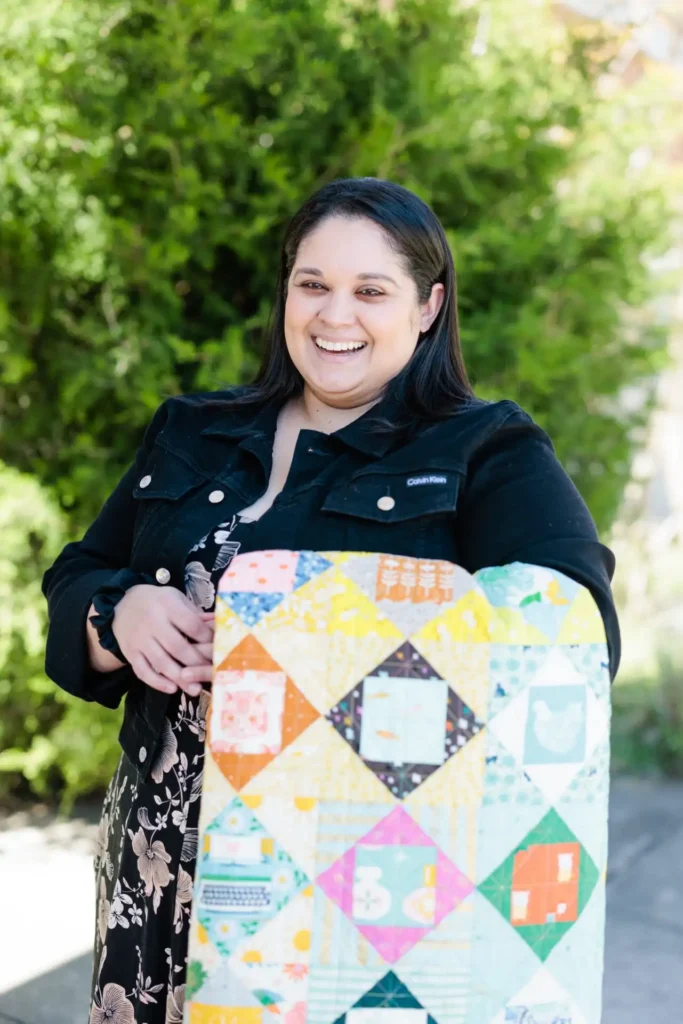
Mayre Perez with "Ruby Star Economy Block Swap Quilt."
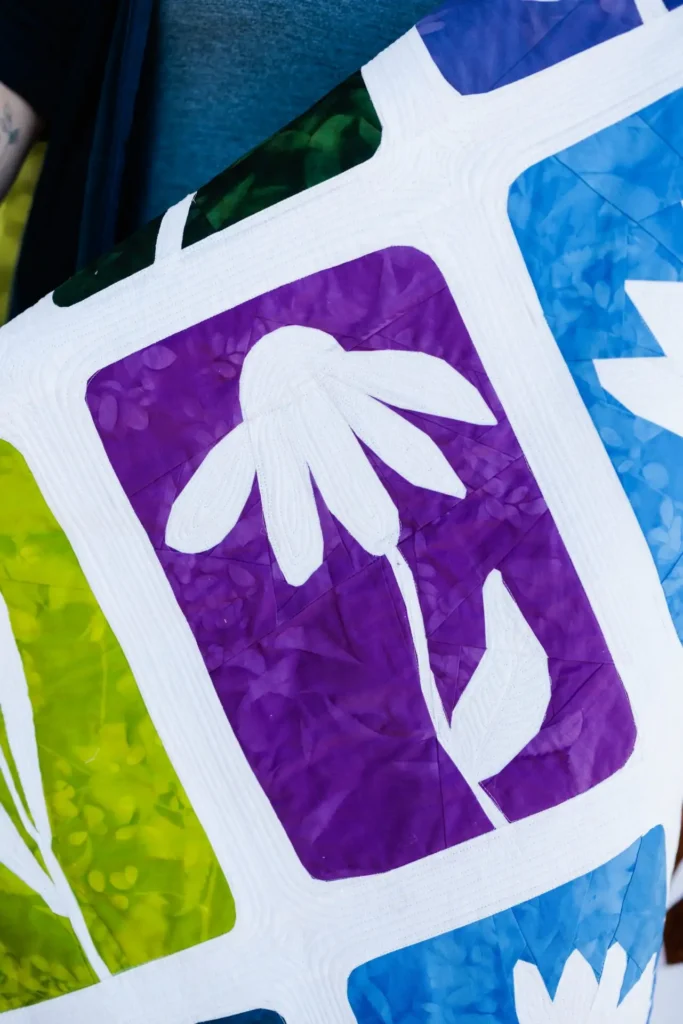
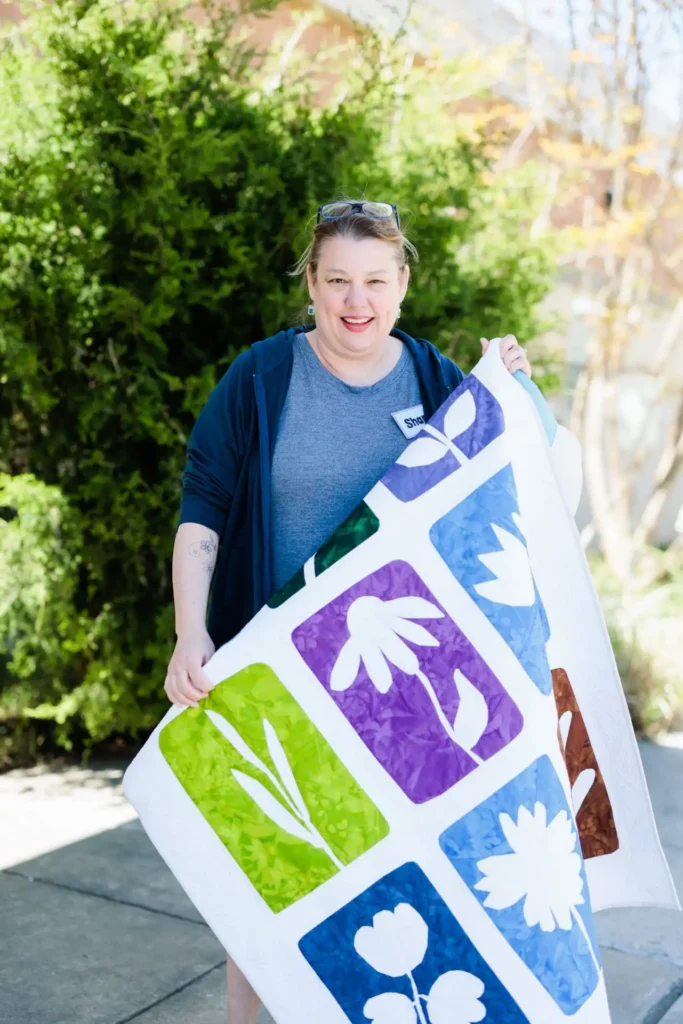
Sharon Fay with her botanical-inspired quilt.
“I’m proud of the inclusivity and the welcoming approach, all levels, all experience. You hear about the quilt police, about gatekeeping, about being dismissed in quilt shops. That’s not who we are,” Diana said. “People here are excited to see what you made. They want to share whatever knowledge they have that might make it easier for you next time. It’s that tradition of people gathering around something they love and using it to do tangible good.”
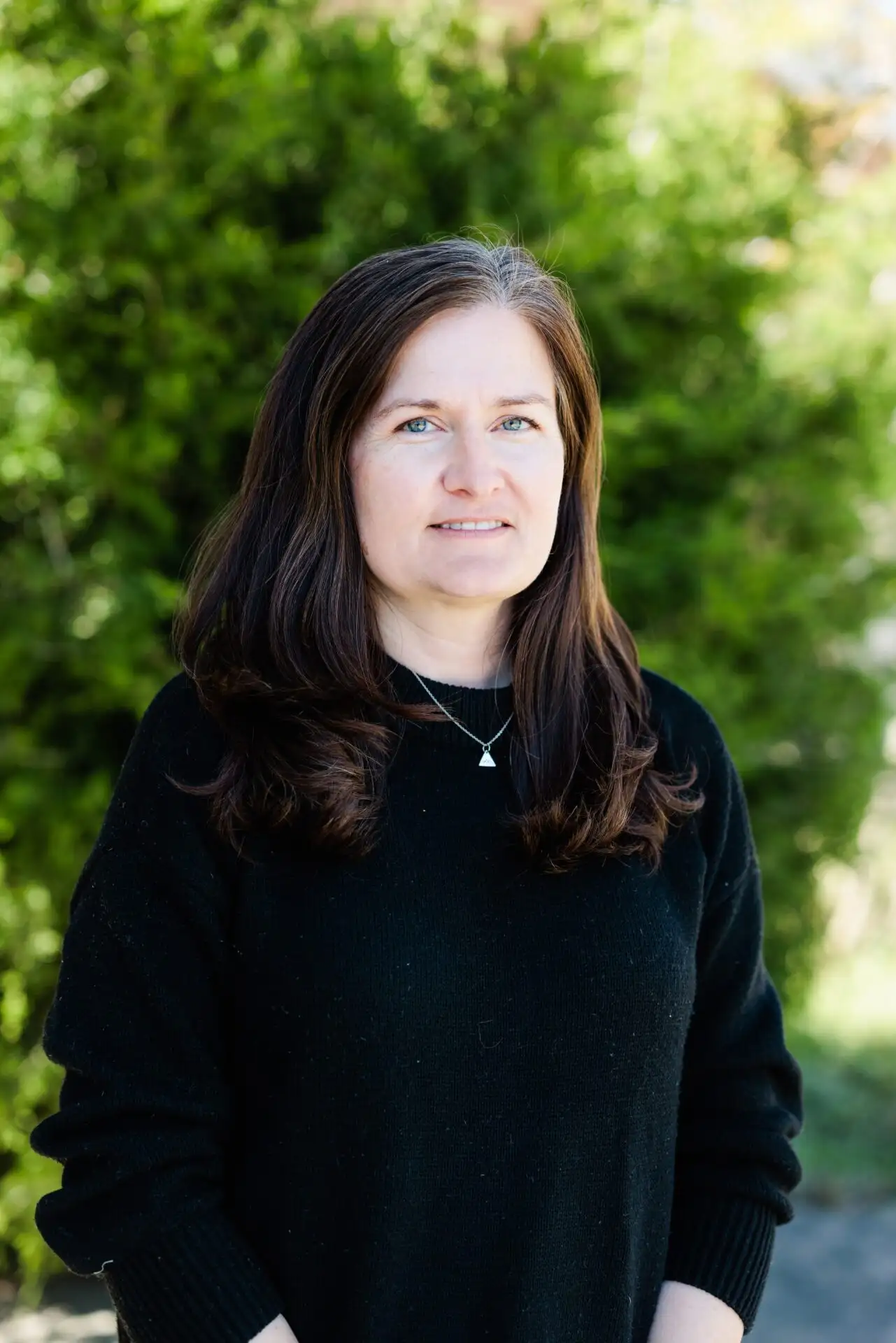
Rebecca Bratburd joined the Quiltfolk team in 2023 and has written for the magazine and contributed to many other projects since. Learn more about Rebecca on her website and Instagram.
About The Photographer
Azuree Holloway has been photographing for Quiltfolk since 2019 and has contributed to many other projects. Check out more of her work on her website and her Instagram.
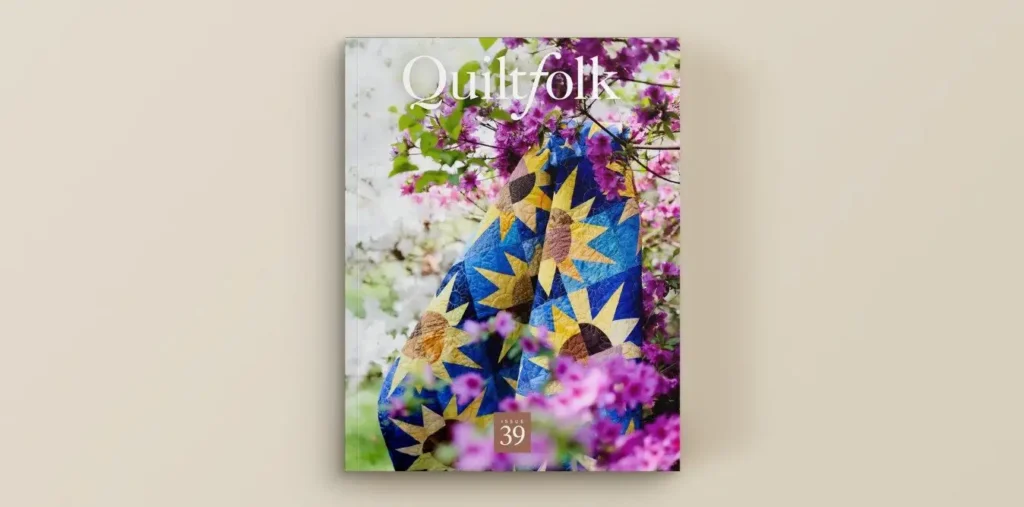
Read more stories from Washington, D.C. quilters in Issue 39.