Cassandra McKee had long been grappling with how to connect her two lives: the one she spent as a grassroots organizer, campaigner, and grant maker, and the one she spent at her sewing machine. It culminated at a leadership retreat in California, with every participant standing before the room to declare a personal vision. “I wanted those two things to feel more connected. I didn’t know it was in me, until it was,” the Washington, D.C.-based quilter said.
The idea was Wrapped in Love for Justice, a healing justice project honoring the unsung labor of organizers and leaders, who are mostly women and women of color. Cassandra flew home from California as the COVID-19 pandemic was beginning. Then, George Floyd was murdered, and quilting guilds across the country began having conversations about racism and racial justice, many for the first time. Cassandra, a member of the DC Modern Quilt Guild (MQG), saw an opening. “It’s so important that there be an action component,” she said, “that we don’t just give lip service to justice but actually have a way to move it forward.”
She led an effort to overhaul the guild’s bylaws, adding an inclusion statement and a social justice committee. Now, the guild has an explicit commitment to racial justice in its governing documents. In January 2021, clarity arrived for Cassandra during a yoga session: she would lead the new committee, and Wrapped in Love for Justice would be its first project.
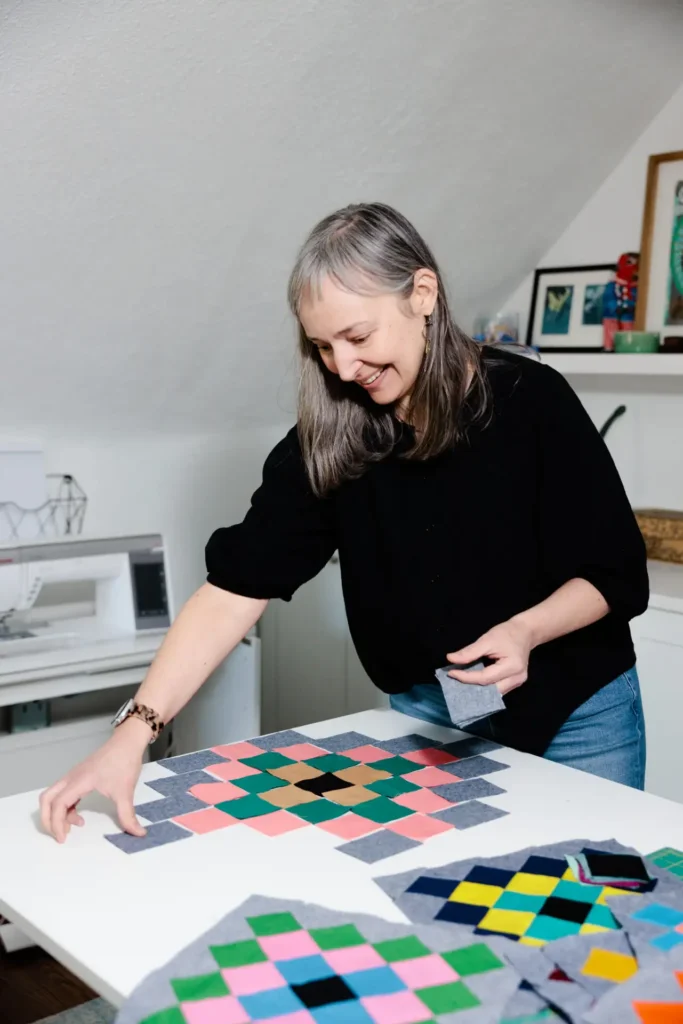
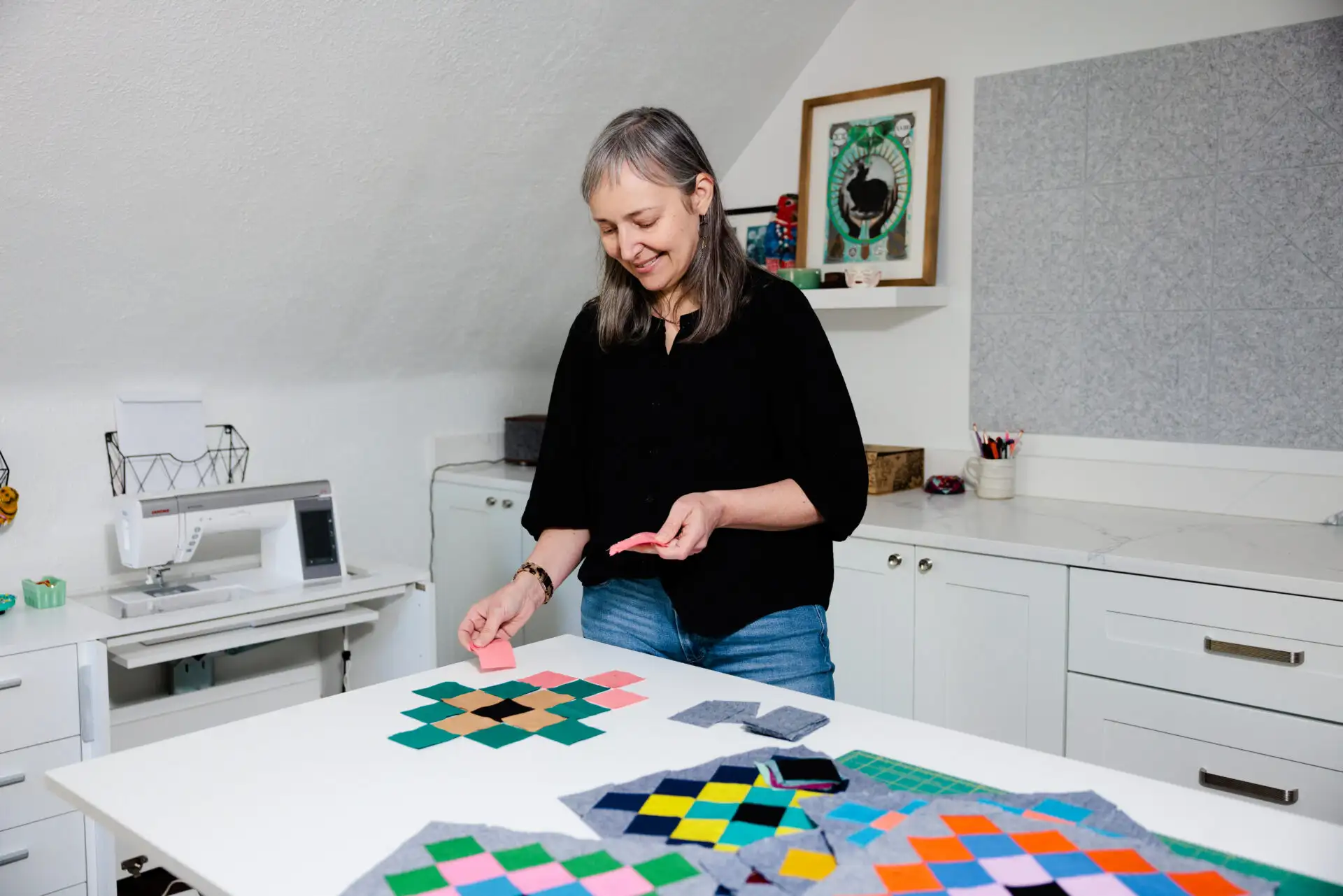
Cassandra McKee in her studio piecing together some Granny Square blocks from her bin of solid fabric scraps.
The first quilt went to Dolores Huerta, known for co-founding United Farm Workers (UFW) union with Cesar Chavez. A friend of Cassandra’s knew Dolores personally and mentioned her 91st birthday was approaching. Guild member Aarti Ravi designed a quilt personalized with symbols of UFW, including the rallying cry coined by Dolores, “Sí, se puede.” (Commonly translated as “Yes, it can be done” or “Yes, you can.”) They mailed it off and received word that Dolores appreciated it.
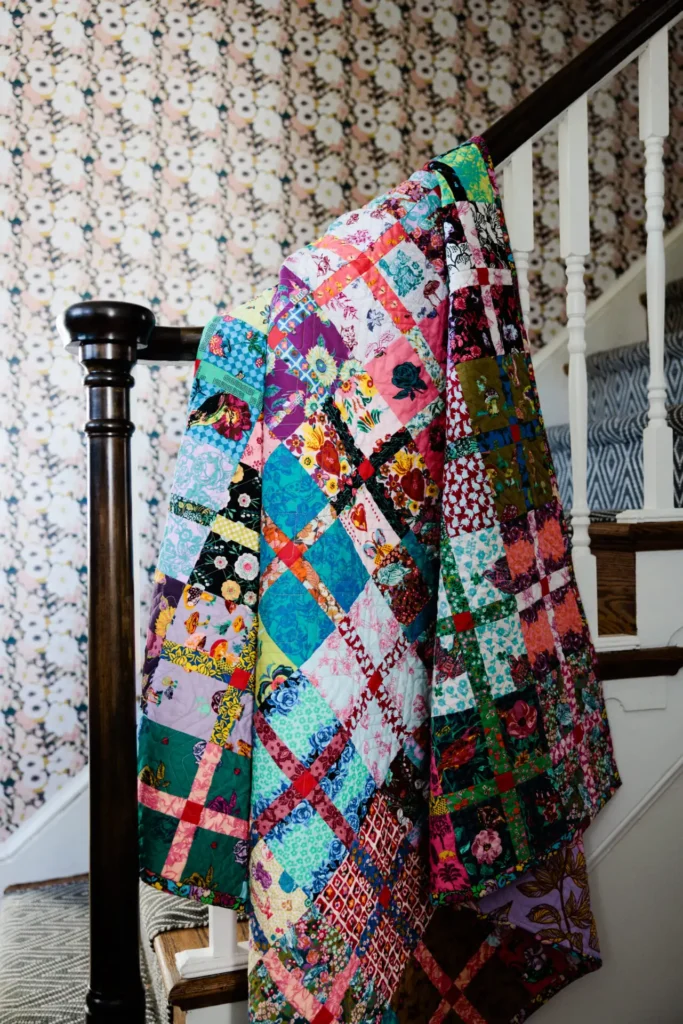
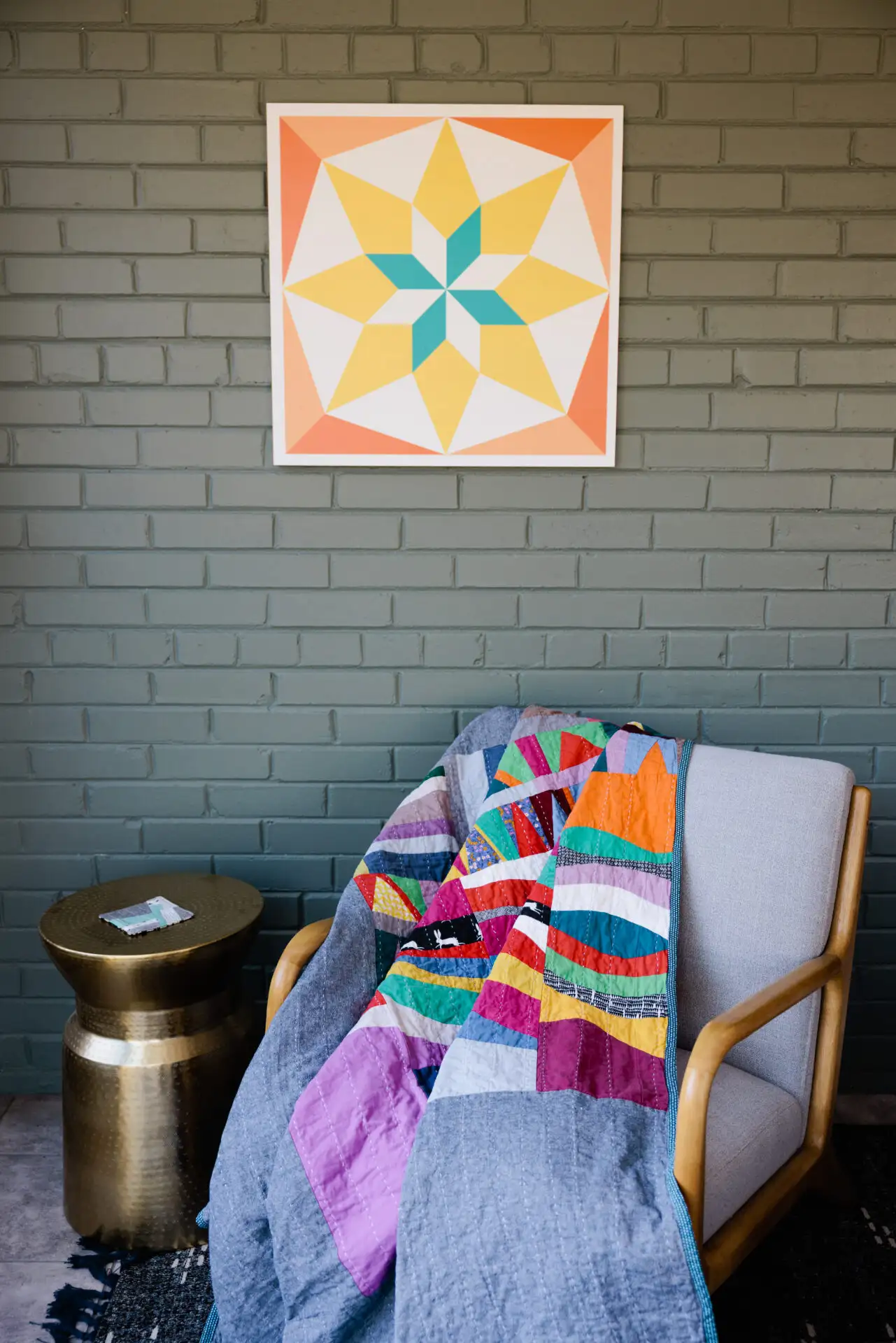
This 2025 quilt contains fabrics designed by Nathalie Lete. Made by Cassandra, quilted by Cindy Luby.
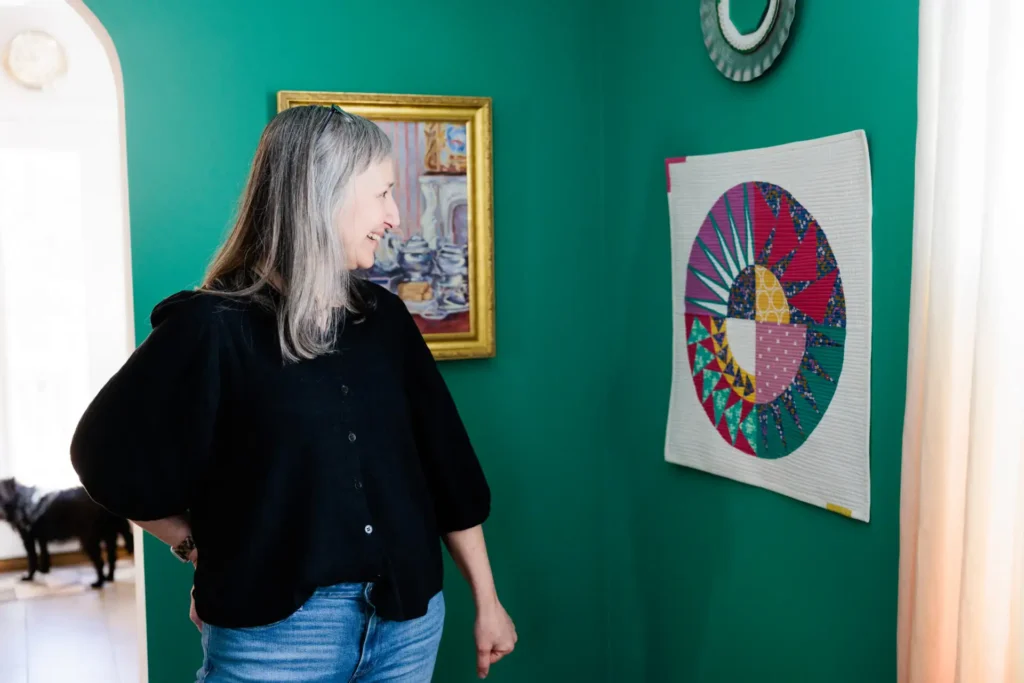
Cassandra by her quilt "Joy" (2019), which uses her design made from New York Beauty blocks using paper piecing templates created by Sarah Bond.
Subsequent quilts went to Heather Booth, founder of Jane, the underground abortion network. Hand embroidery, colors, and images symbolized and honored her life’s work advancing civil, gender, racial, and economic justice. Another quilt went to the founders of Harriet’s Wildest Dreams, a Black-led abolitionist community defense hub. It featured a portrait of Harriet Tubman, their namesake, on a background of denim log cabins. The quilt honoring SaVanna Wanzer, a trans activist and health educator, combined rainbow blocks inspired by the trans justice flag. A quilt with colorful butterflies went to M. Felix Macaraeg, symbolizing “the beauty of migration [and made] in honor of their work for immigrant justice in D.C.,” Cassandra said, adding, “It felt personal, too.” She had worked alongside M. Felix years earlier at a national organizing group.
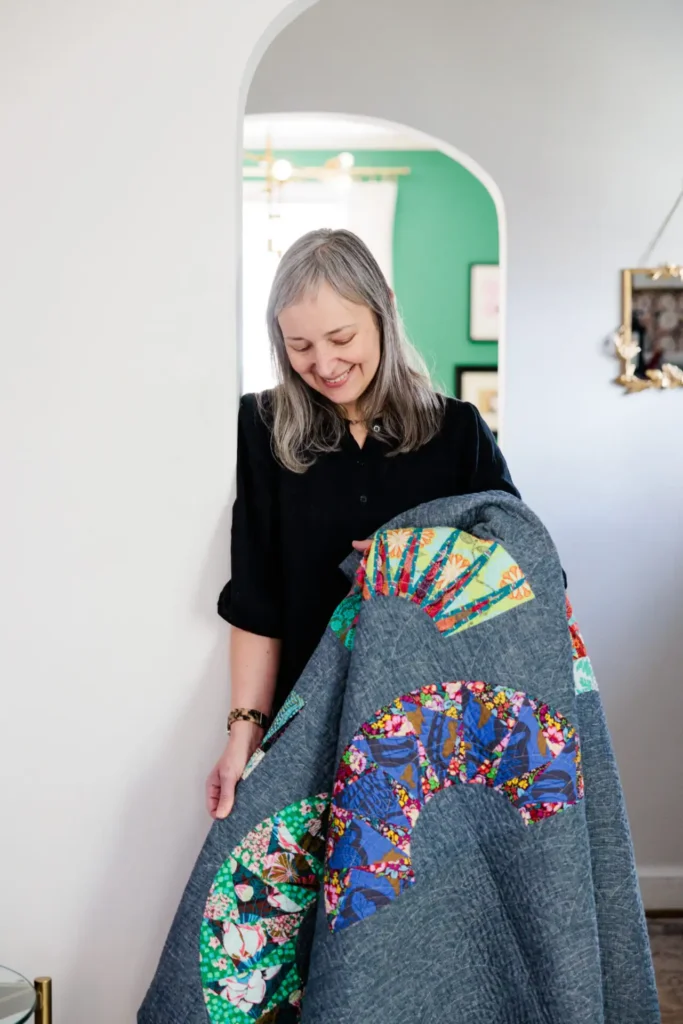
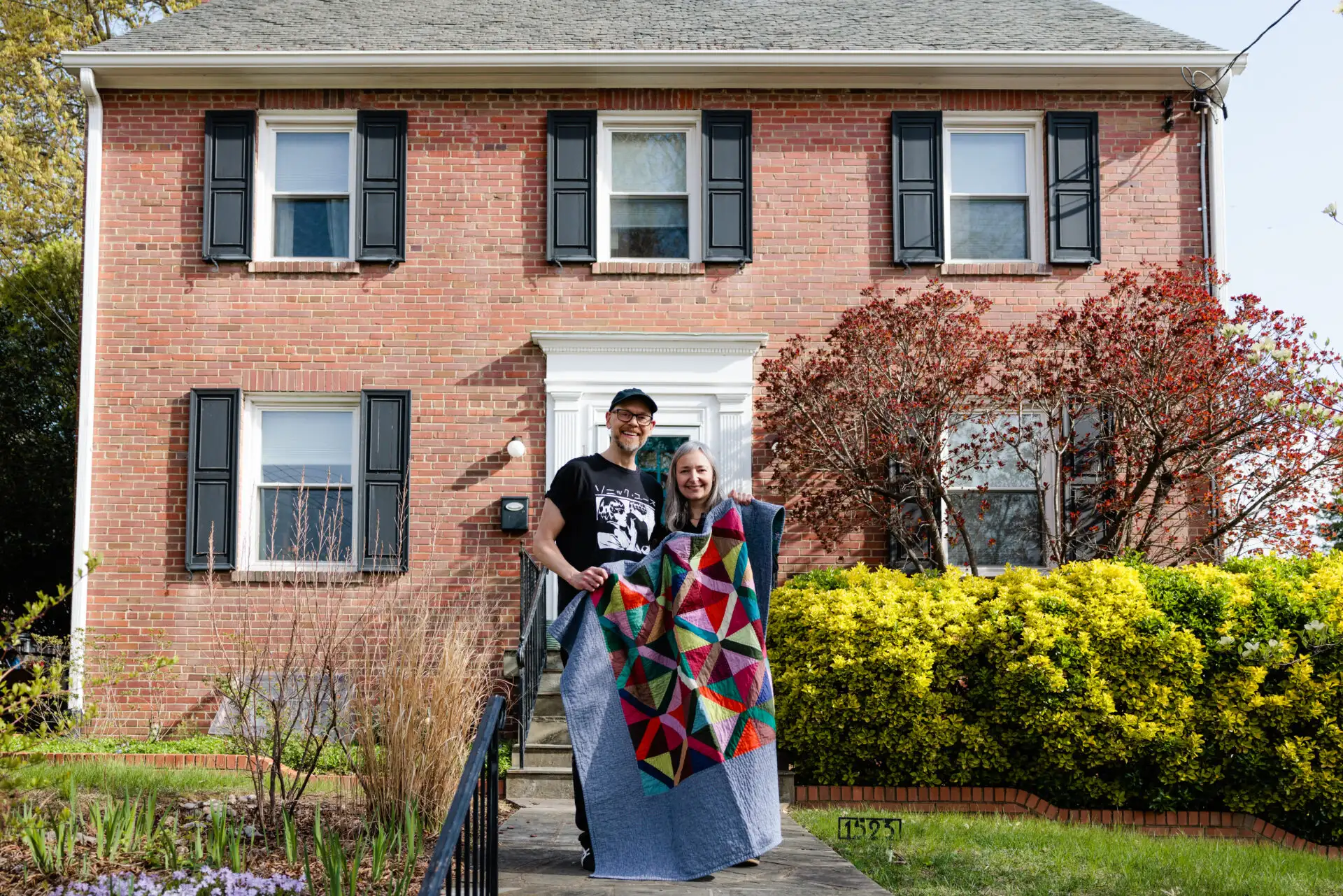
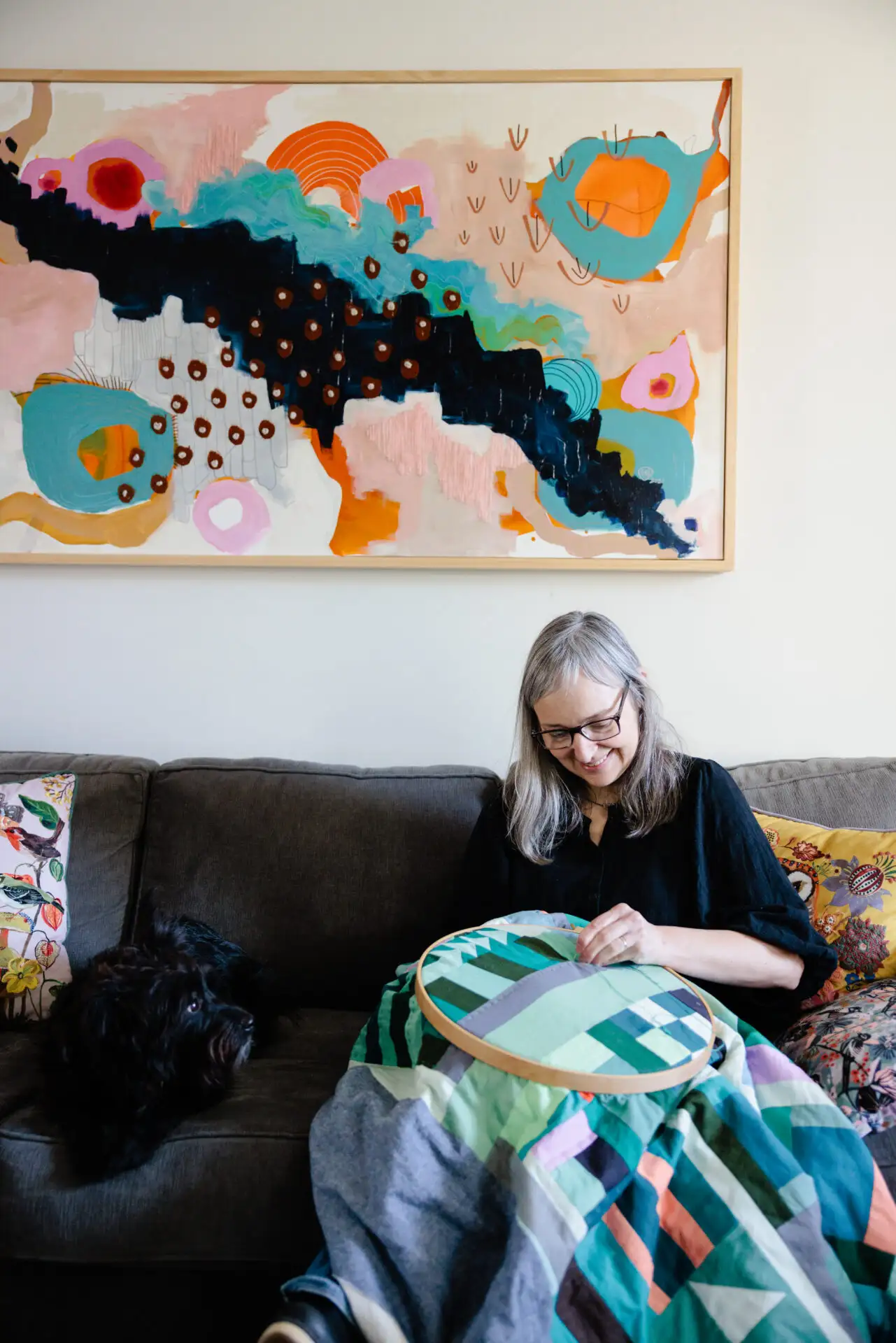
Cassandra with a 2023 quilt, which uses her own design. Longarm quilting by Cindy Luby.
Each quilt was designed by a guild volunteer, assembled collaboratively through a block-making sign-up, long-armed and bound by other volunteers, and sent with a letterpressed card made by Meghan Gordon, a guild member.
Cassandra’s path to quilting was its own kind of inheritance. She grew up in New Jersey and has lived in Washington, D.C. since 1998. Her birth mother was a quilter and sewist who died when Cassandra was 8, before she had the chance to teach her. Years later, Cassandra inherited her mother’s sewing machine and made her first quilt on it in 1997, a mix of satin, an old bedsheet, and a lace tablecloth. She set quilting aside until 2011, when she was on maternity leave and found her way to a DCMQG meeting through quilter Katie Blakesley, who used to write a blog called Swim Bike Quilt.
“I knew she was in the D.C. general area from her blog, and I was asking for help with the actual quilting part. She said, ‘Come to our meeting, and I’ll show you.’ I did, and it was incredible because it was the meeting when the DC Modern Quilt Guild was voting on whether to become an affiliate of the Modern Quilt Guild, and they did,” Cassandra said. “She gave me her basting pins and basted my quilt for me. I remember walking away thinking, ‘Quilters are so nice.’”
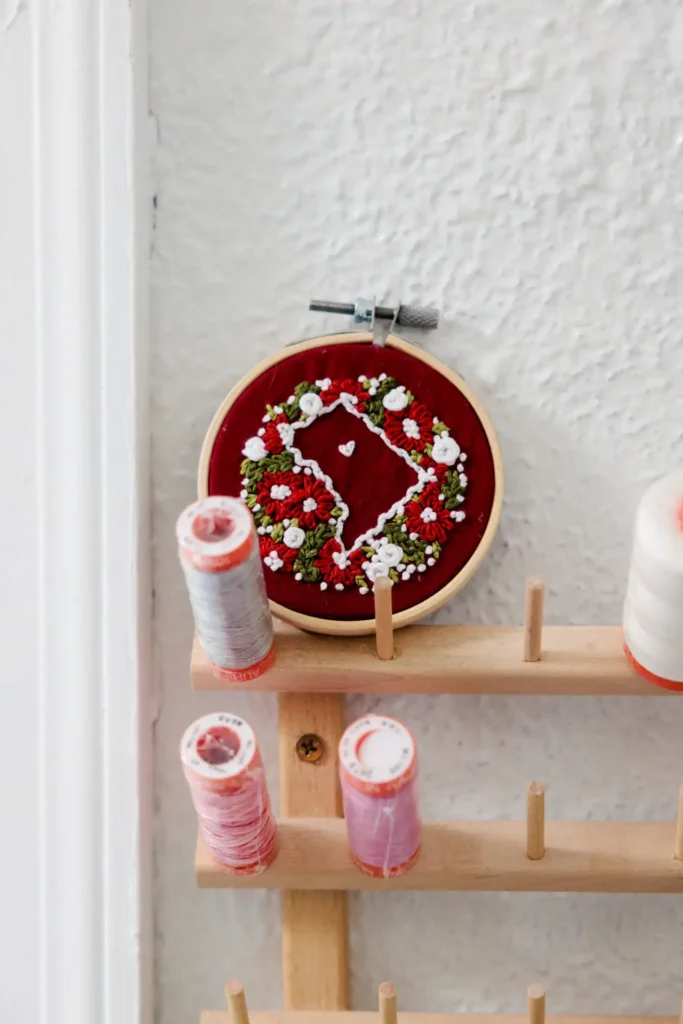
An embroidery project Cassandra made from a kit by Capital Stitch Co.
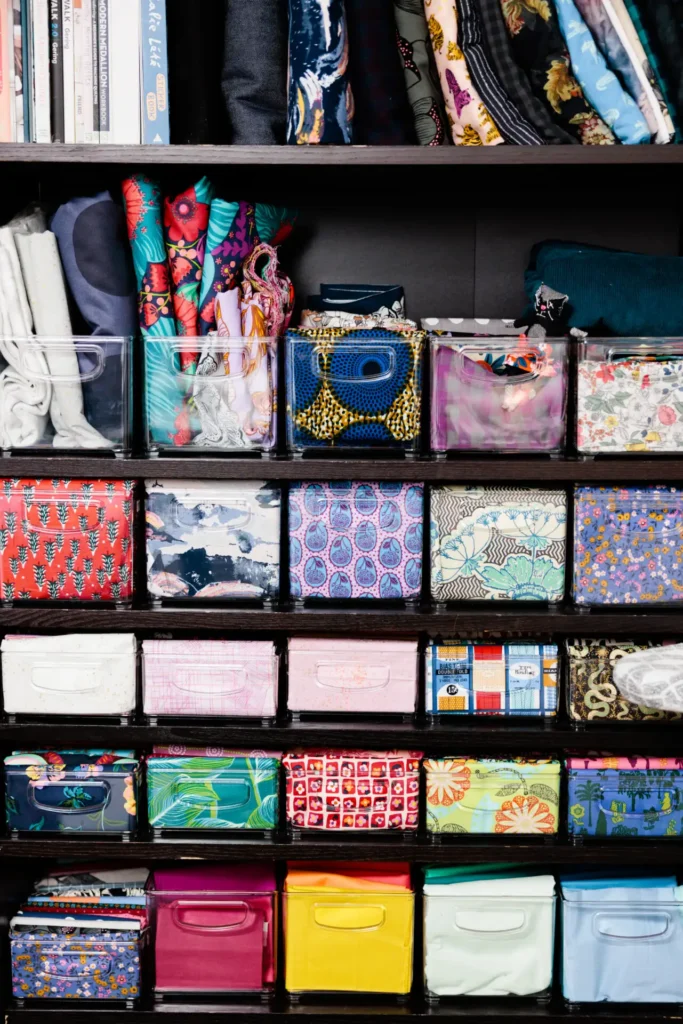
Cassandra, very disciplined about her organization, has one bookshelf for her entire fabric stash.
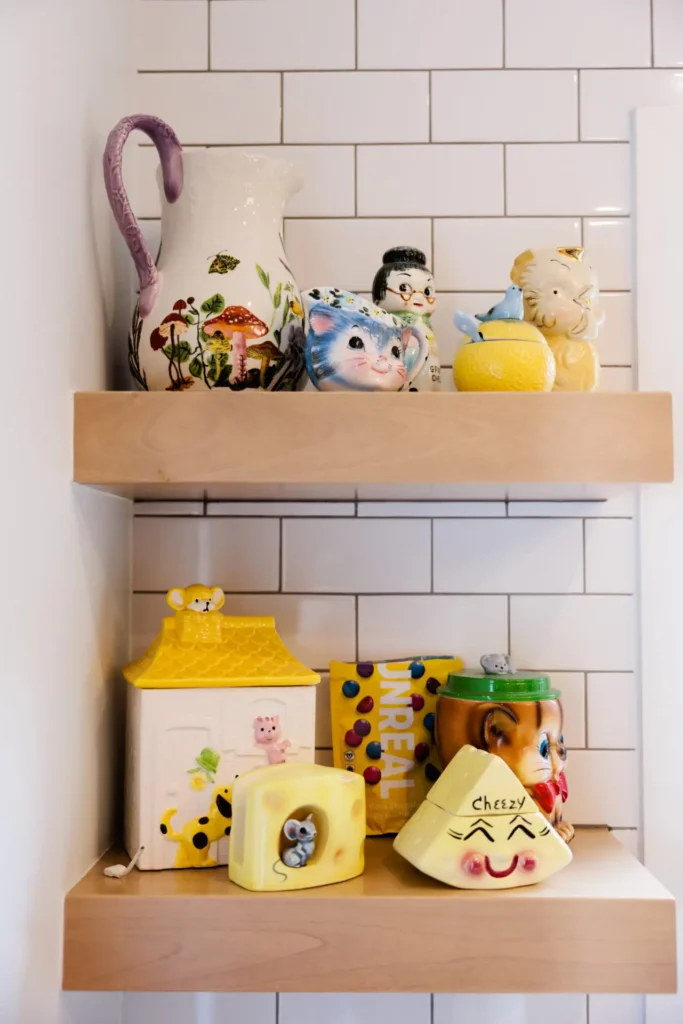
Cassandra loves whimsical and vintage things, like this curated collection of joy in her kitchen.
She has since taken classes with Sarah Bond, Sherry Lynn Wood, and Sujata Shah, whose use of color and pattern she found revelatory. Her own style is modern traditional, built around improv with repeating elements, triangles, and bright color anchored by Essex linen and indigo.
She wears mostly black, she’ll tell you, so the quilts are where color lives.
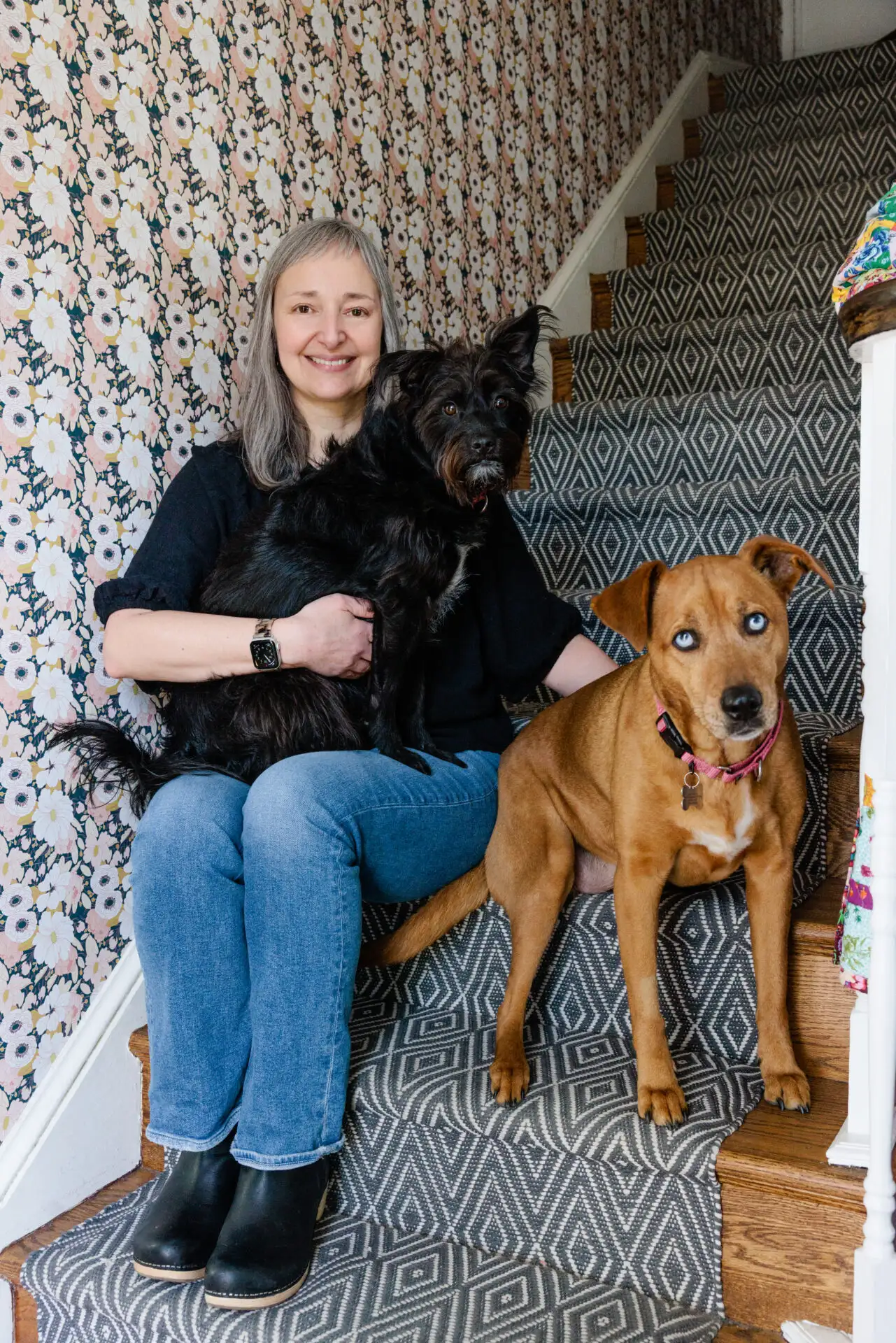
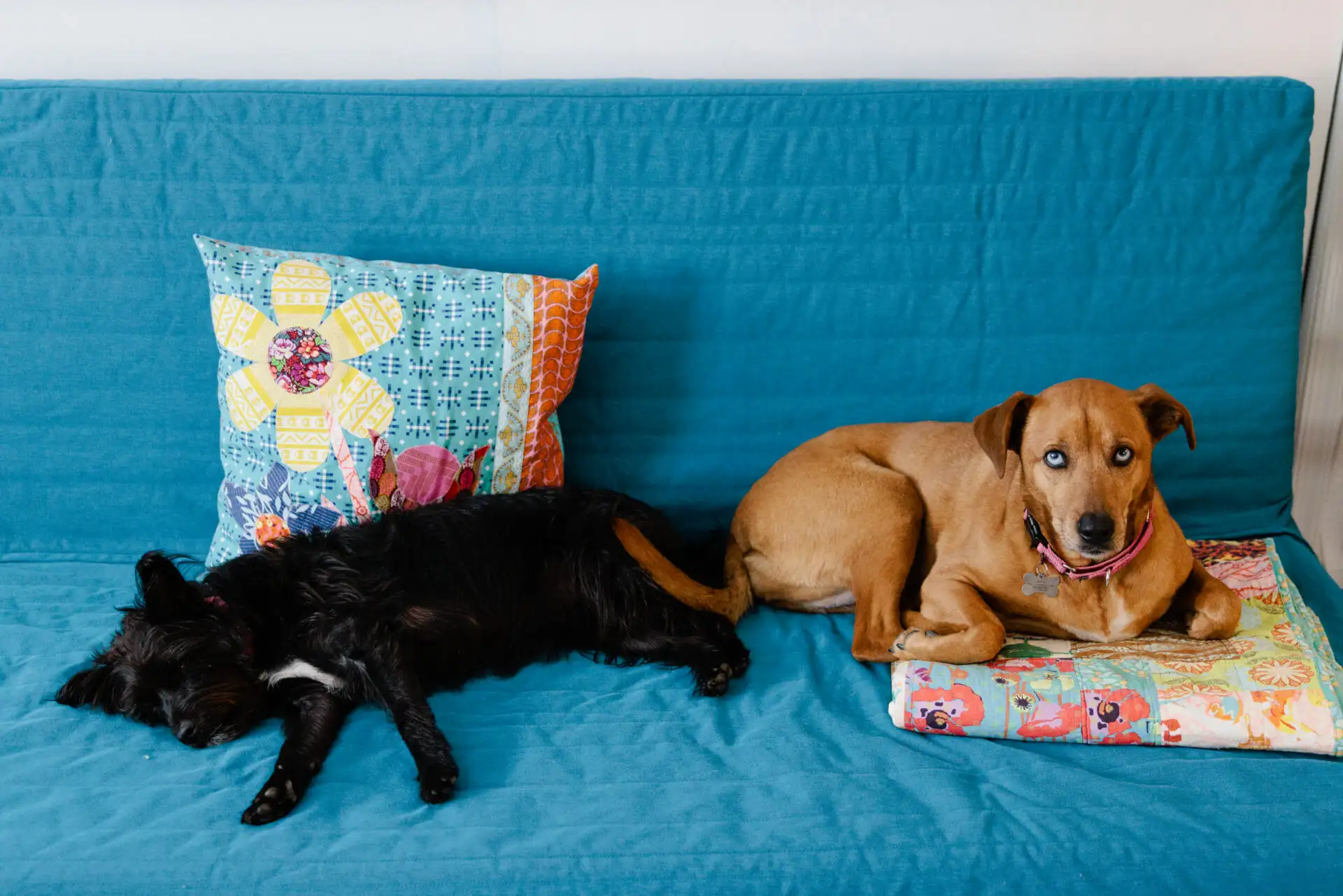
Cassandra currently has four works-in-progress, which, coincidentally, also intersect with her interests and have her trying new techniques. “I’m working on a block-of-the-month quilt based on the board game Wingspan. It’s paper pieced, which I don’t love, but I just want to finish it. I’m halfway through the blocks,” she said. She and her husband, Jeffry Cudlin, an artist who teaches curatorial studies at the Maryland Institute College of Art, their two sons and their two dogs, Gigi Poppins and Ruby Slipper, live across the street from a park with great birdwatching. Wingspan has become her favorite game.
Beyond Wrapped in Love for Justice, Cassandra serves as vice president of the board of Create Arts Center, a Maryland organization providing arts education and art therapy to children, youth, and families.
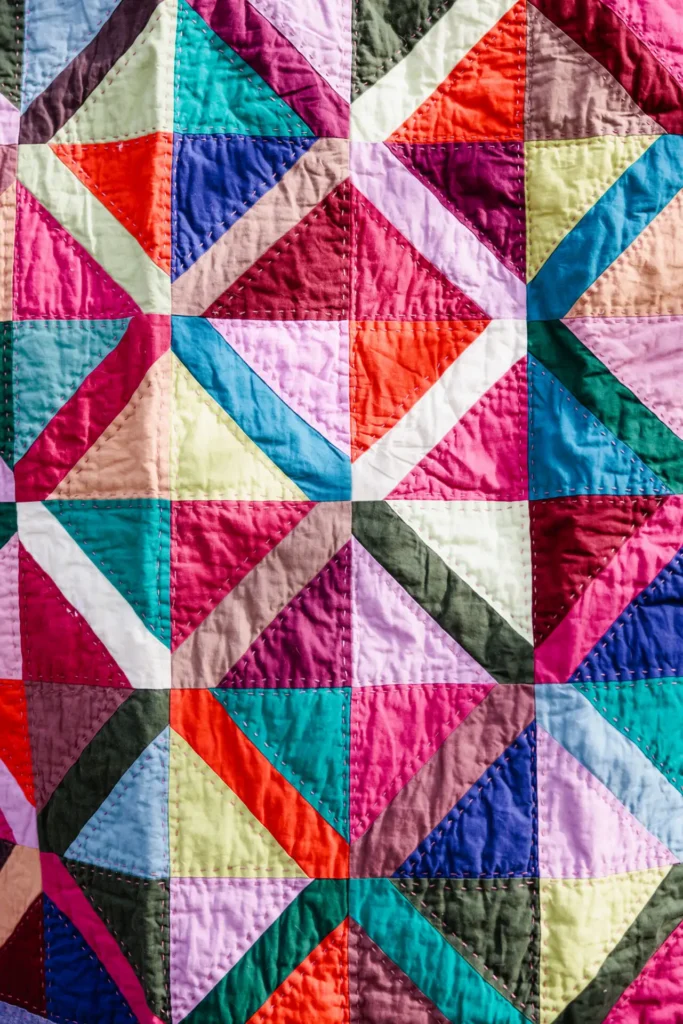
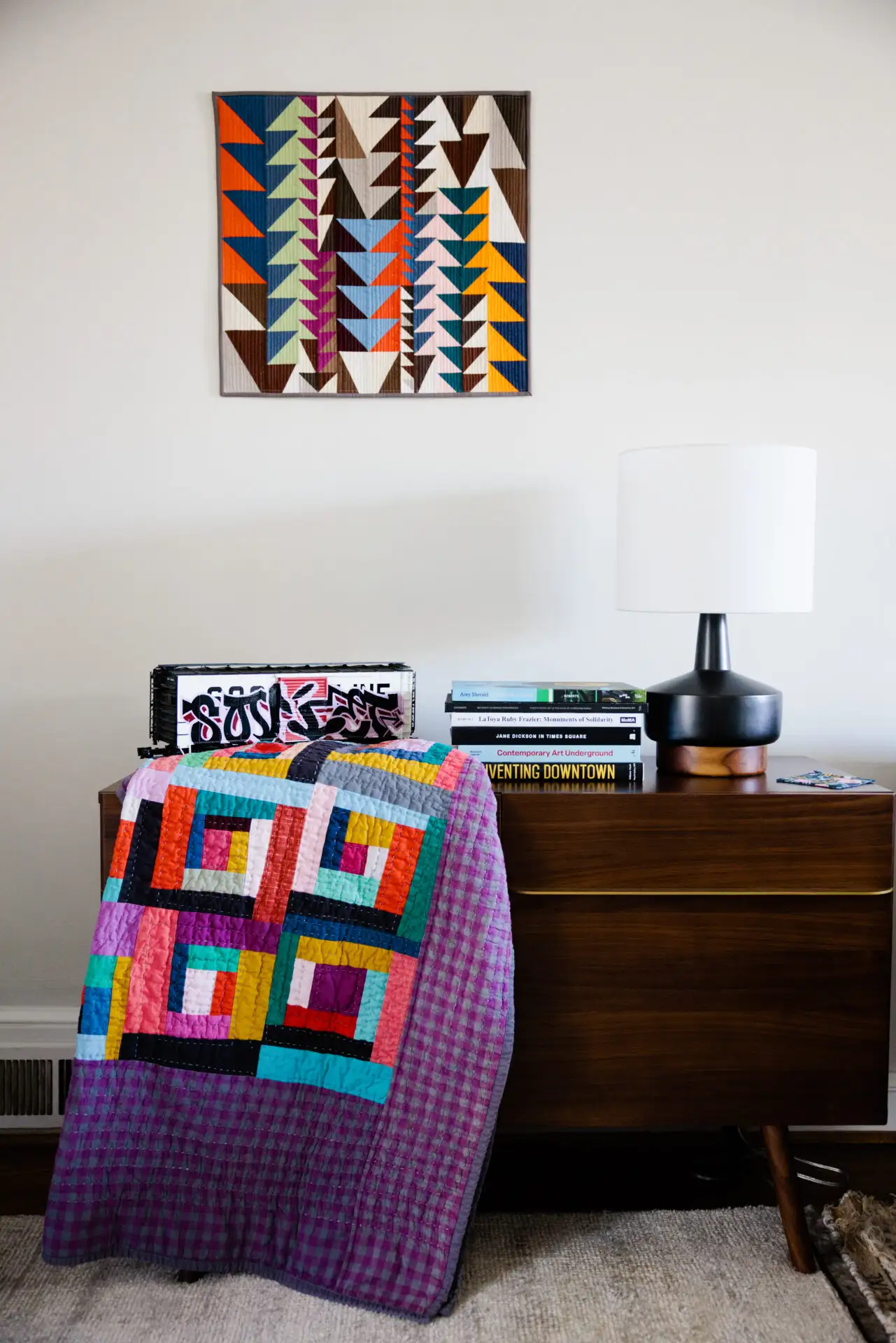
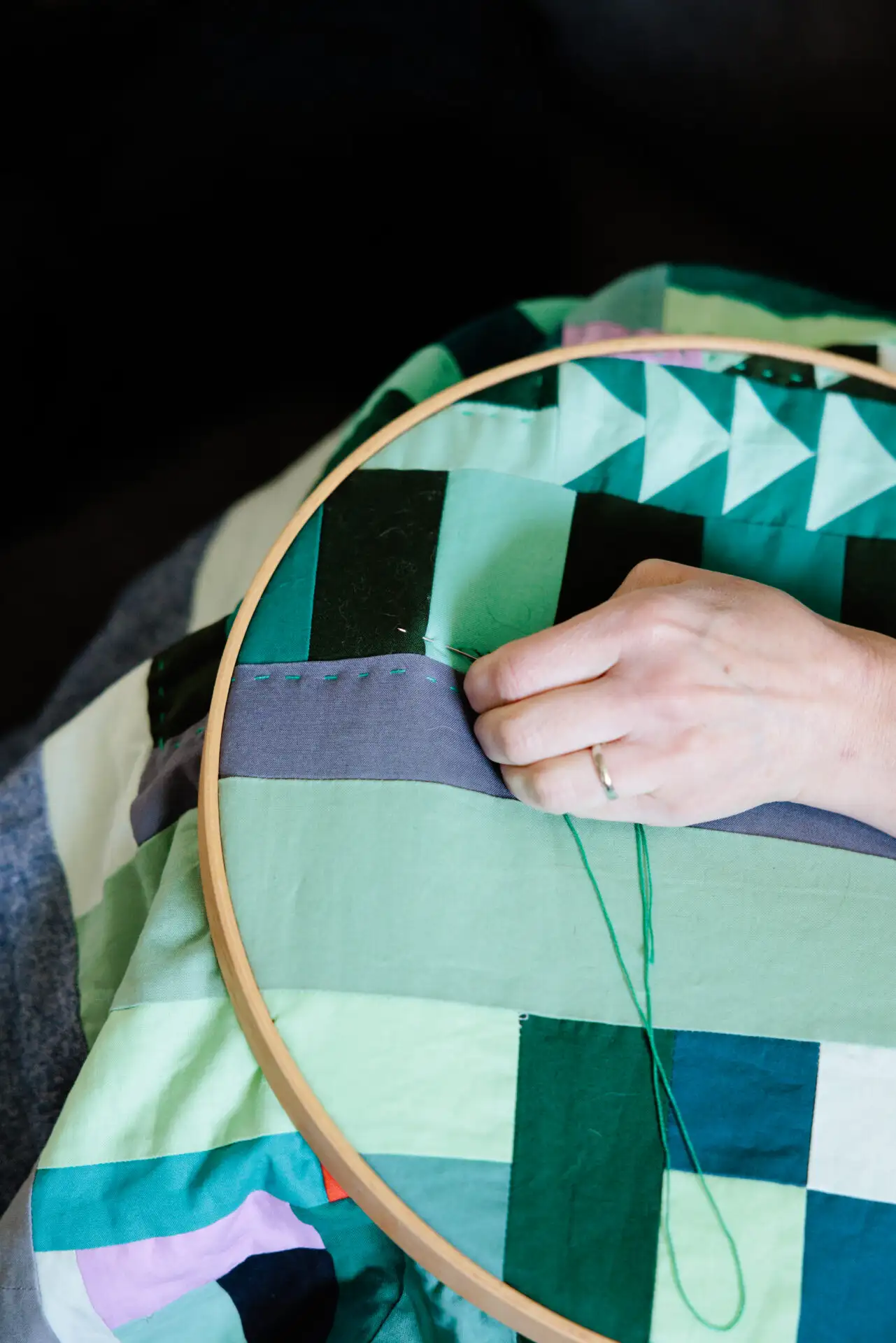
Finished in 2025, this quilt uses Cassandra’s design of freeform blocks, made in a class on color, line, and value with Sujata Shah.
She also made panels for the Social Justice Sewing Academy’s Remembrance Project, which memorializes victims of gun violence, and the DCMQG partnered with Welcome Blanket and Homes Not Borders to make gifts for immigrants and refugees, displayed in a show before being donated.
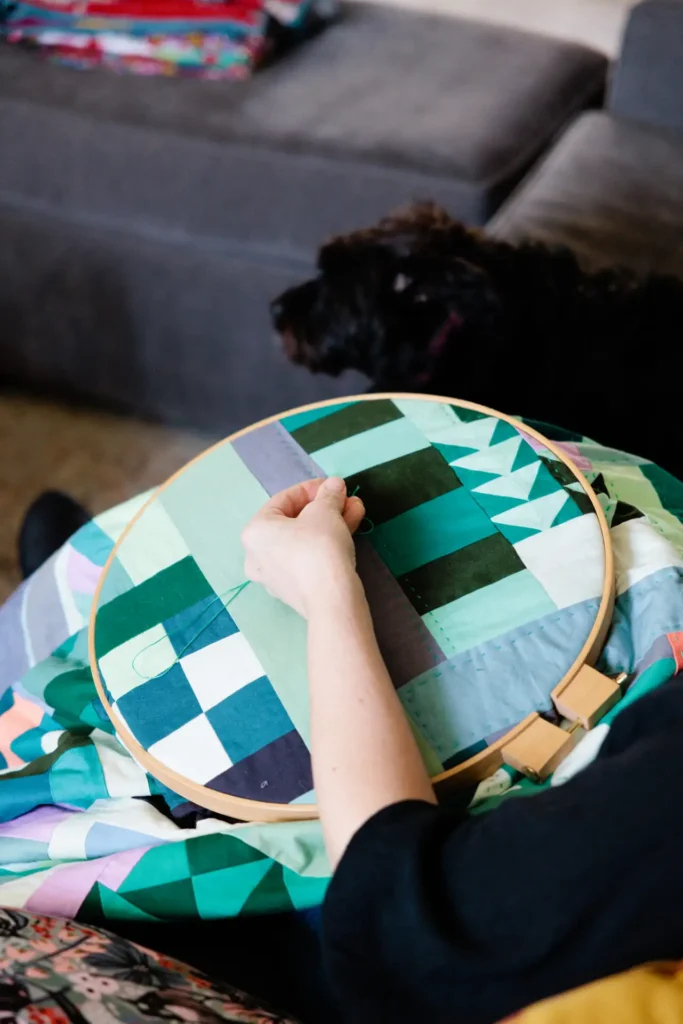
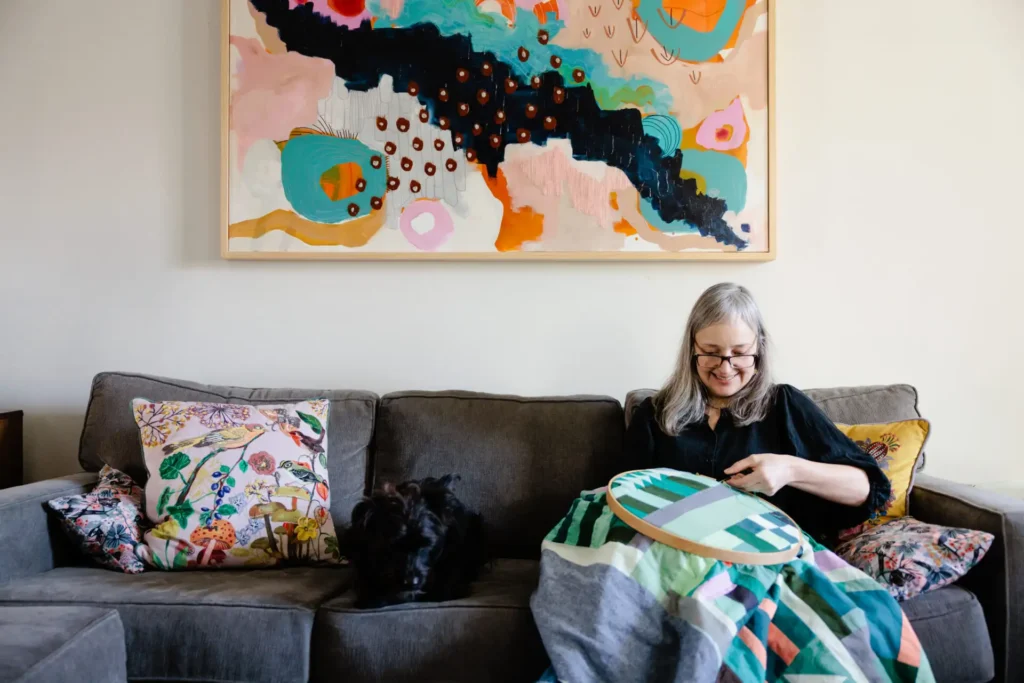
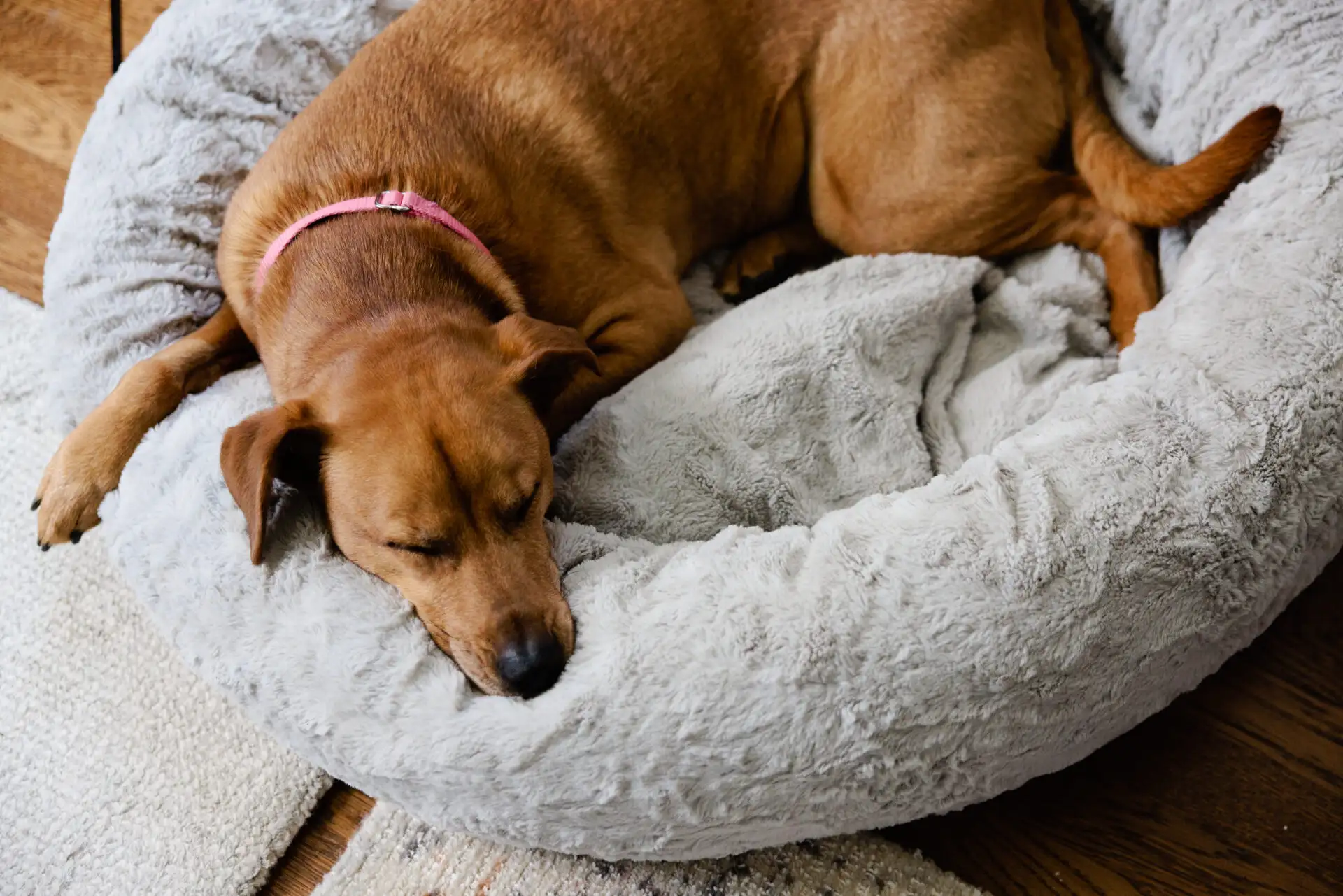
Cassandra working on an improv color study from her scrap bin. Beside her is Ruby Slipper, supervising her work.
“Quilting is a kind of therapy. It’s a way of calming my whole system down,” Cassandra said. “It’s also a way that I connect with the memory of my mother. It feels personal and meaningful in that regard.”
About the Author
Rebecca Bratburd joined the Quiltfolk team in 2023 and has written for the magazine and contributed to many other projects since. Learn more about Rebecca on her website and Instagram.
About the Photographer
Azuree Holloway has been photographing for Quiltfolk since 2019 and has contributed to many other projects. Check out more of her work on her website and her Instagram.