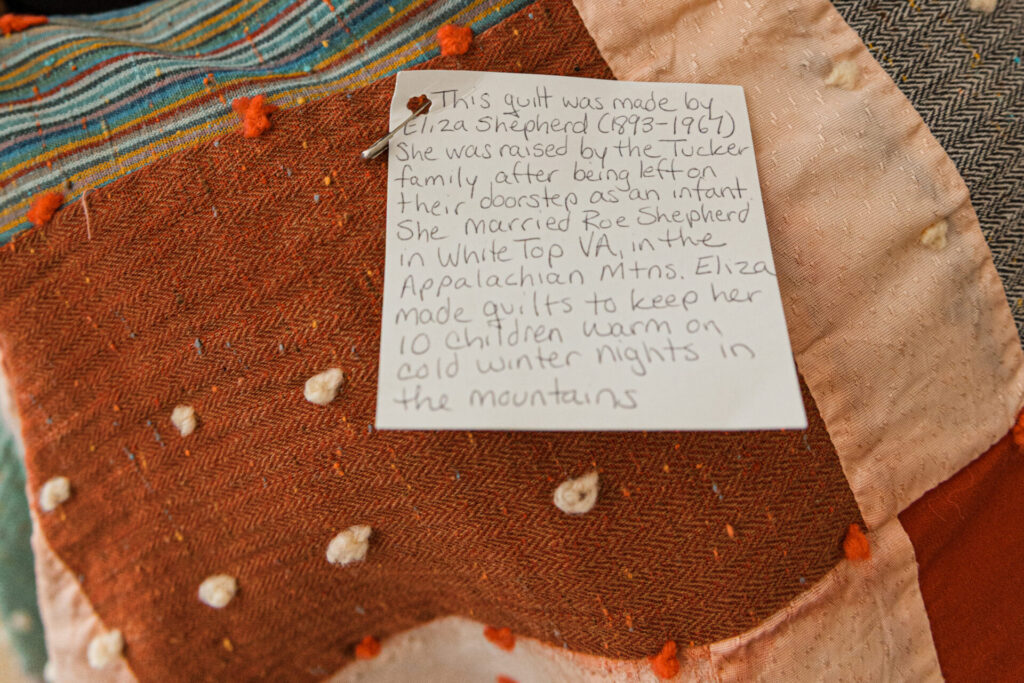
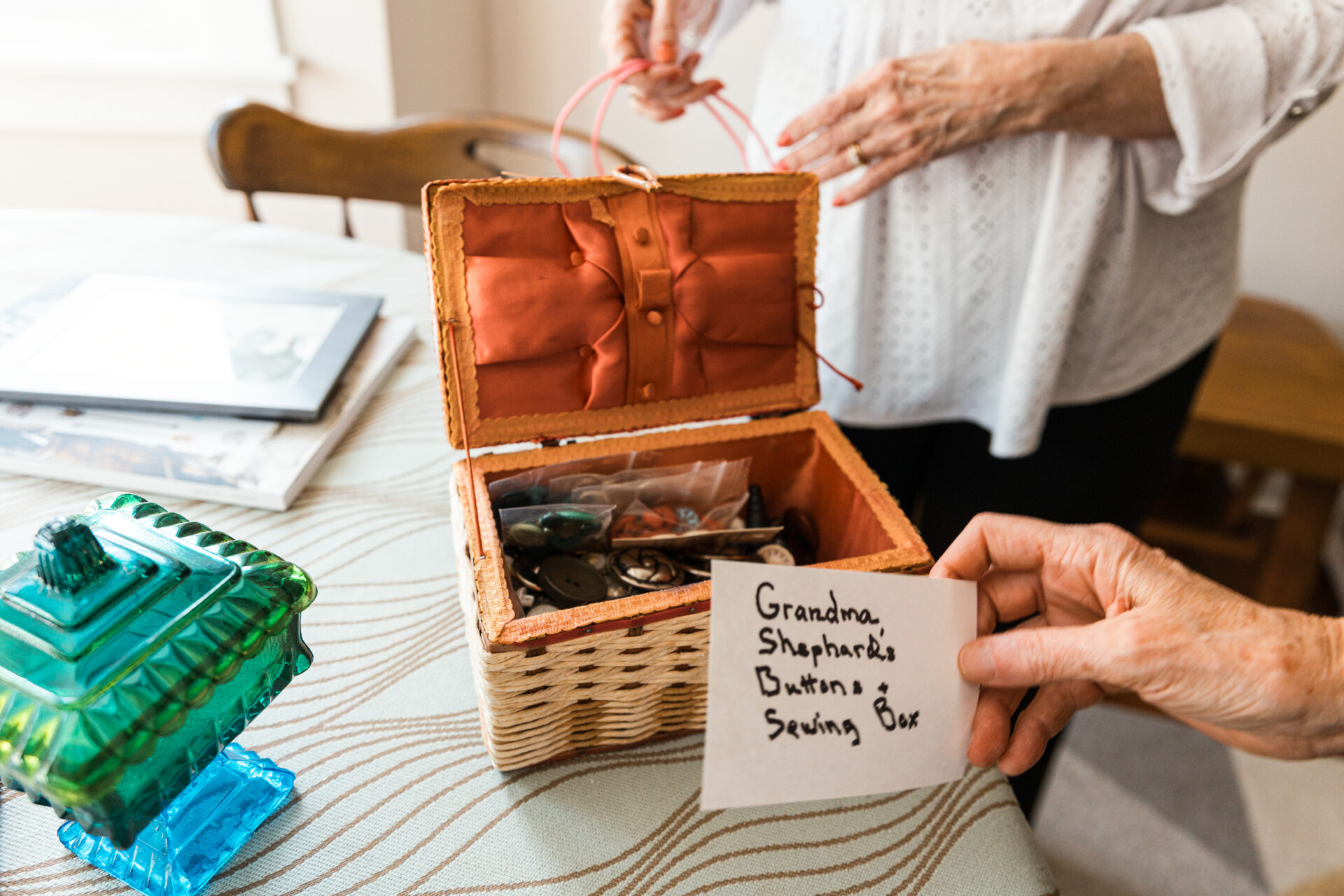
In December 2024, I bought a few bedraggled tied quilts at an antiques mall in rural Pennsylvania. Pinned to each quilt was a handwritten note saying that the quilt was made by Eliza Shepherd (born 1893) who “made quilts to keep her children warm on cold winter nights in the mountains” in Appalachia.
The note Meg Cox found pinned to Eliza Shepherd's quilt.
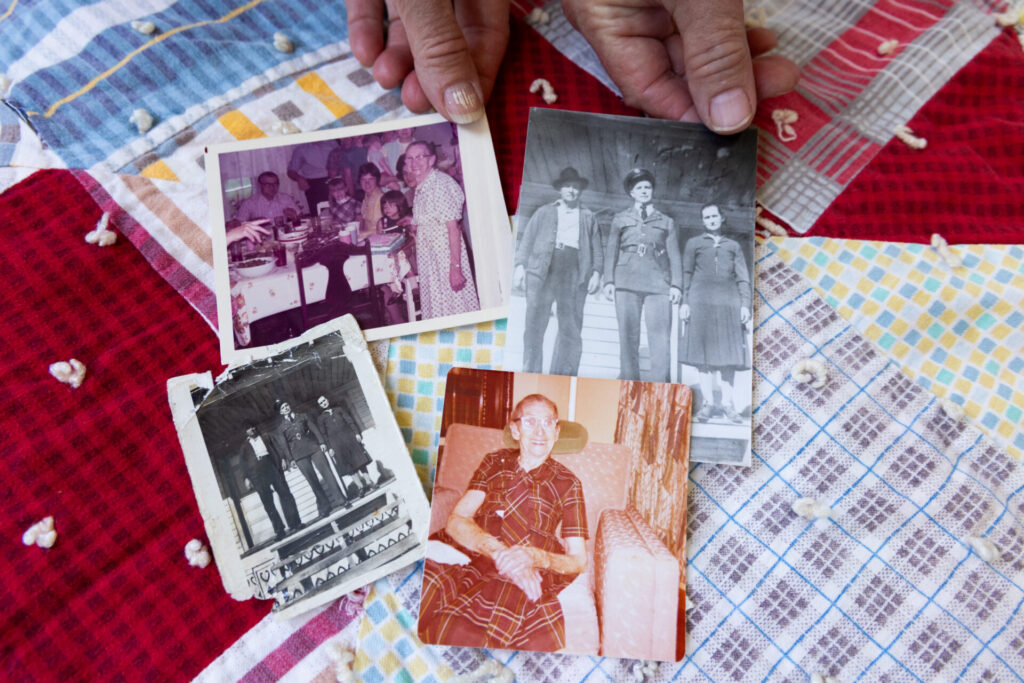
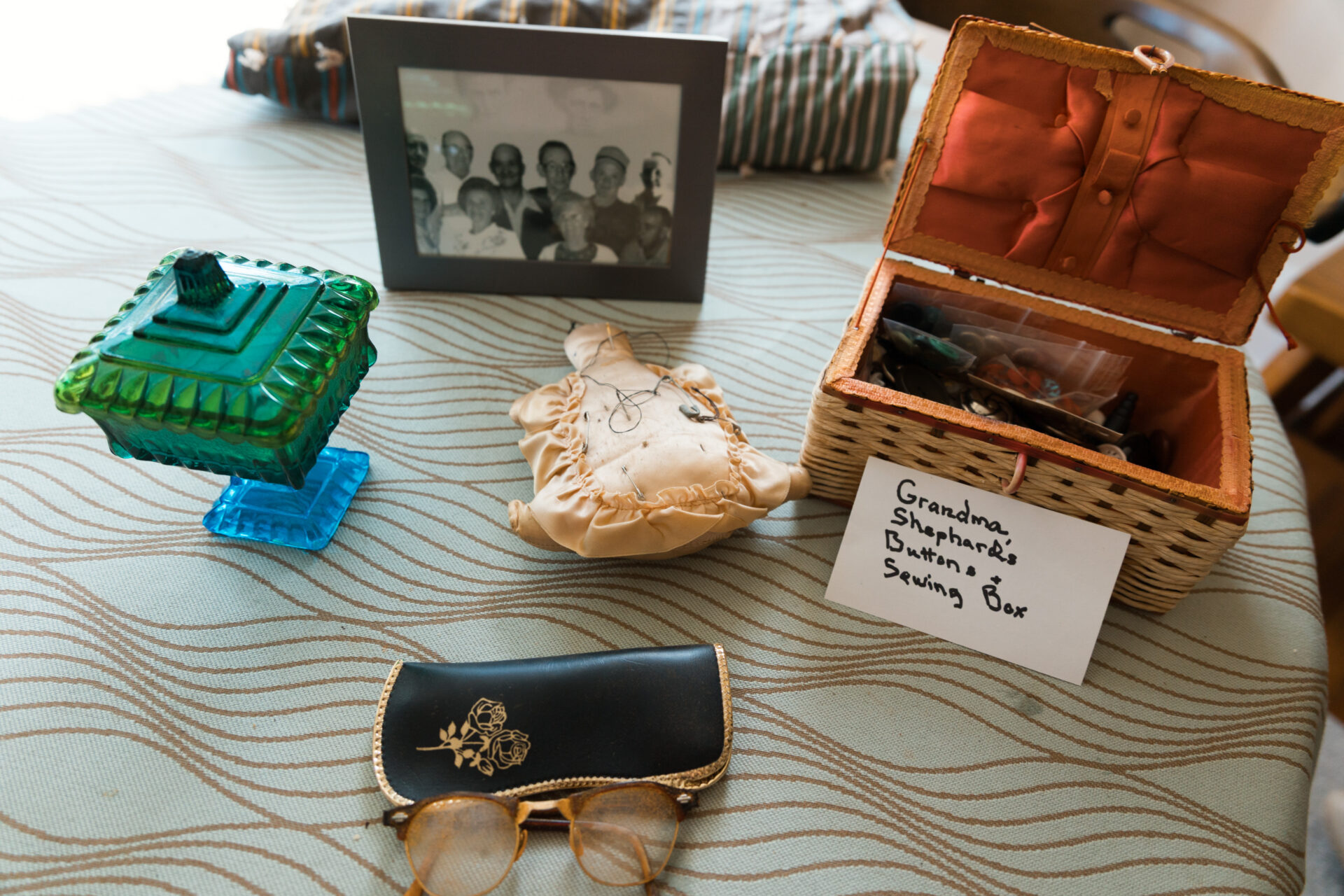
In a basket that held this small pile of quilts was a faded copy of a 1935 photograph showing Eliza in Whitetop, Virginia, with the four of her 10 children who were still living at that time. Now, they are all gone.
Never could I have imagined that a year later, I’d be hosting a family reunion for the quiltmaker’s descendants. It all began with a deep curiosity about the Appalachian woman who had made these quilts. I wanted to know her story because the quilts themselves grabbed me hard.
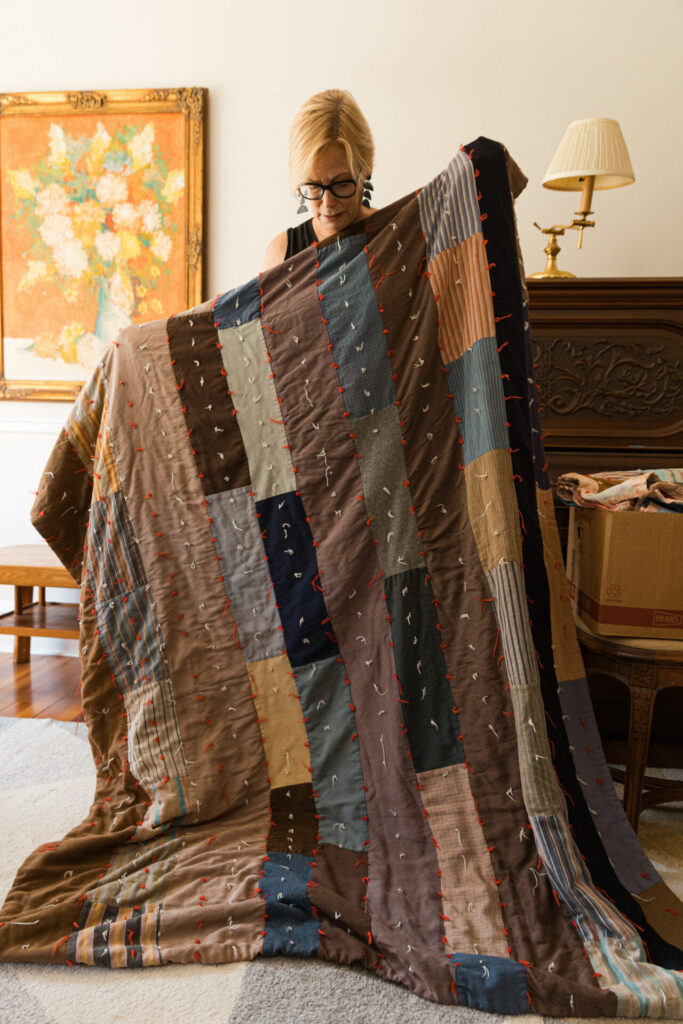
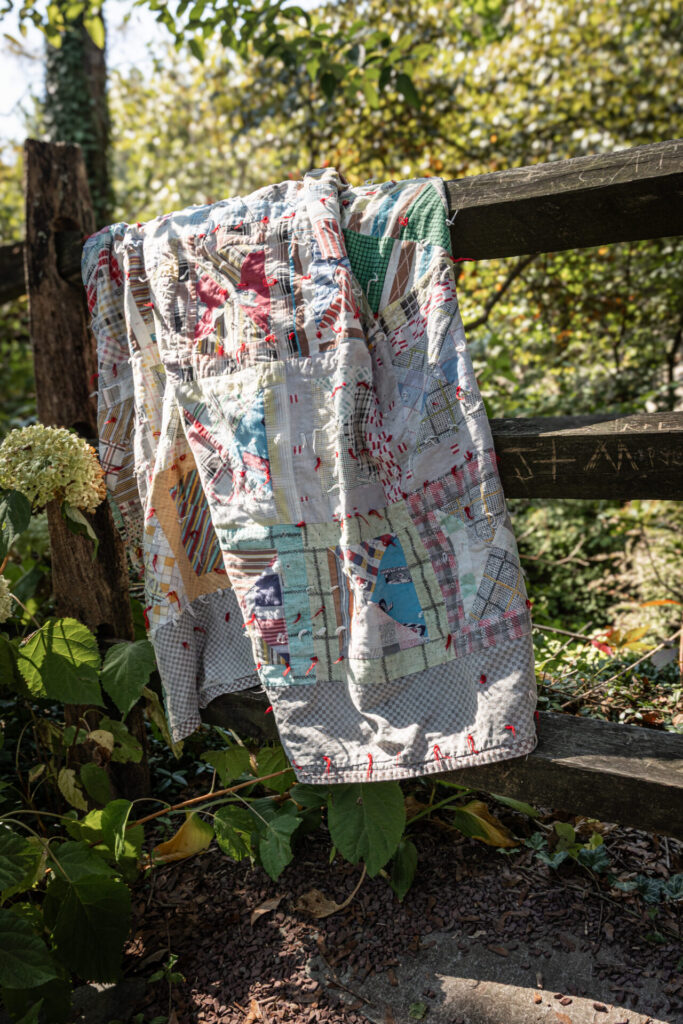
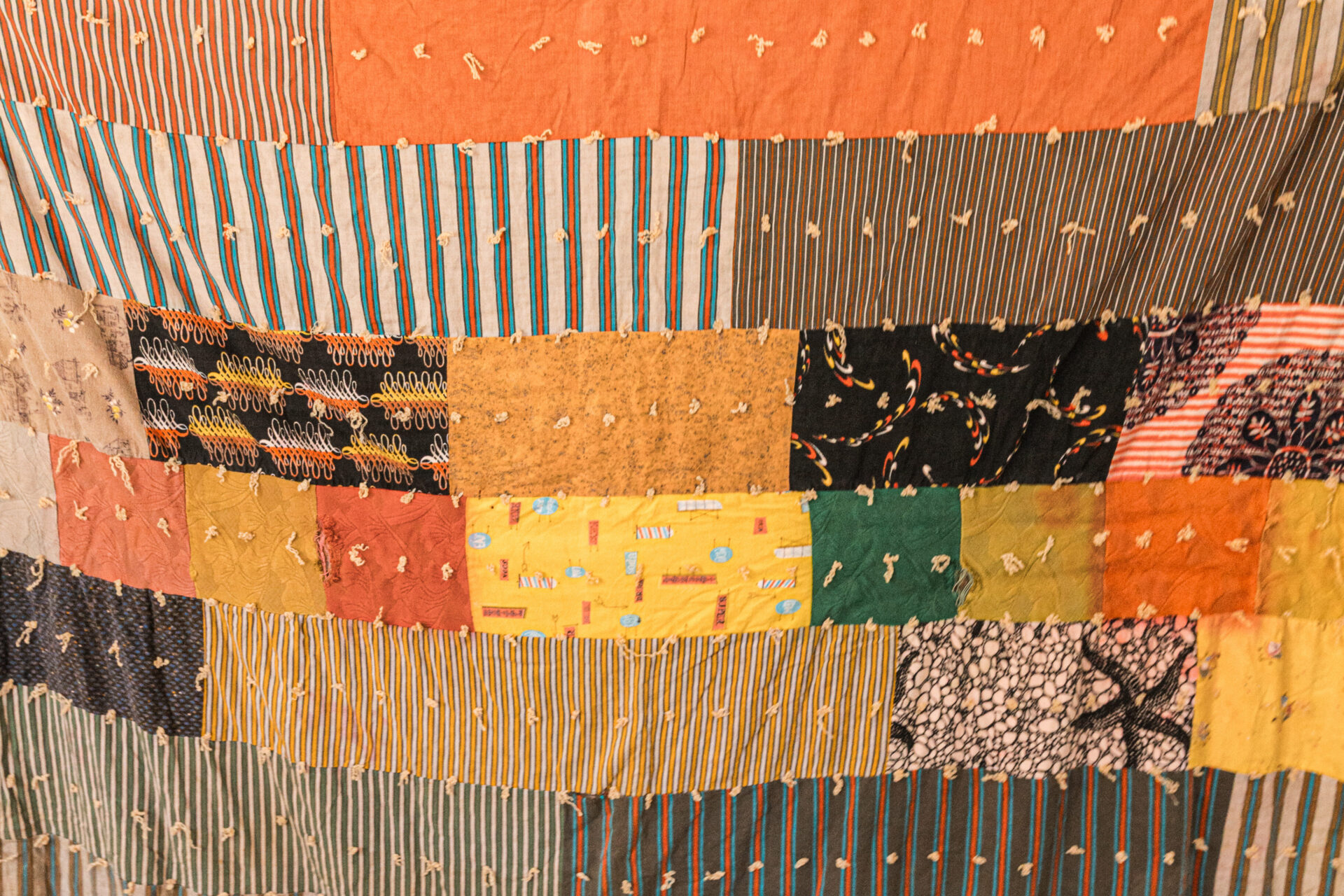
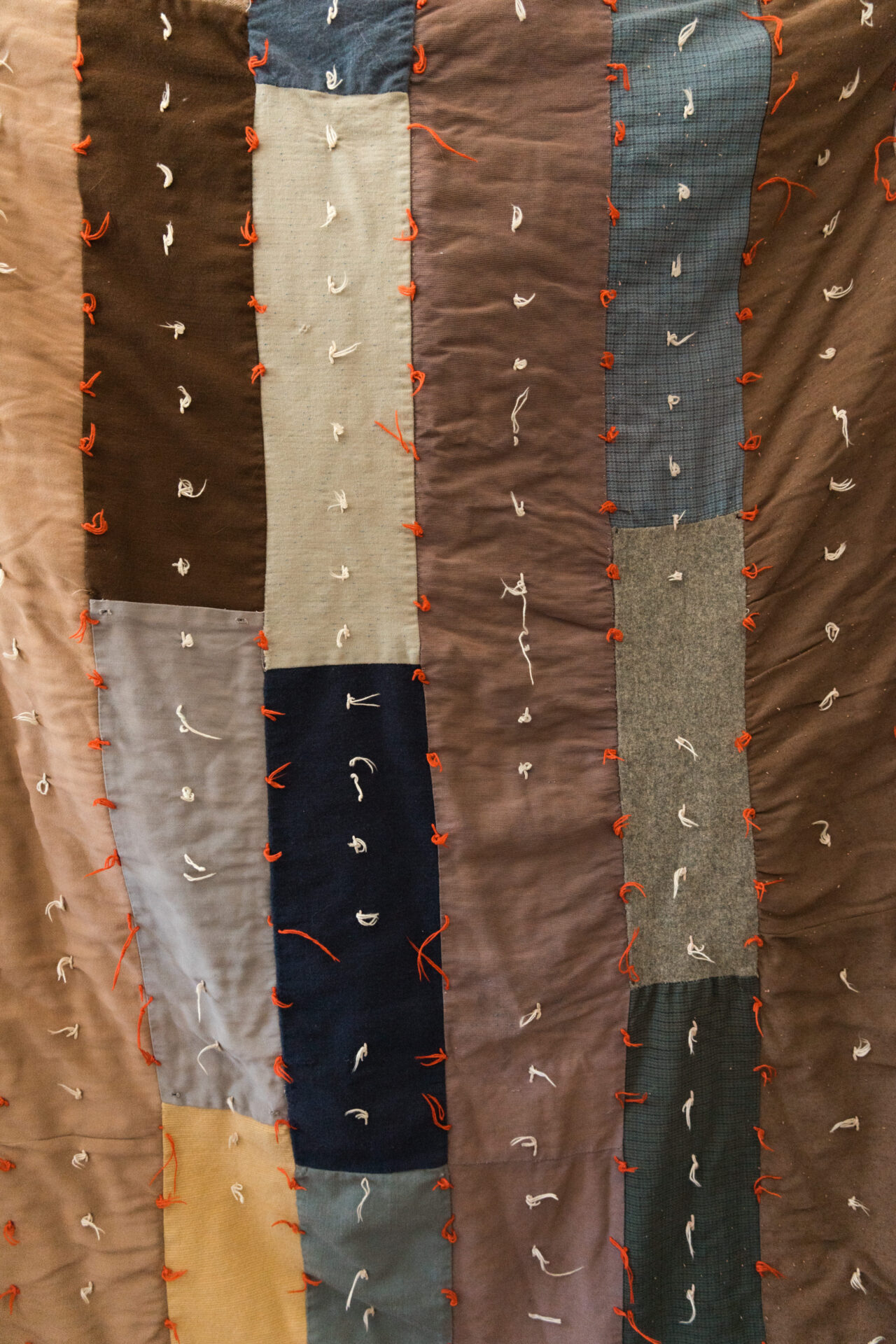
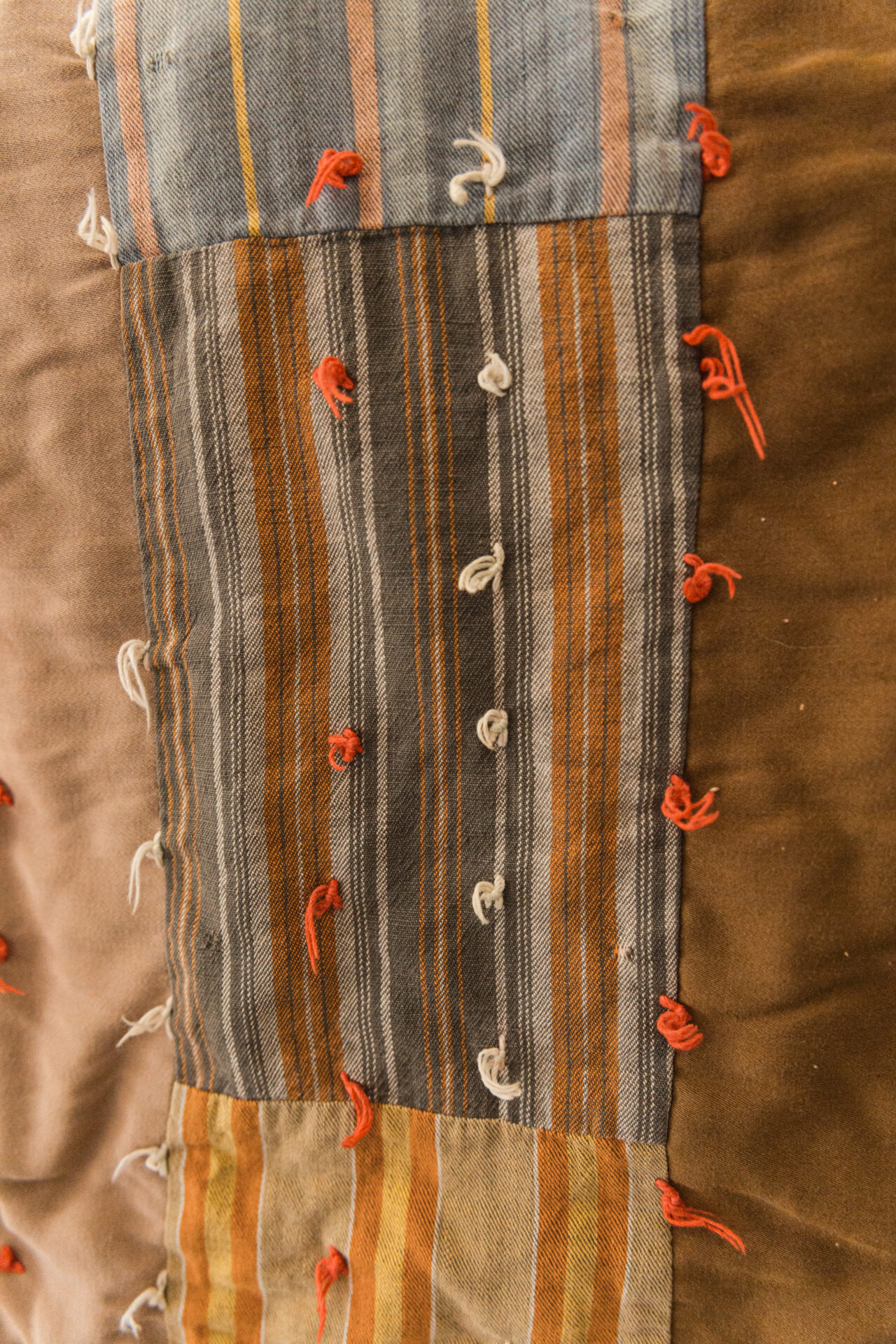
The quilts I saw that day appear to be made mostly from old clothing, much of it in solid colors like browns, grays, and black. Seven of Eliza’s 10 children were boys, and I’m assuming their old garments provided most or all of the fabrics in the pieced top of my favorite quilt. There is no evident quilt block pattern here, just simple long rows of varying widths stitched together. But to me, this quilt proves that the maker had a design plan. All of the striped fabrics she used, which I assume came from shirts, run down in two vertical strips. All of the plaid fabrics comprise most of another strip, though she needed to insert a piece of gray flannel to make her plaids reach the quilt’s edge.
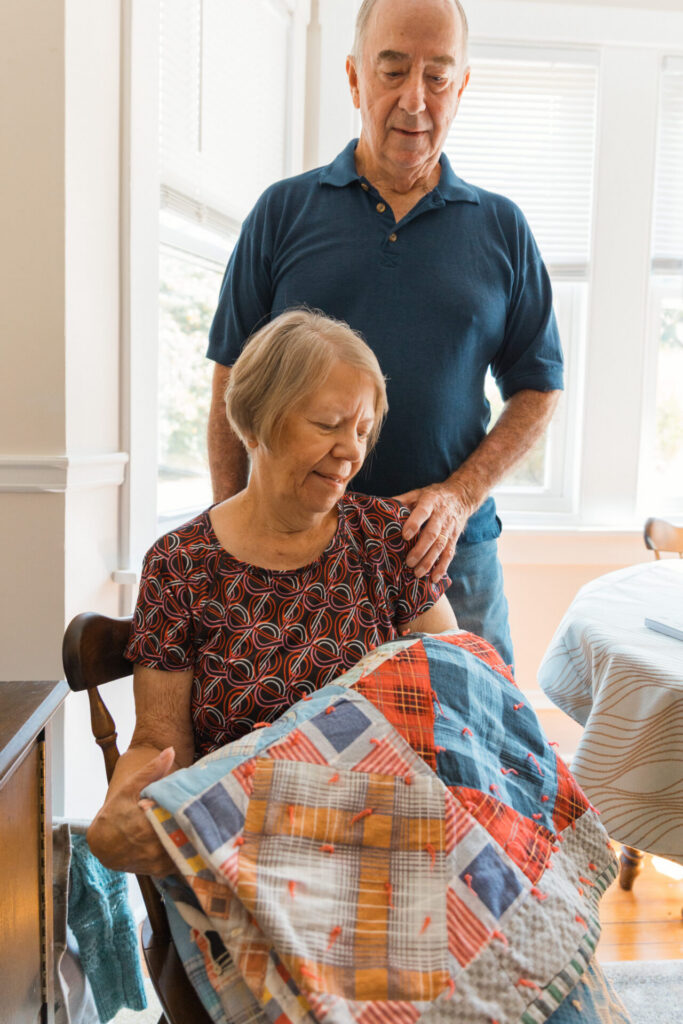
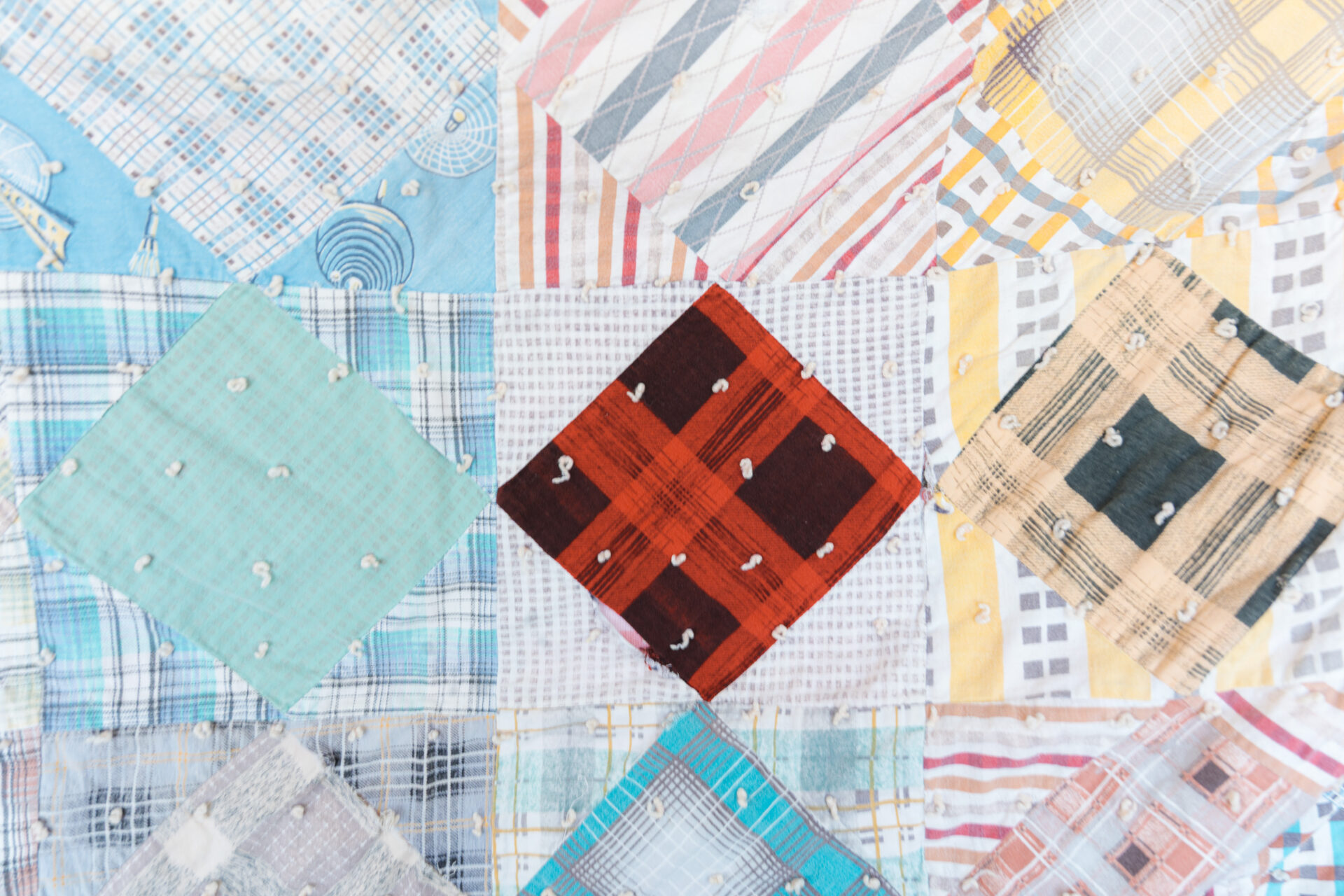
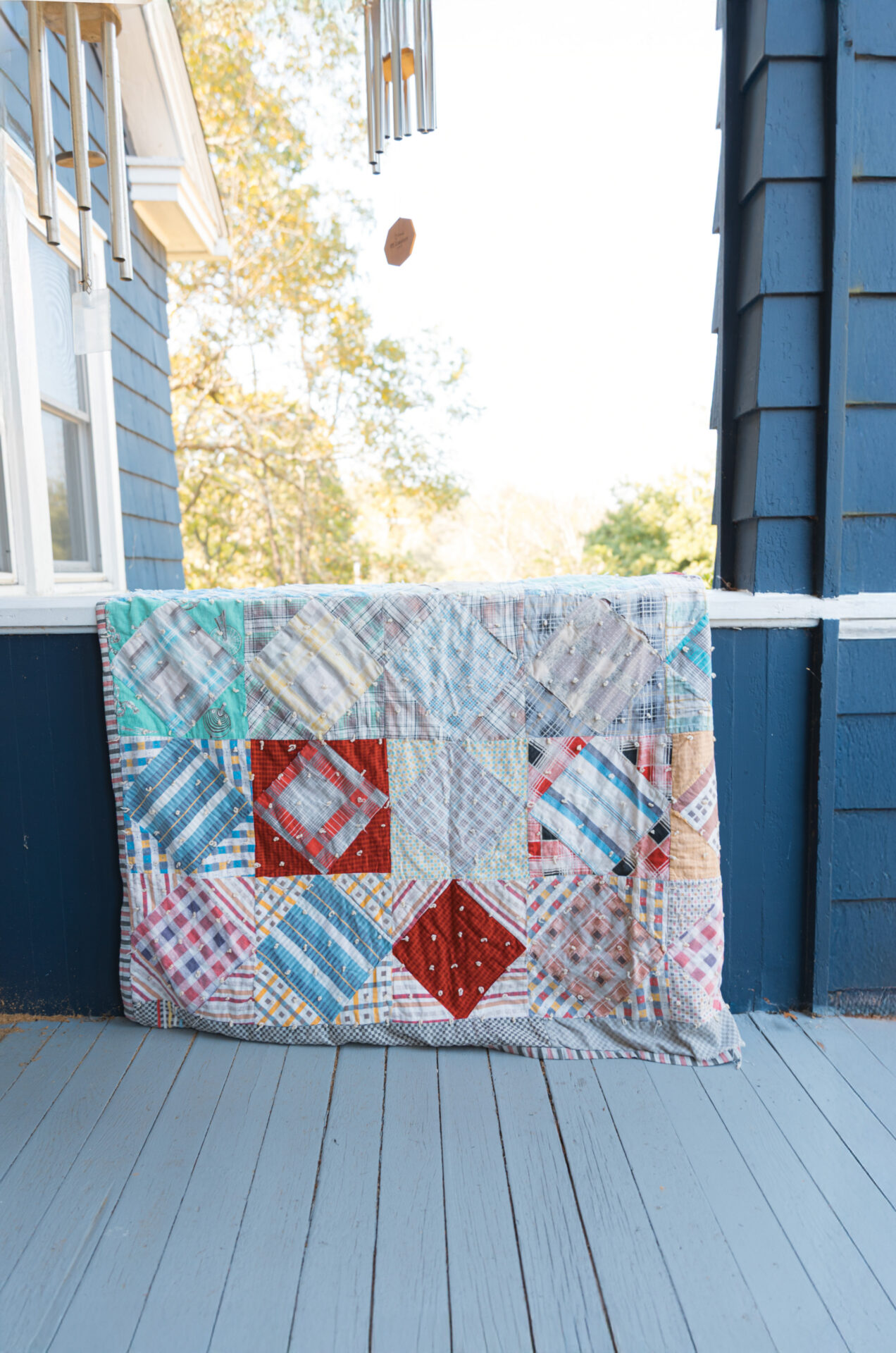
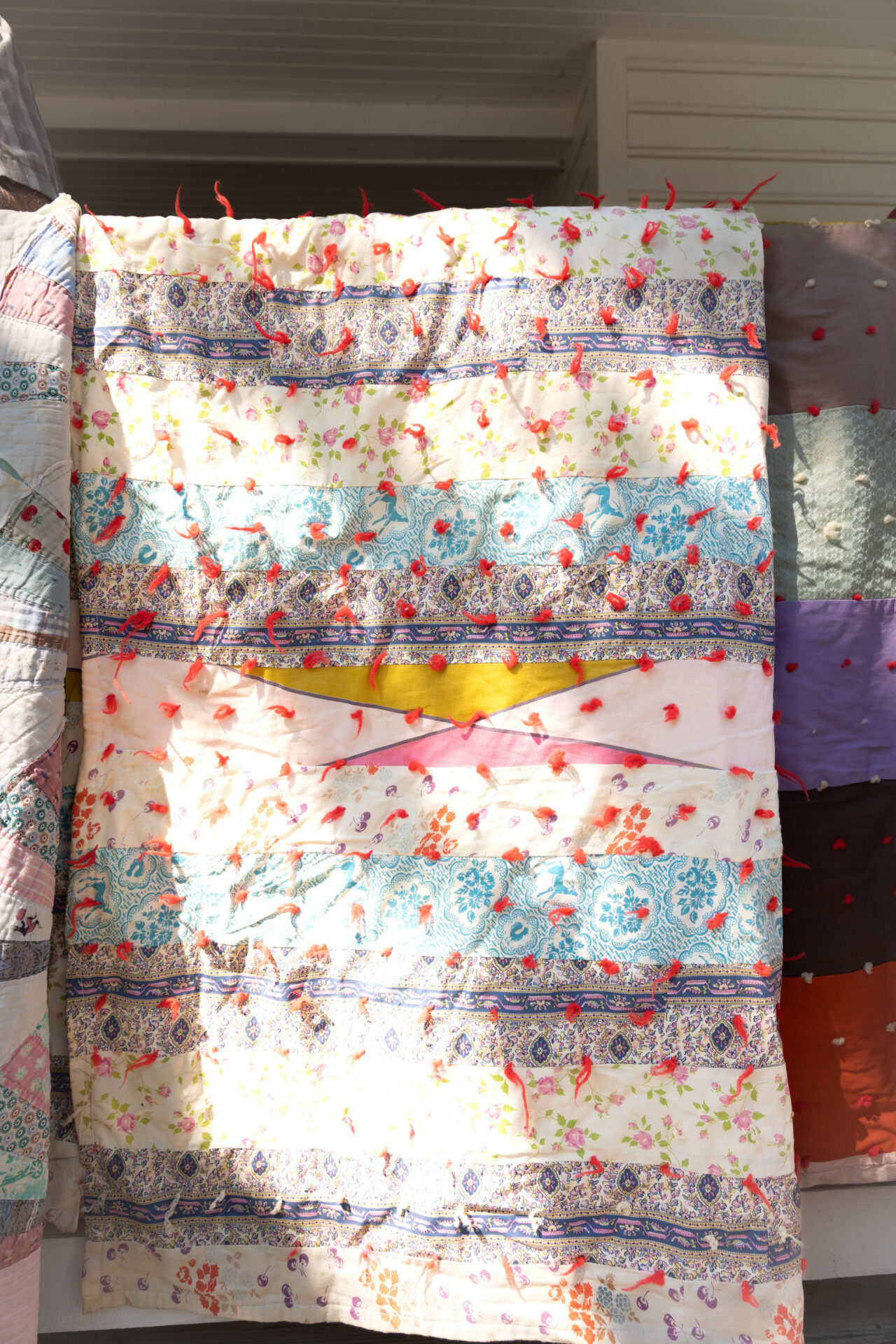
The four Eliza Shepherd quilts I own are all tied, mostly with white and red yarn. One of her grandchildren told me that she unraveled old sweaters for their yarn to tie her quilts. And these quilts are quite heavy.
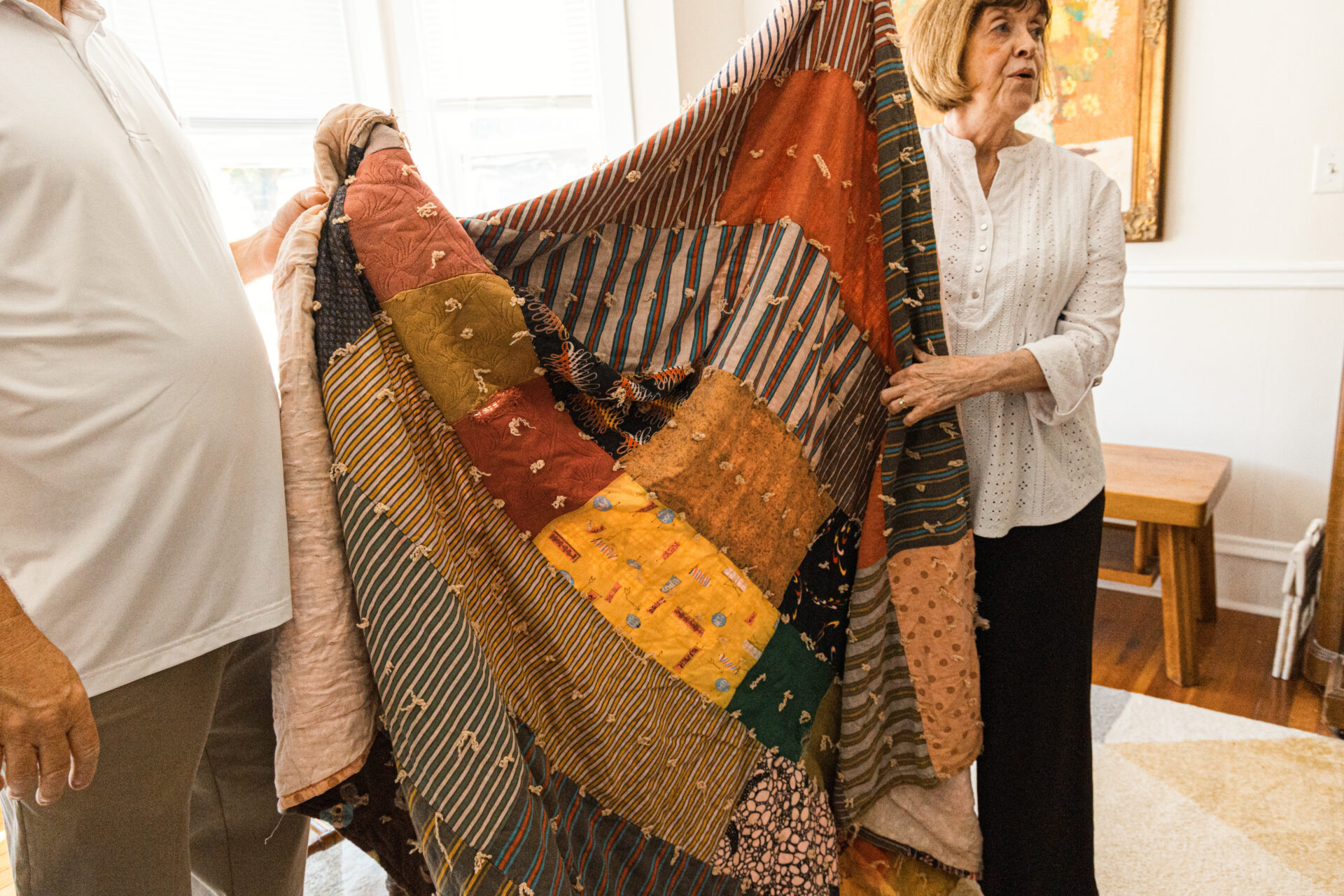
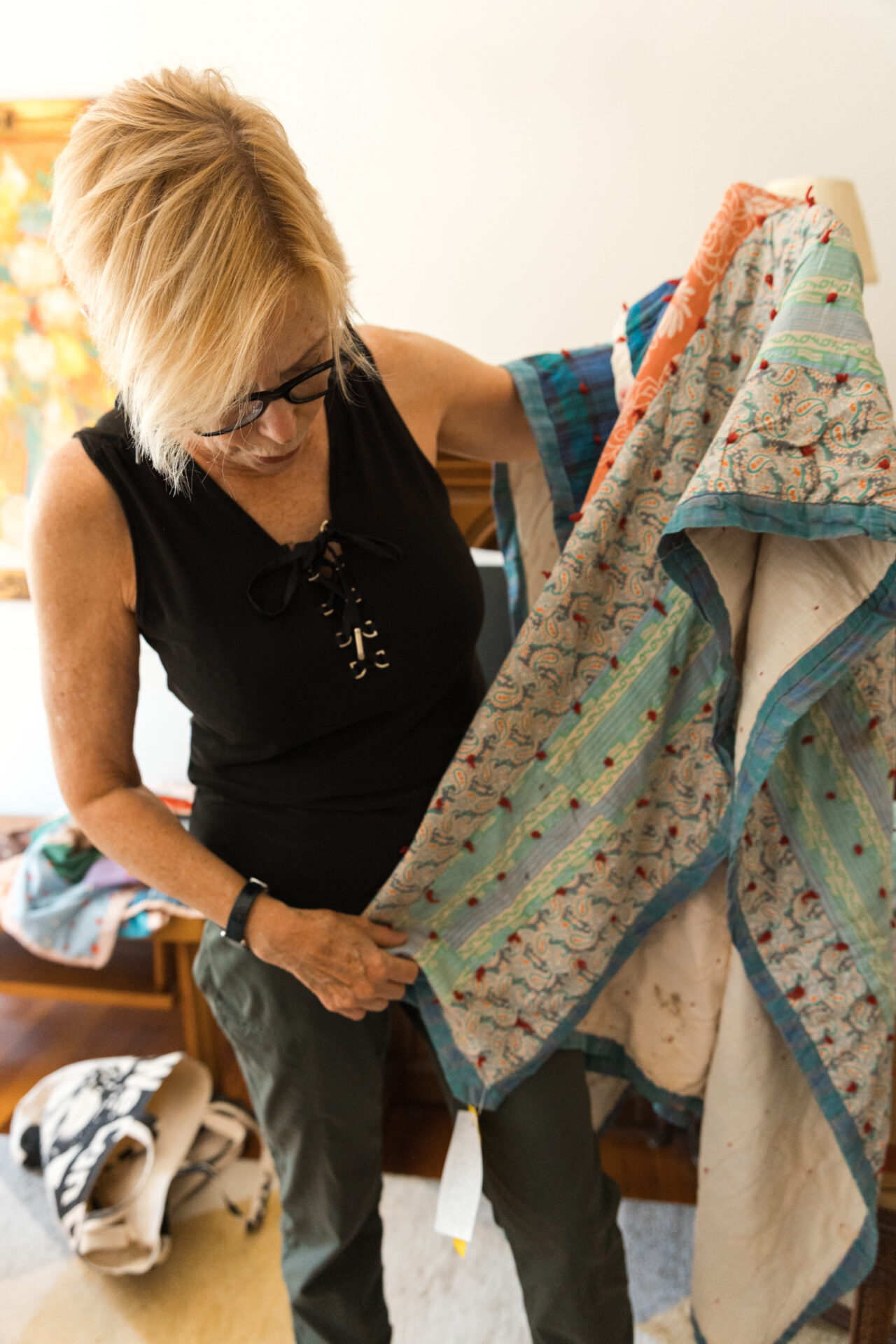
Meg shares her favorite quilt with Eliza's descendants.
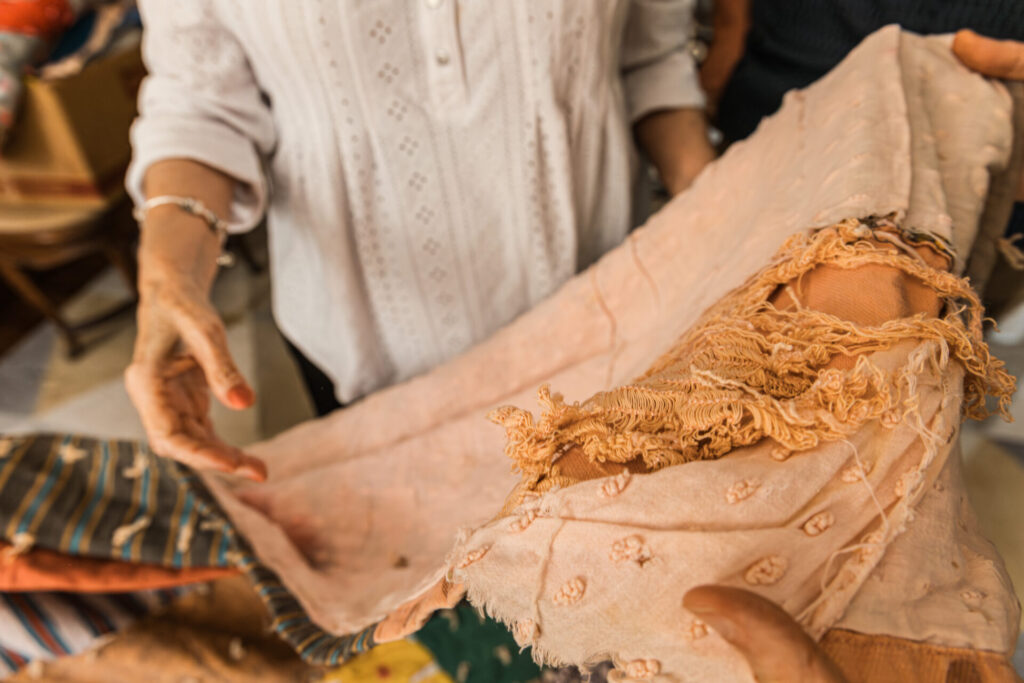
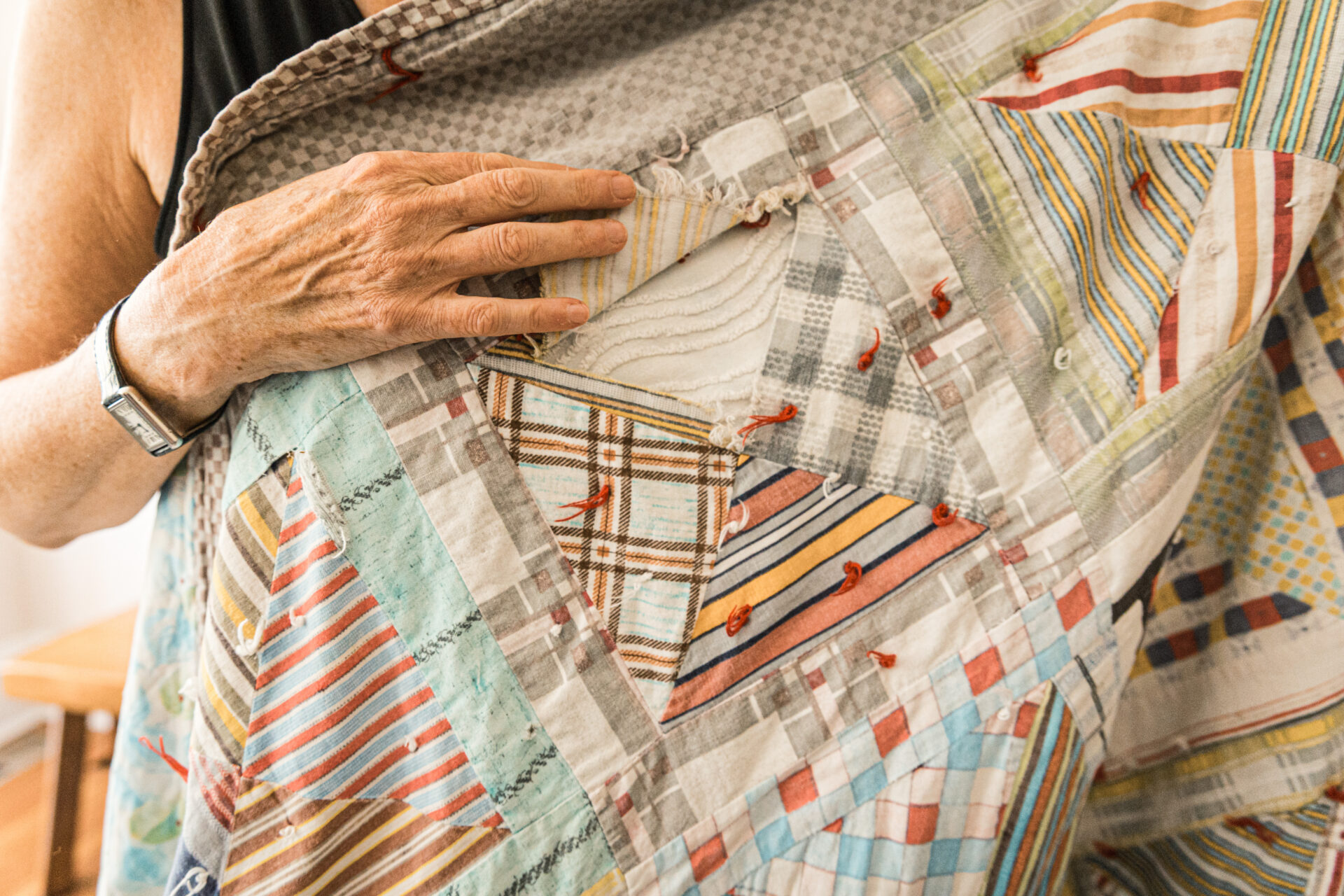
Several appear to have a blanket of some sort as either the batting or backing. One of them has a complete chenille bedspread between the pieced top and backing—some of the cotton half-square triangles on top have pulled apart, and through the gaps, I can see the raised wavy texture of the white chenille layer inside.
My search for information about Eliza’s life and quilting practices started with the antiques dealer who was selling the quilts. She put me in touch with Lynne Hamm, the wife of one of Eliza’s 38 grandchildren. Lynne helped me reach some of the other grandkids, who had the most vivid memories of the woman they called “Maw.”
Old photos of Eliza Shepherd and family members.
As a wee baby, the family story goes, Eliza was left as a “foundling” on the doorstep of the Tucker family in a North Carolina town. Nothing is known of her birth parents, and though she was given their name, the Tuckers never formally adopted her. As an adult, Eliza was determined to have as big a family as possible: she said she wanted 12 kids but ended up having 10.
A tiny, sparrow-like woman, Eliza is remembered by her grandchildren as never expressing anger or frustration, despite a life marked with privation. Brenda Edwards, now in her 70s, spent multiple summers as a teenager staying with her grandmother in Virginia. “I helped her churn butter, and they had cows and chickens. She would take the feathers off the chickens to make mattresses for the bed, and she used quilts for heat,” Brenda told me. “It was the best sleeping I ever had.”
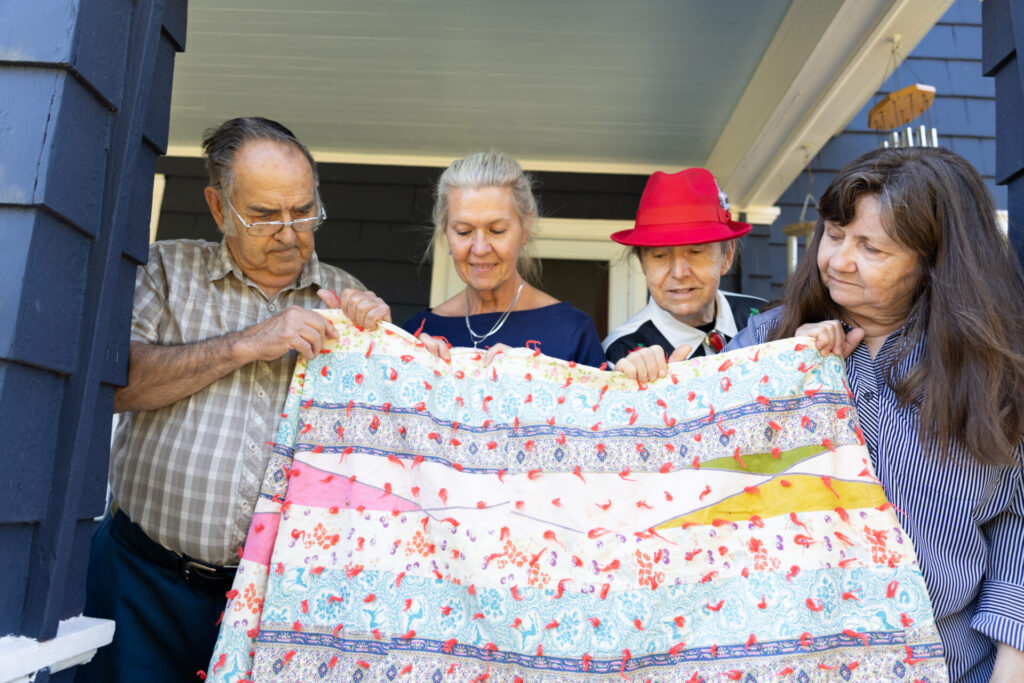
Four of Eliza's grandchildren studying one of her quilts: (L-R) Jerry Shepherd, Vickie Nunemaker, Randy Shepherd, and Susie Shepherd.
On the other hand, there was no indoor bathroom. It was the 1960s, and Brenda remembers using “a little pee pot under the bed” when she visited. With all her hardships, “I never saw my grandmother angry, not once. She loved her children and all the grandchildren. She had so little. I would crochet her stuff, and she was so thrilled to have anything given to her.”
Joyce Hamm Layton—a daughter of Eliza’s youngest child, Hazel—describes her grandmother as “a toughie. They were so poor, and she never complained. She never cut her hair and always wore it in a bun. She had hard times trying to feed and take care of all her children. She would make their dresses and shirts, sewing with a treadle Singer sewing machine. “
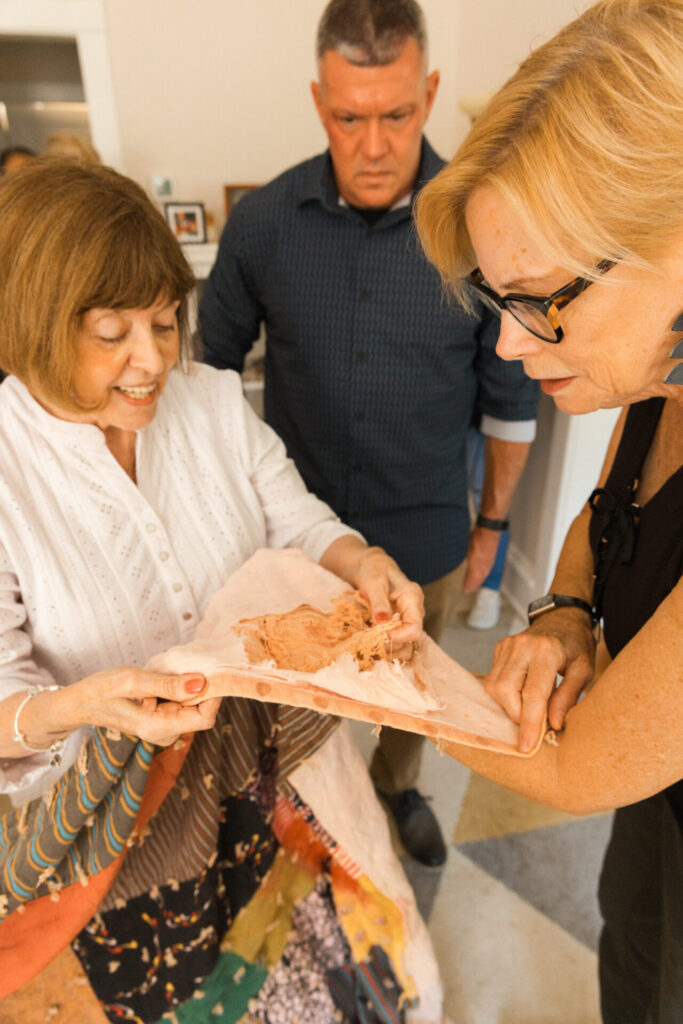
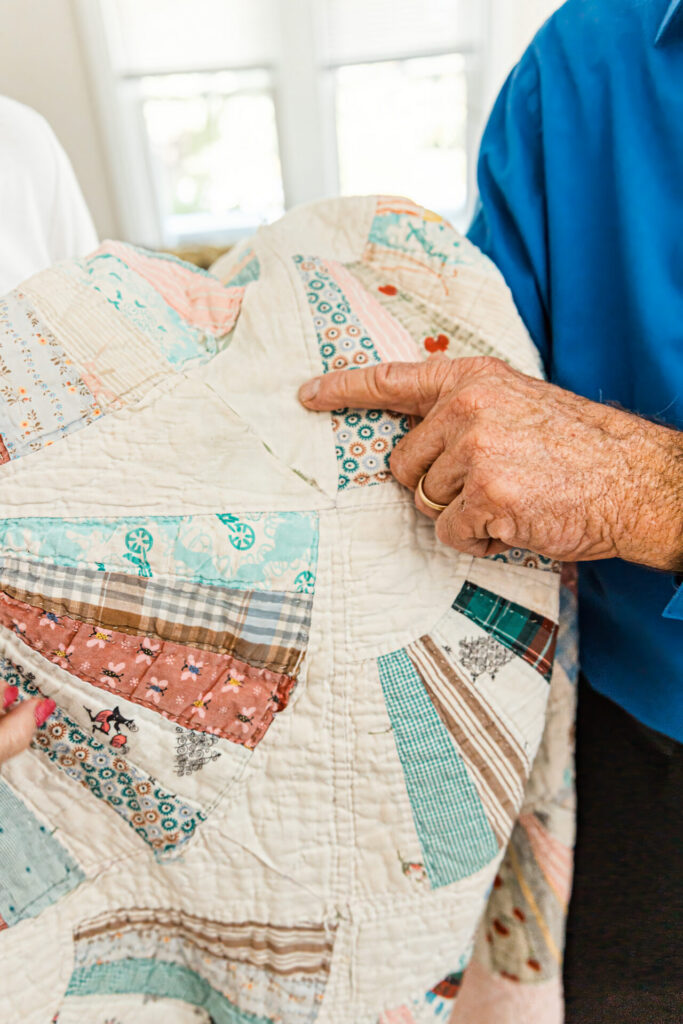
Brenda Edwards, one of Eliza’s granddaughters, alongside Brenda’s son, Chris, showing Meg details of a quilt.
Family life became especially hard when Eliza’s husband, Roe Shepherd, served two years in prison for killing a man after a card game. He said he acted in self-defense, according to Joyce, who sent me copies of newspaper accounts saying Roe was wanted for murder and reporting that he was caught and sentenced.
Joyce never met her grandfather; he died before she was born in 1952. But she says she grew up hearing that “he was a lady’s man. He wasn’t around a lot. From what I hear, I think he was mean. He would beat the kids. I don’t think I would have liked him.” Other family members confirm that for many years, Eliza was on her own raising those 10 kids.
Though she never taught her grandchildren the craft, some of them do remember Eliza’s love for quilts. Vickie Nunemaker, another granddaughter, said she recalls being 7 or 8 years old and visiting her grandmother with her family. “I remember seeing the quilts draped over her banister and on every bed,” Vickie said. “She was just so into her quilts.”
After gathering stories from half a dozen family members, I knew I wanted to share Eliza’s story publicly and began to work with Quiltfolk on the best approach.
One of Eliza's many quilts, this one now in Meg's care.
Many of her descendants left Virginia years ago and settled in Pennsylvania. Among them were the last two of her 10 children to die, Clyde and Hazel. So we arranged a photo shoot in Chester County, mostly in a picturesque former mining town called Saint Peters. In addition to those living nearby, we attracted grandkids from Maryland and South Carolina.
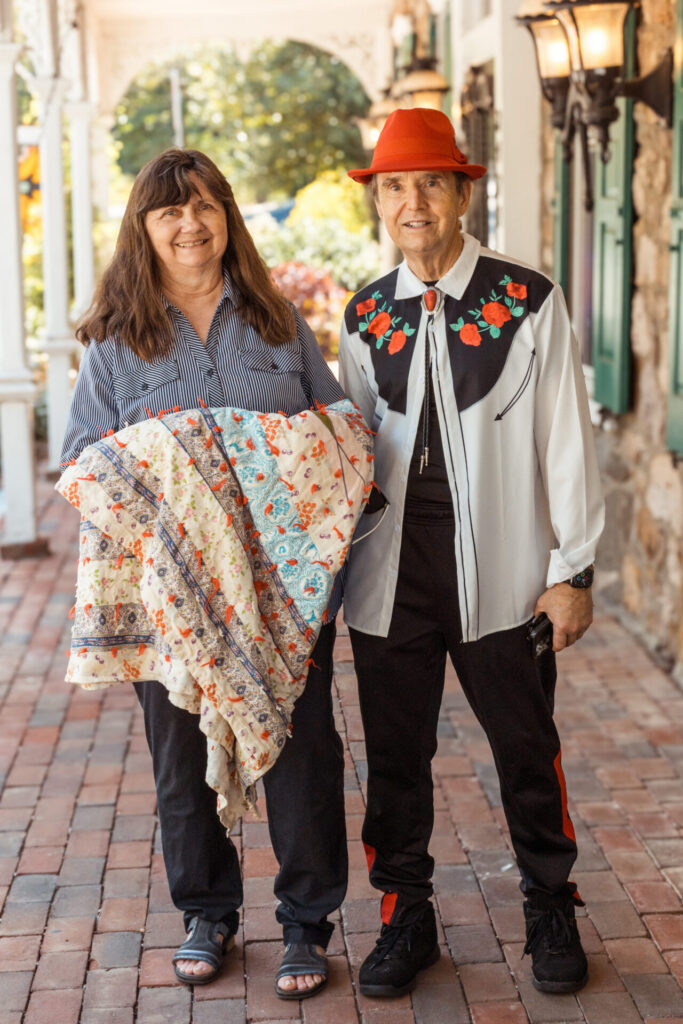
Susie and Randy, two of Eliza's grandchildren, in Saint Peters village.
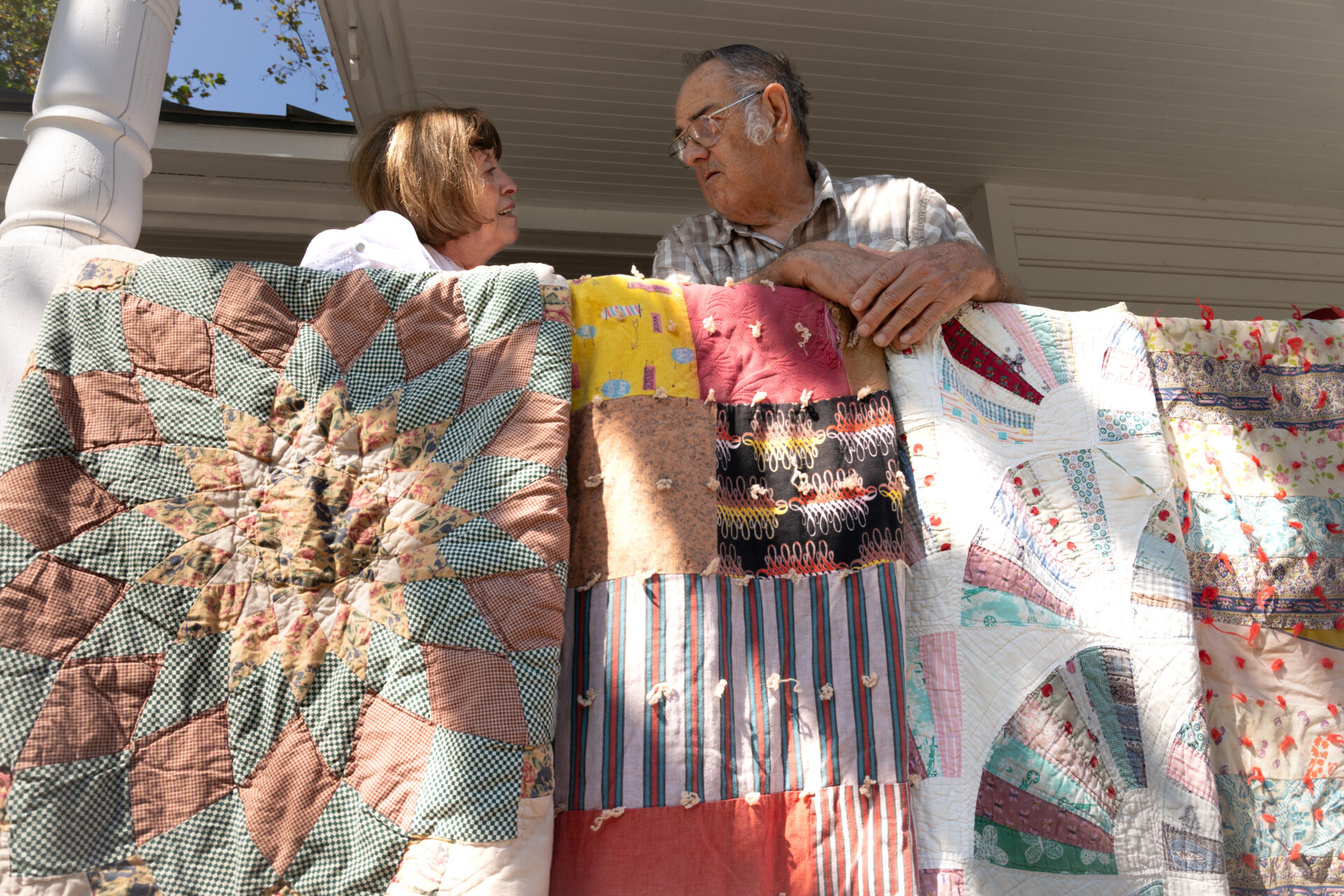
Rick Greer points out the details in one of his grandmother's quilts.
Mike Hamm besides his wife, Lynne, with one of Eliza's quilts.
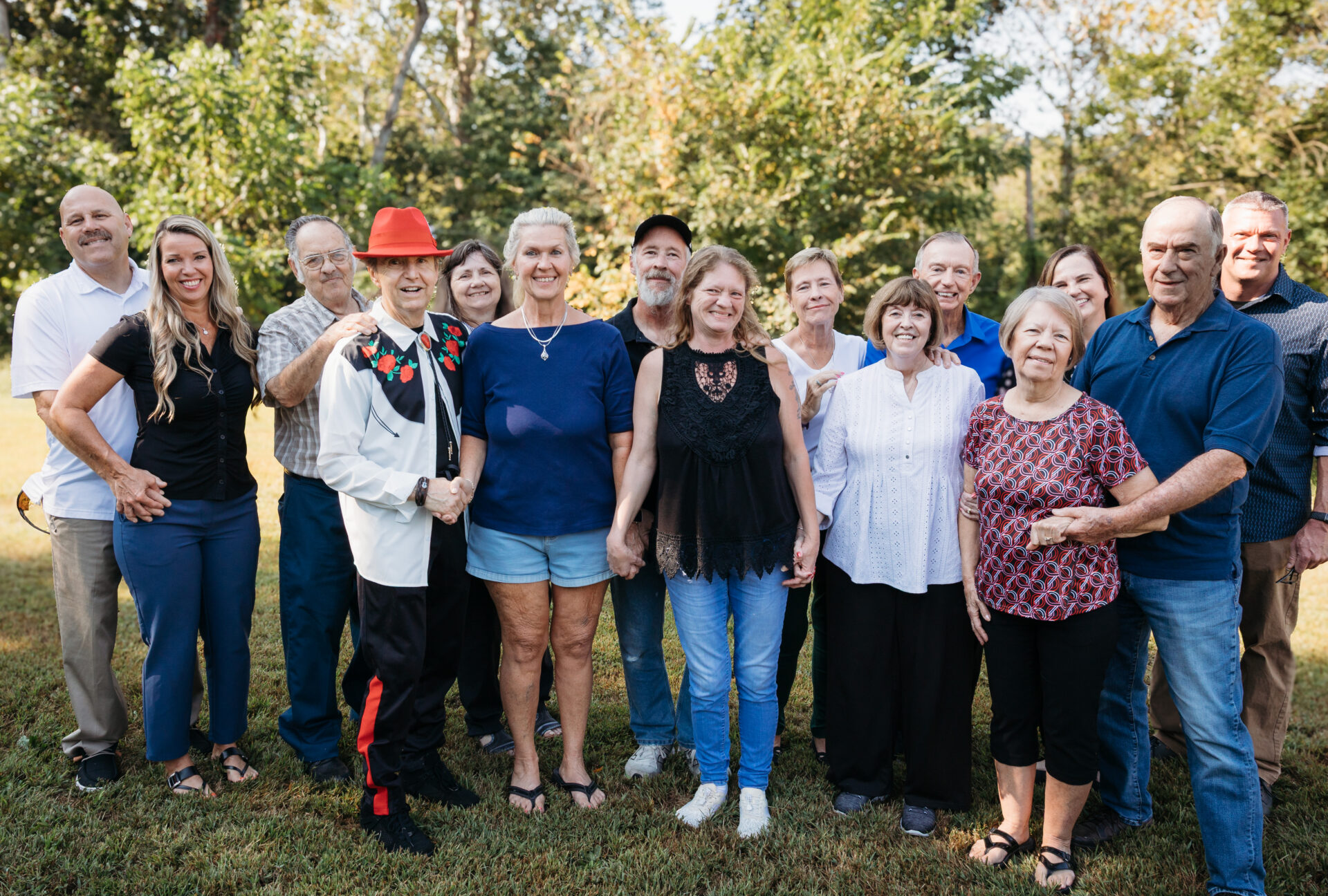
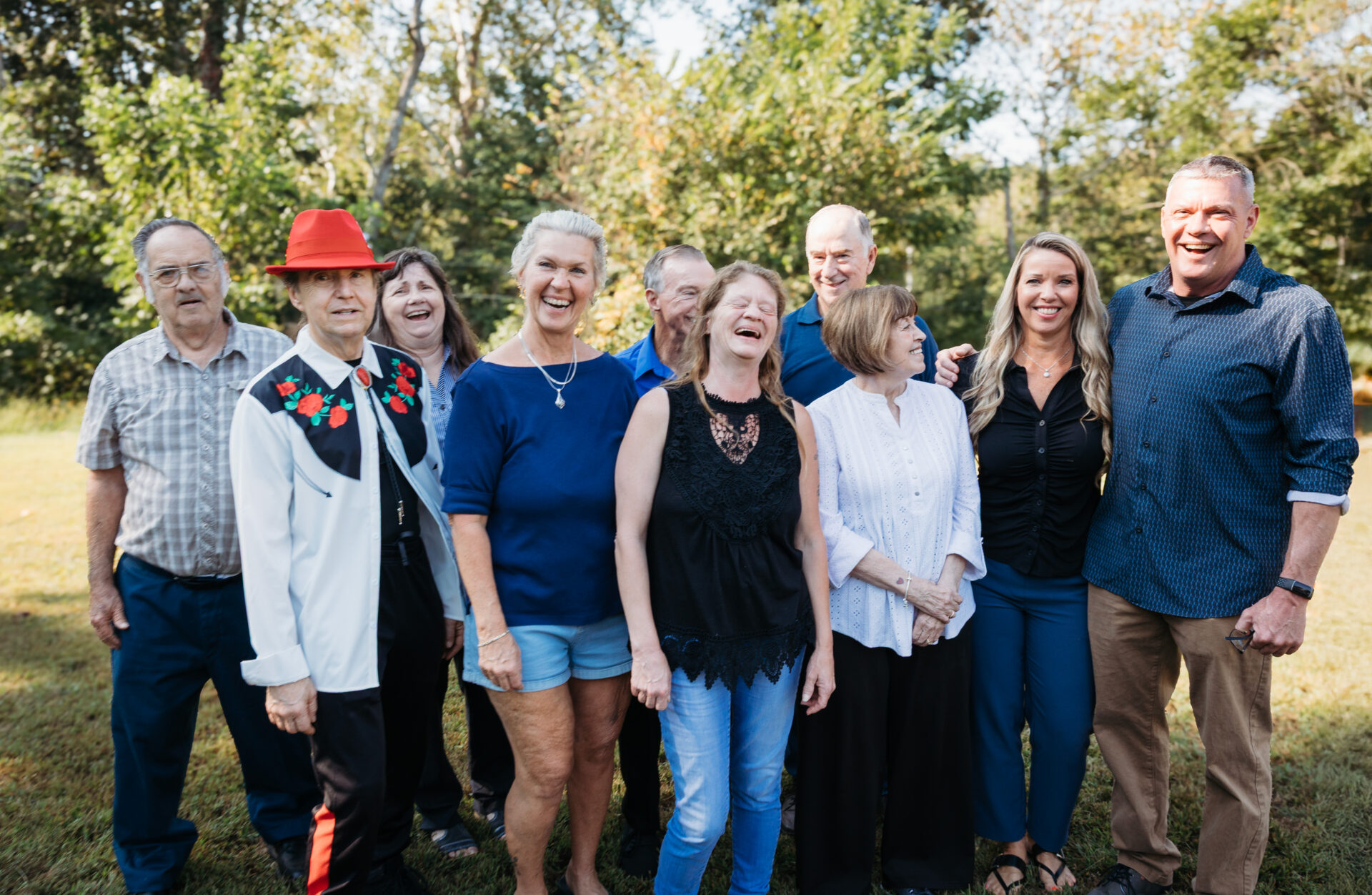
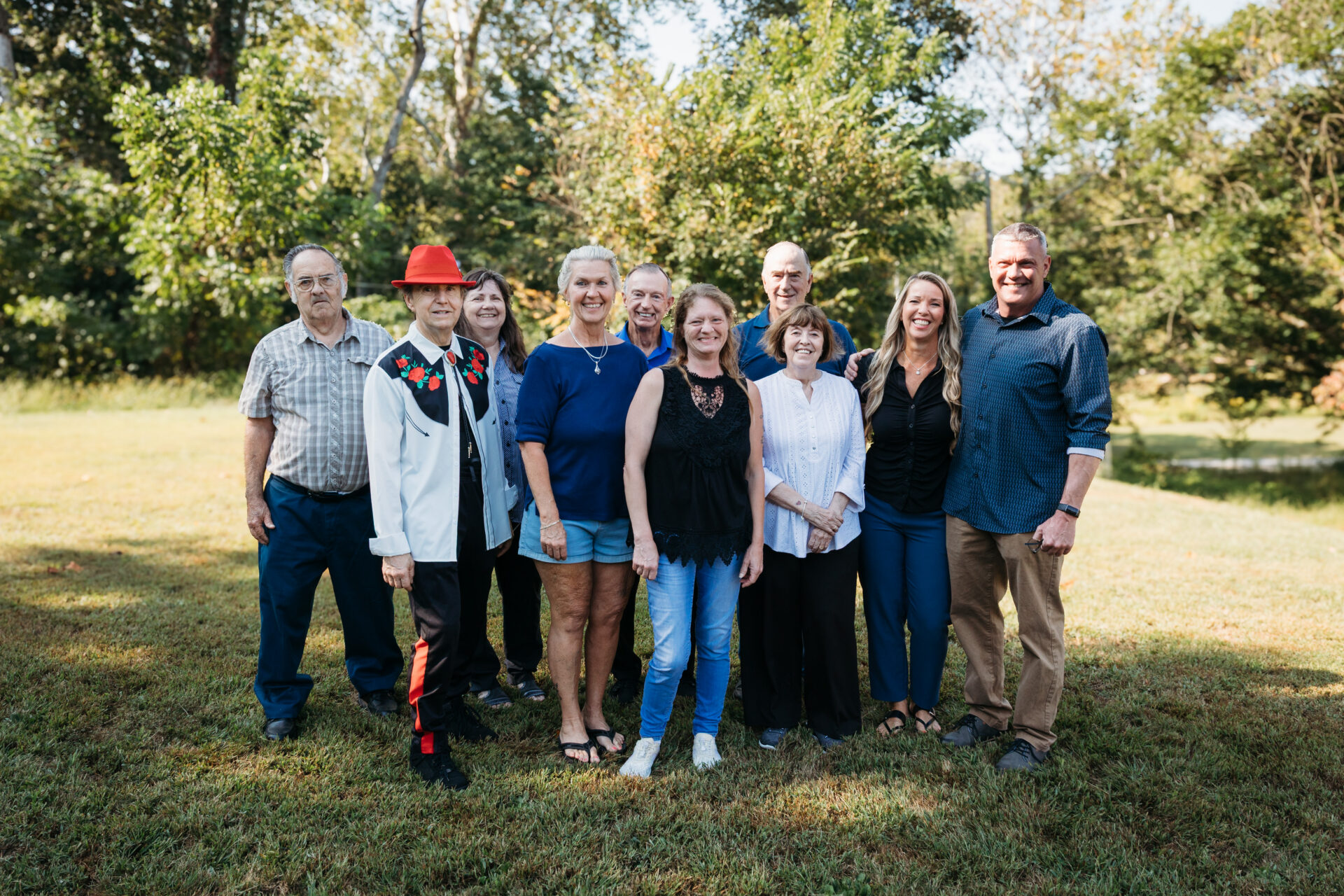
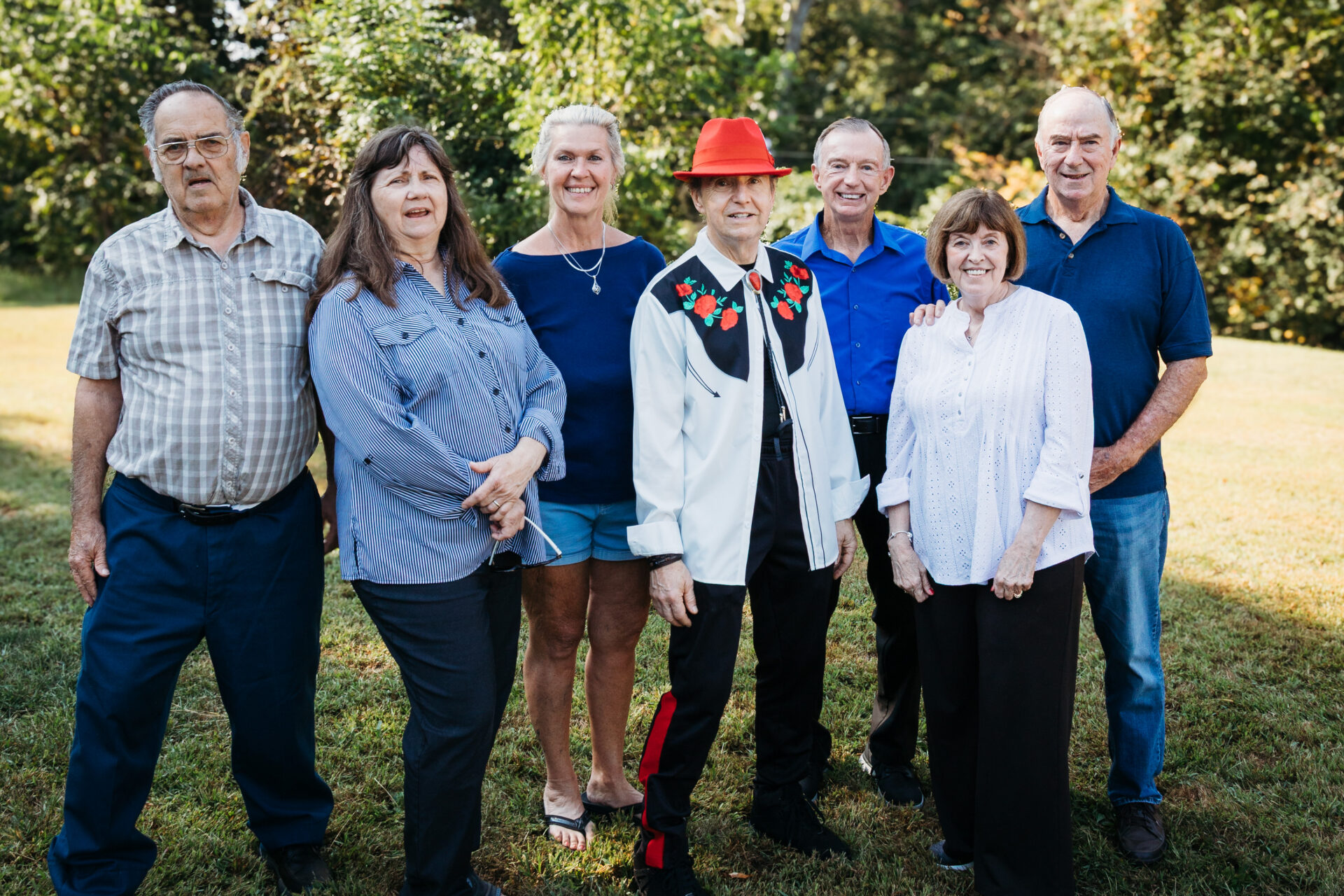
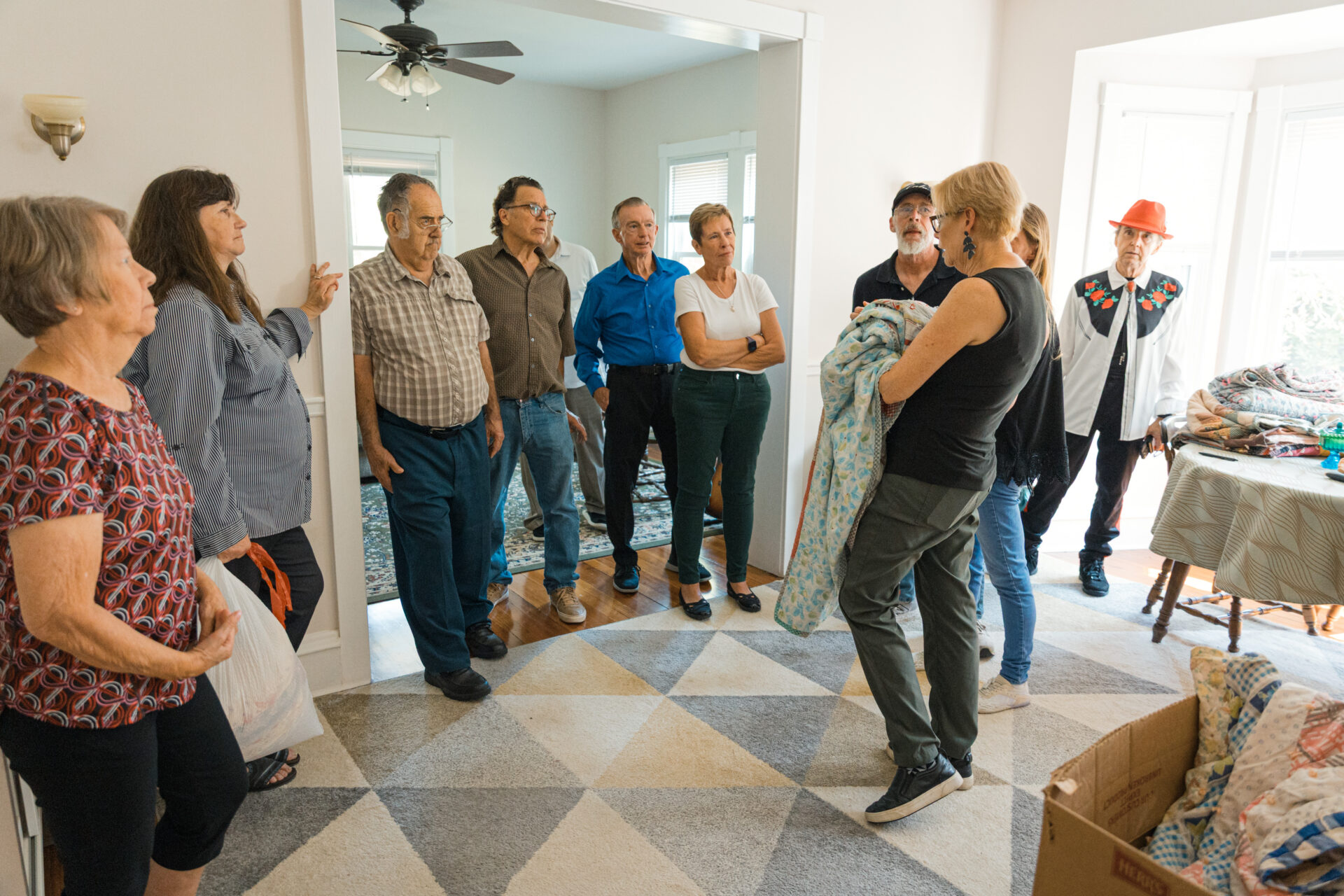
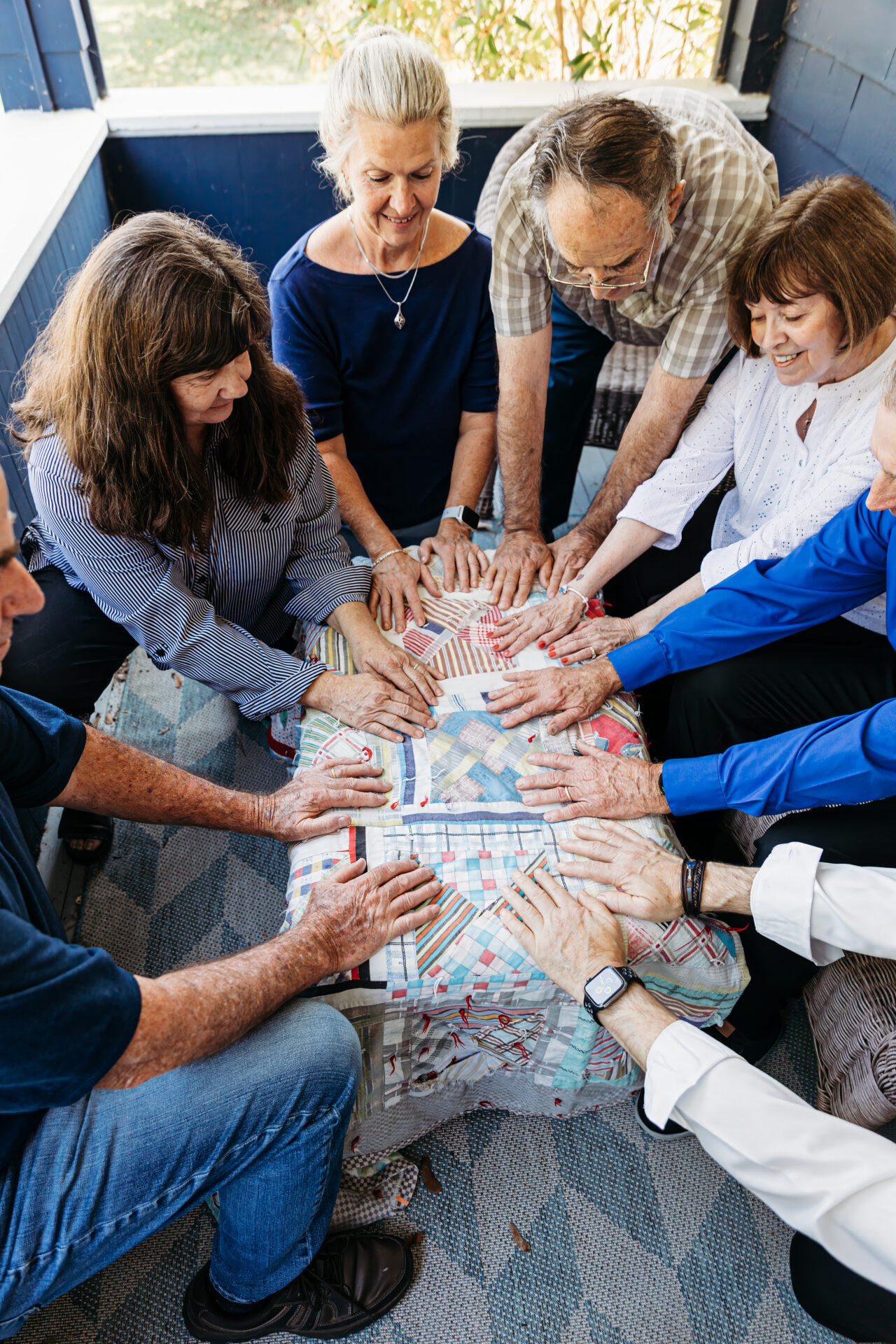
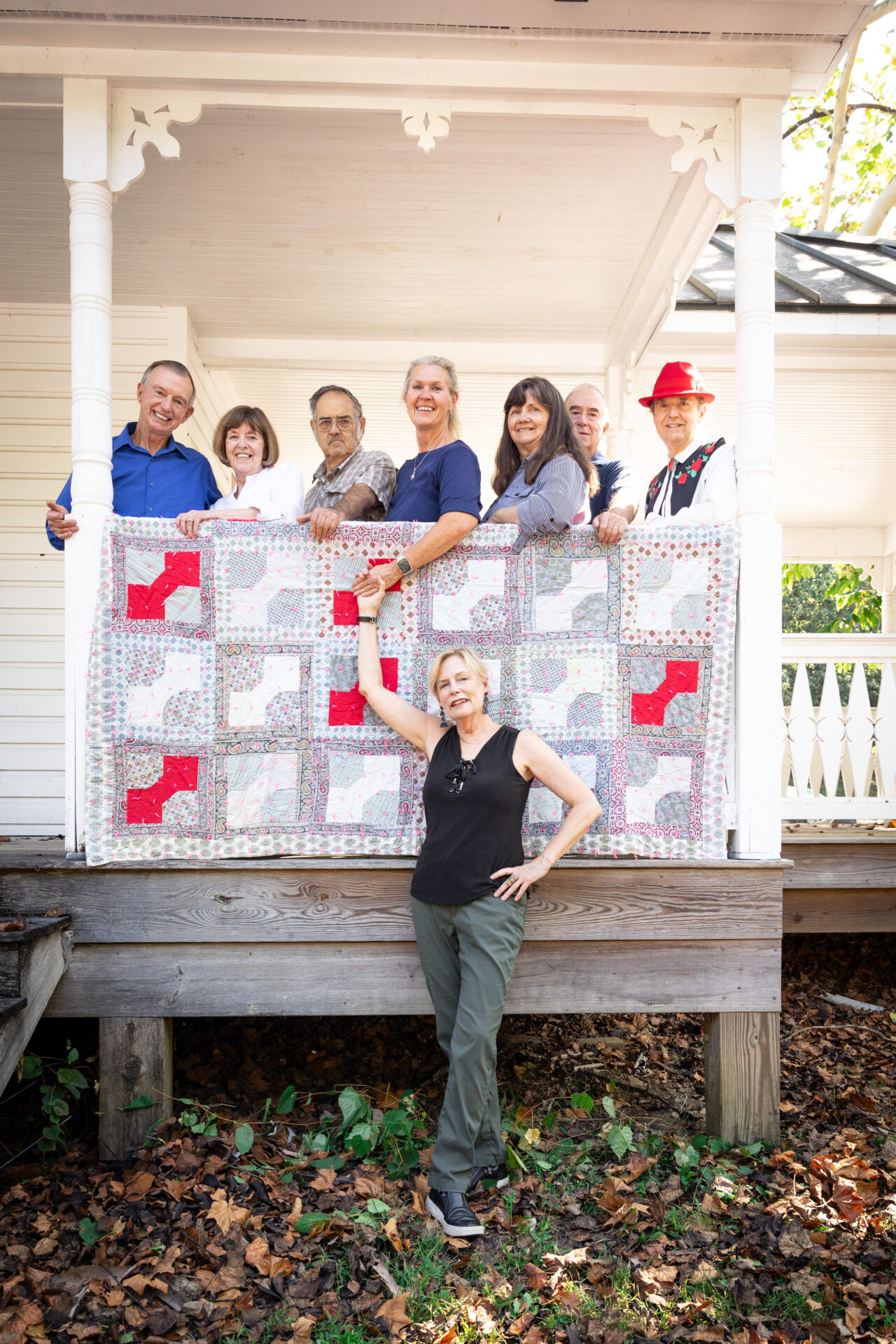
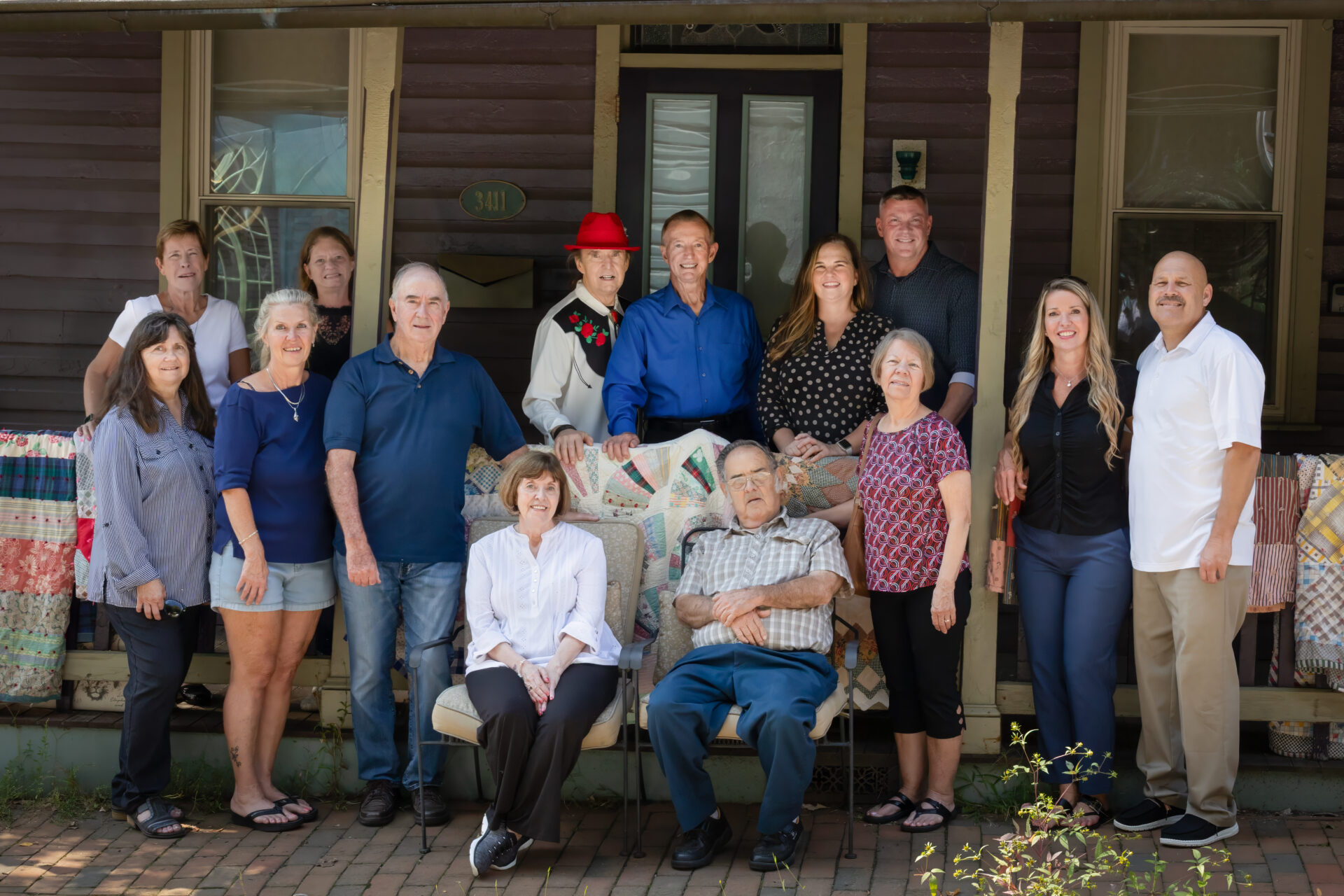
I didn’t realize until that day in September that the gathering would be not just a photo shoot, but also a family reunion and a quilt reunion. There were seven grandchildren, some with spouses, and several great-grandchildren. Between them, they brought five treasured quilts made by their Maw. From their quilts, I learned that Eliza’s piecing and quilting got more elaborate later in her life. The patterns she chose were more challenging and the quilting more complex, though still done by hand.
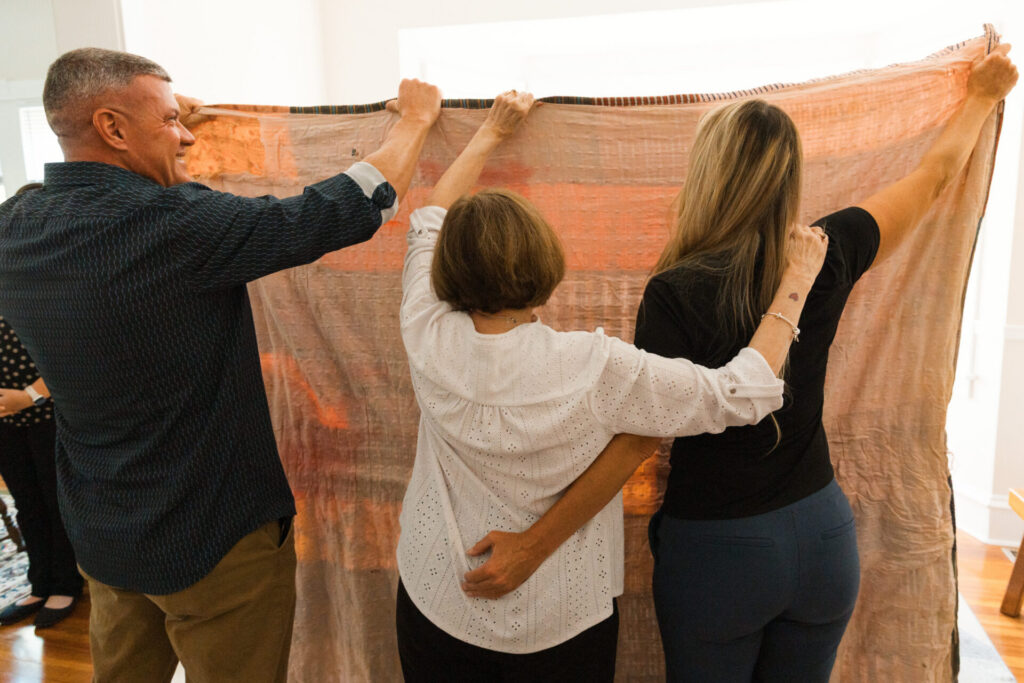
Brenda Edwards holds up a quilt with her children: her son, Chris, on the left and daughter, Mandy, on the right.
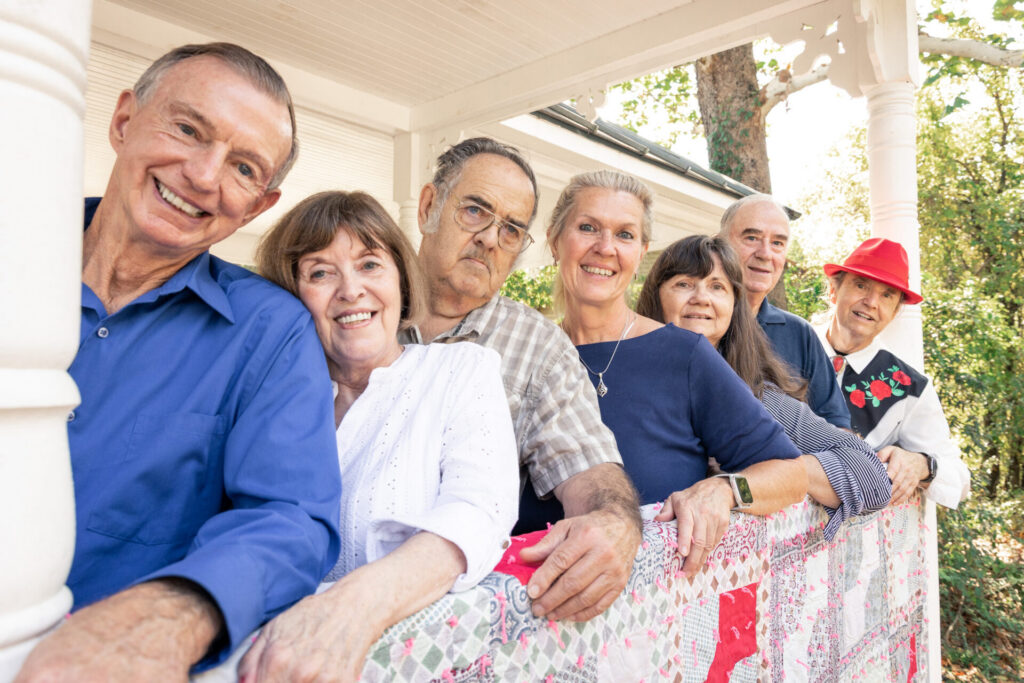
Seven of Eliza's grandkids pose with one of her quilts.
I found out later how much that day’s gathering meant. “To see the family come together like that, for Grandma, almost made me cry,” Brenda said. “My kids, Chris and Mandy, thought it was the best thing in the world. They had no idea my grandmother was that talented. They had never even seen her quilts that I own because I have kept them boxed up. There were relatives they were meeting for the first time. Eliza would have been so proud that we were showing off her lifelong work.”
I’ll make a confession. Although I was thrilled to find and acquire these quilts, at first, I felt a touch squeamish. I thought maybe I was walking off with a legacy the Shepherd clan was sad to lose.
It was a relief to learn how wrong I was. The antiques dealer who sold them to me had bought them from a friend of the family and was told “they had a pile of family quilts and doilies they were going to throw out.”
I learned that Hazel—the last of Eliza’s children to die, in 2024—had kept all of the quilts left from her mother’s estate. “When my mother died, we each picked out what things we wanted,” said Joyce. “What was sold was anything left.”
An expert in Appalachian quilts, quilt historian Neva Hart told me these were very common quilts, almost stereotypical in their materials and techniques. The recycled clothing, unraveled sweater ties, and thick center layers were things she had seen a million times. But because these quilts were labeled as they were, they enabled me to see Eliza through her grandchildren’s eyes. And they will always be a treasure to me.
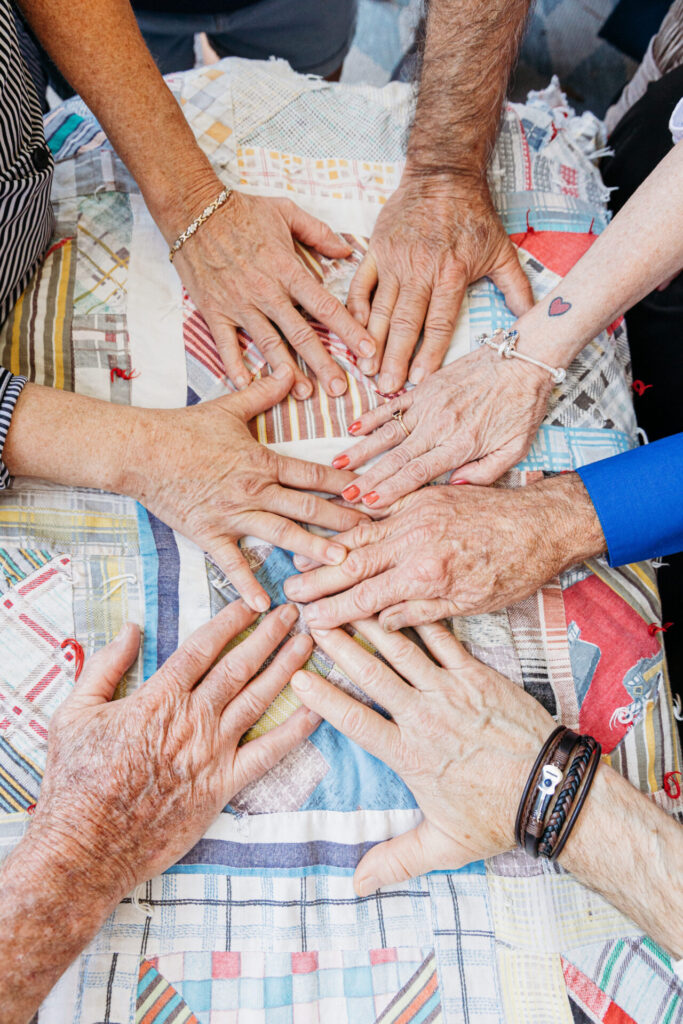
Hands-on love: seven grandchildren who traveled from three states to celebrate Eliza's quilts.
About the Author
Meg Cox joined the Quiltfolk team in 2018 and has written for the magazine and contributed to many other projects since. A working journalist since college and a quilter since the ’80s, she’s been publishing the free newsletter Quilt Journalist Tells All! since 2008. She lectures about quilts all over the country and previously served on the advisory board of the International Quilt Museum. Learn more about Meg on her website and Instagram.
About The Photographer
Photography by Erica Hawn of Petunia Rose Art and Photography. Located in Chester County, Pennsylvania, Erica has a Master’s in Fine Art from the Pennsylvania Academy of Fine Art. Check out more of her work on her website or Instagram.