“Human connections are deeply nurtured in the field of shared story.” — Jean Houston
Conveniently situated near the geographic center of the US, Denver, Colorado, is a great place for a gathering of like-minded individuals from across the country, even the world. Such was the case this past week when the Denver Art Museum hosted the inaugural symposium of the Avenir Institute of Textile Arts and Fashion entitled Interwoven: Creating Community by Supporting Artistic Innovation in Textile Arts and Fashion.
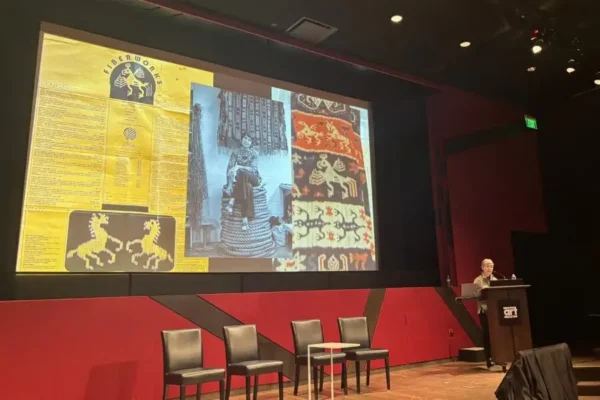
With an impressive array of speakers from textile institutions around the globe, the symposium illustrated shared ties within the field, and the clear message: fiber art thrives in community. It felt appropriate that the event should begin with Gyöngy Laky, a San Francisco-based sculptor and founder of Fiberworks Center for the Textile Arts, a groundbreaking gallery and studio which put textiles front and center at a time when they were given little exposure in galleries and museums. Gyöngy gave the audience—a collection of fiber art enthusiasts, creators, and museum professionals— a glimpse into the past and the lively and exciting time that was the art community of the California Bay Area in the 1970s.
Gyöngy Laky presenting at the Interwoven Symposium.
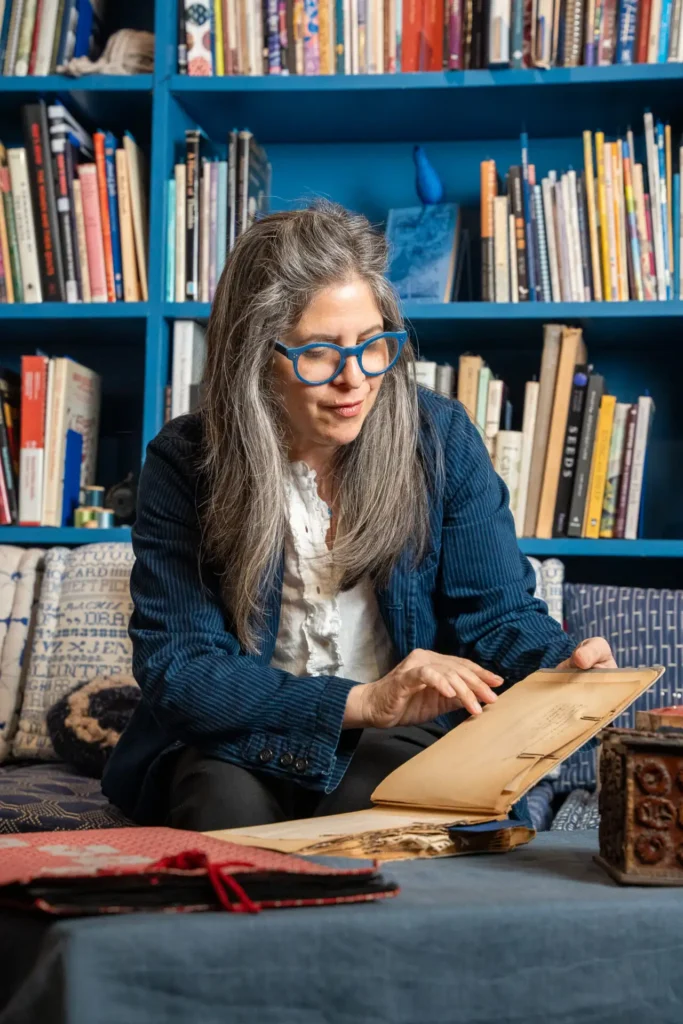
Gyöngy spoke about the fiber artists she has worked with over the years but also about the idea of textiles as a record of process, labor, and knowledge. What an intriguing thought! Perhaps more than any other medium, fiber and textiles draw on thousands of years of tradition. The repetitive motion of weaving on a loom, stitching through cloth, or looping together strands of yarn is an act that has been repeated by numerous cultures around the world since time immemorial. And unlike many forms of 2-D art, fiber is so very connected to the human body, so often held—as was pointed out by speaker and founder of TATTER Jordana Munk Martin—close to our hearts, in the embrace of our arms.
Jordana Munk Mutter at BLUE: The Tatter Textile Library during Quiltfolk’s visit while filming Made in Manhattan.
Think back to your last textile creation—a quilt, perhaps. Think of how much time it took you to acquire the knowledge needed to make this quilt, whether passed down from a family member or gained through courses and workshops. And then, think about how long this particular project took you, from planning and gathering materials to cutting and sewing fabric. Now, think of your fabric, your thread, your batting, even, and the hands that it passed through during its creation. Your quilt, whether it was meant to warm or to adorn, has joined a (very) long tradition of textiles that have embedded within them a record of process, labor, and knowledge.
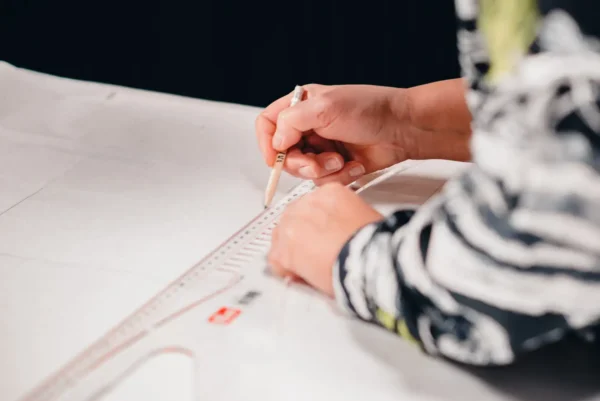
A pattern-a-thon participant at MoMu.
All the speakers at the Interwoven symposium spoke of similar themes: of the incredible capability that fiber has to tell stories, be they personal or historical, and of the importance of preserving and passing on this knowledge. At MoMu – Antwerp Fashion Museum, a monthly event dubbed the pattern-a-thon gives visitors the opportunity to create patterns based on objects in the museum’s study collection. Once finished, they are posted onto Wikimedia Commons, where they can be used by everyone. From the TextielLab in the Netherlands and Chanakya International in India to just down the road at the Unstable Design Lab in Boulder, Colorado, organizations all over the world are cultivating connections through fiber. The incredible work these individuals and organizations are doing to build community in the textile arts is an inspiration and a gentle reminder to share your knowledge, to connect with your community, and, of course, to stitch.
About the Author
Emily Pillard joined the Quiltfolk team in 2021 and has worn many hats over the years. She is now the marketing coordinator for the magazine.